Bank Transfer Held Up? It Isn't You. Europe's Banks Are Tightening Up
A December deadline for Sweden's biggest banks, fresh fines over old laundering failures and a probe into Wise are pushing Europe's lenders to look harder at every payment.
If one of your bank transfers has been held, delayed or met with a list of questions lately, the chances are it had little to do with you. Across Europe, banks and payment firms are under the heaviest anti-money-laundering pressure in years, and the result is more checks, more pauses and more requests for paperwork on ordinary payments.
The pressure is coming from several directions at once: hard deadlines from national supervisors, large fines for failures that date back a decade, criminal investigations into fintech platforms, and a new European rulebook that arrives in 2027. Each gives compliance teams a reason to look twice before money moves.
Why your payment was stopped
Banks are legally required to monitor transactions and to question payments that look unusual against what they know about a customer. A first transfer to a new recipient, an amount far larger than usual, a payment involving a country considered higher-risk, or money routed through a payment app can all trigger a manual review.
When that happens, the bank may ask what the payment is for, where the money came from, or for supporting documents such as an invoice or a contract. Until those questions are answered, the payment can sit on hold.
None of that is an accusation. Most flagged payments turn out to be legitimate. Banks are also barred from telling customers about any suspicion they report to the authorities, which is one reason the explanations people receive are often vague.
Sweden's December deadline
Some of the friction is built into the system itself. In June 2024, Sweden's financial supervisor, Finansinspektionen (FI), ordered Handelsbanken, SEB and Swedbank to fix deficiencies in the country's payments infrastructure no later than December 2026.
The problem sits in Bankgirot, the clearing system the three banks own. A large share of Swedish domestic payments, from invoices and salaries to transfers between accounts, passes through it. According to FI, limitations in the system mean that participating banks cannot meet anti-money-laundering requirements on the information that must accompany a transfer, such as details of the payer and the payee.
"We expect these deficiencies to be resolved," Malin Alpén, FI's executive director, said when the order was issued, adding that the supervisor had followed the banks' work for a long time and was now setting a strict timetable.
FI said the shortcomings affect every bank that uses the system, not only its owners, but it targeted the three Swedish owners because they are in a position to fix them. It said it lacked the same legal basis to act against Danske Bank and Nordea, and instead alerted the supervisors in Denmark and Finland. No public update on the banks' progress was available at the time of writing.
The bill for past failures
The caution also reflects a decade of scandals that cost Nordic banks dearly.
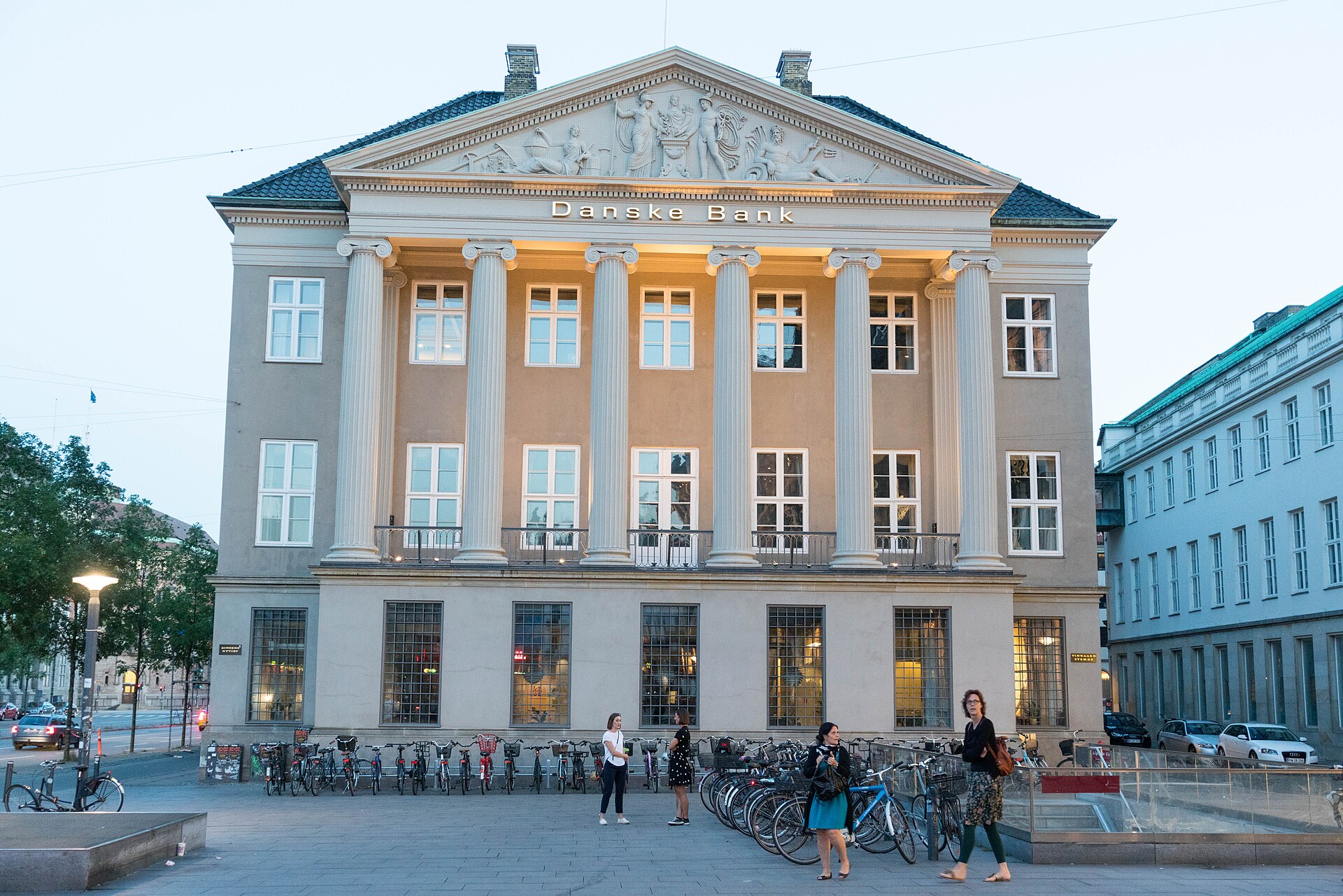
Danske Bank's Estonian branch handled around €200bn of payments from non-resident customers between 2007 and 2015, much of which the bank later said was suspicious. In December 2022 it pleaded guilty in the United States and agreed to forfeit about $2bn. In Sweden, FI fined Swedbank SEK 4bn in 2020 over failings linked to its Baltic operations, and fined SEB SEK 1bn the same year.
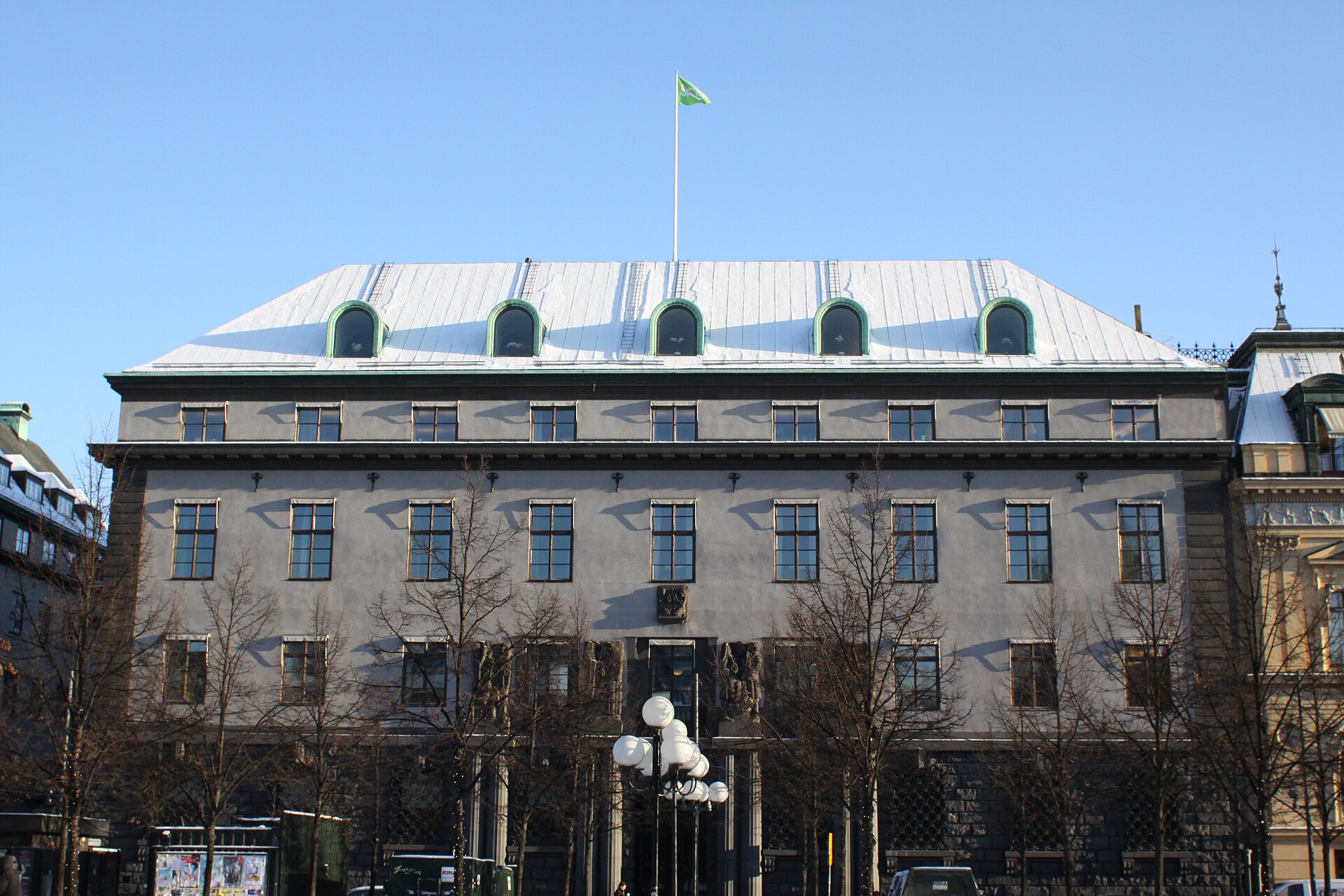
The bills are still arriving. On 15 October, New York's Department of Financial Services (NYDFS) announced that SEB and its New York branch had agreed to pay $33m over anti-money-laundering failures between 2015 and 2019. The regulator found weak due diligence on high-risk clients and on correspondent banks, and transaction monitoring in Estonia, Latvia and Lithuania that could not reliably detect and stop suspicious activity. The investigation grew out of the 2016 Panama Papers leak.
"This chapter is now closed," Cecilia Wolrath Ekenbäck, SEB's head of group compliance, said, adding that the bank had since taken extensive measures to strengthen its controls. The US Justice Department also reviewed the bank and closed its investigation without a penalty. According to Banking Dive, the same New York regulator fined Swedbank $50m in July and Nordea $35m in 2024.
For banks, the lesson of these cases is that the cost of missing suspicious flows can arrive years later and dwarf the cost of extra checks today. For customers, it means a lower tolerance for anything that looks out of the ordinary.
Fintech under the microscope
Payment apps and money-transfer firms face their own scrutiny. In June, Brussels prosecutors said an investigation into Wise Europe, the Belgium-based arm of the British transfer company, was at an advanced stage. The probe began in 2025 after Wise's name came up in hundreds of requests for assistance from investigators in other countries, and it is examining whether criminal groups used Wise accounts to launder the proceeds of fraud, corruption and drug trafficking.
Prosecutors said the findings mainly concerned the use of Wise accounts for criminal purposes and pointed to failures to identify customers and their activities. Wise said it was cooperating, that such information requests are a normal part of its business and not in themselves evidence of wrongdoing, and that no specific findings had been shared with it. Its shares fell almost 15% on the day the probe was reported.
Supervisors are also examining the plumbing that lets payment firms offer accounts. In April, France's banking supervisor, the ACPR, and its financial intelligence unit, Tracfin, published a joint report warning that some uses of virtual IBANs, account numbers a payment firm issues to its own customers on top of a bank account, could be exploited by criminal networks. In July, Germany's BaFin told institutions to review the money-laundering risks of such structures, including links to informal transfer systems, and to tighten monitoring and their oversight of partner providers.
When banks grow warier of the payment firms they serve, those firms' customers feel it too, in slower transfers, extra verification and, in some cases, closed accounts.
Europe's new rulebook
The pressure will not ease soon. Since 9 October 2025, banks in the euro area have had to check, before a transfer is authorised, whether the name a customer types matches the account number, a service known as Verification of Payee. A "no match" result does not block the payment, but a customer who goes ahead after a warning may find it hard to recover the money if it reaches the wrong person. Providers outside the euro area have until 9 July 2027 to offer the check.
The EU's new Anti-Money Laundering Authority, AMLA, began operating in Frankfurt on 1 July 2025. A single EU anti-money-laundering regulation will apply from 10 July 2027, and AMLA is expected to start directly supervising around 40 of the largest and riskiest financial institutions from 2028.
Together, the changes move much of Europe's anti-money-laundering oversight from national capitals to a single European supervisor, and put the same rules on every bank in the bloc.
What it means for you
A held payment is frustrating, but there are ways to make one less likely and to resolve it faster:
- Type the recipient's name exactly as it appears on their account, and take a "no match" warning seriously.
- Answer your bank's questions promptly, and keep invoices, contracts or proof of where the money came from for larger payments.
- Expect more questions for first-time recipients, unusually large amounts and cross-border transfers through payment apps.
- Avoid splitting a large payment into many small ones, a pattern that can itself trigger a review.
- If a payment is stuck, contact your bank through its official app or phone number, never through a link in an unexpected message.
The last point matters more than usual. Fraudsters exploit exactly this kind of friction, contacting people who are waiting on a payment and asking them to "verify" their details.
What to watch
The December deadline for Sweden's banks is the nearest test, and whether Danish and Finnish supervisors impose similar requirements on Danske Bank and Nordea will show how far the fix reaches across the region. The outcome of the Belgian investigation into Wise could set the tone for how European authorities treat transfer platforms.
Further out, the EU rulebook in July 2027 and AMLA's direct supervision from 2028 will move much of this work to the European level. For customers, the likely result is that the extra checks of 2026 become the new normal.
Photos: Danske Bank, Copenhagen, by Kevin Wallis / Wikimedia Commons (CC BY 2.0); SEB, Stockholm, by Magman100 / Wikimedia Commons (CC BY-SA 3.0).
More from peatpost
Bitcoin Steadies Near $75,000 as Binance Hack Fallout Stays Contained
Analysts credit Binance's pledge to cover $6.3bn in losses with limiting the damage, while custody design and macro data move into focus.
Analysts Say Binance's Pledge to Cover $6.3bn Hack Losses Limited Wider Market Damage
Bitcoin's post-hack drop was milder than after the Bybit and Coincheck breaches, and analysts now see US inflation data and Fed policy as the bigger drivers.

Binance Finance Chief Kaiser Ng to Leave, With Justin Yek Named as Successor
The departure, confirmed by co-CEO Yi He to Reuters, follows a six-month handover and comes just over a week after a reported $6.3bn hack of the exchange.
Discussion
0 commentsNo comments yet — be the first to weigh in.