You Can Now Pledge Bitcoin for a Mortgage Down Payment
Better and Coinbase pair a Fannie Mae-backed loan with a second loan secured by BTC. Borrowers must pledge 250% of the amount.

Better Mortgage and Coinbase have made a Bitcoin-backed mortgage product generally available, letting US homebuyers pledge Bitcoin as collateral for a down payment without selling it.
How it is structured
According to Coinbase's help documentation, the product pairs a Fannie Mae-backed home loan with a separate down payment loan secured by Bitcoin.
Borrowers must pledge BTC worth at least 250% of the down payment loan, with the pledged coins transferred to Better's custodial account on Coinbase Prime. The two loans carry the same interest rate and amortisation term and are repaid through a single monthly payment. The Bitcoin is returned once the mortgage is repaid.

Why the structure is two loans
The split is the clever part, and it exists because of what Fannie Mae will accept.
Conforming mortgages have strict rules about the source of a down payment, principally to ensure the borrower has genuine equity in the property. Borrowed down payments are generally disallowed, because a buyer with no real stake is far likelier to walk away.
By keeping the crypto-secured loan entirely separate, the conforming mortgage remains conventional and saleable to the secondary market, while the down payment obligation sits outside it. That is what makes the product possible within the existing housing finance system rather than alongside it.
The 250% requirement
A 40% loan-to-value ratio on the pledged collateral is conservative, and deliberately so.
Bitcoin has repeatedly fallen 50% or more within a year. A borrower pledging $250,000 of BTC against a $100,000 down payment loan can withstand a 60% drawdown before the collateral is insufficient — which covers most, though not all, of the drawdowns in Bitcoin's history.
The risk that is genuinely new
What makes this product different from an ordinary mortgage is the correlation between the two things that could go wrong.
A conventional borrower facing job loss has one problem. A borrower here could face a Bitcoin crash that triggers a collateral call at the same time as a broader risk-asset downturn affecting employment — and crypto drawdowns have historically coincided with exactly those conditions.
The outcome in that scenario is being forced to add collateral or repay the down payment loan, while holding a house, during a market in which the asset backing it has halved.
What it signals
Setting the risks aside, the product is a meaningful piece of financial plumbing.
It takes an asset that mortgage underwriting has historically ignored or discounted heavily, and gives it a defined role in a regulated home purchase, with a named custodian and a mainstream lender. For holders with substantial crypto and limited cash — a common profile among younger buyers — it addresses the specific obstacle of converting paper wealth into a deposit without triggering a taxable disposal.
Whether it survives a serious downturn is the question, and it has not yet been asked.
The custody arrangement
One detail deserves more attention than it usually gets: the pledged Bitcoin is transferred to Better's custodial account on Coinbase Prime, not held by the borrower.
That is standard for secured lending and it changes the borrower's position materially. During the life of the mortgage the coins are not in the borrower's control, cannot be moved, and are exposed to the operational and counterparty risk of the custodian and the lender rather than to the borrower's own security practices.
For a holder whose reason for owning Bitcoin includes self-custody, that is a meaningful concession.
What happens in default
The mechanics of a default are less clear than the origination terms.
Two linked loans, one conforming and one collateralised by a volatile asset, create an unusual resolution path: the down payment loan can be satisfied by liquidating collateral, while the mortgage follows ordinary foreclosure procedure. How those interact — and in what order — determines the outcome for a borrower in difficulty, and is the part of the documentation most worth reading closely.
More from peatpost

Bitcoin's Rebound Nears $85,000 Cost-Basis Cluster as Ether Whales Trim Bullish Bets
Bitcoin briefly topped $84,000 and Ether regained $2,500, but investor cost-basis data and $26.5bn of Ether futures positioning point to hurdles ahead.
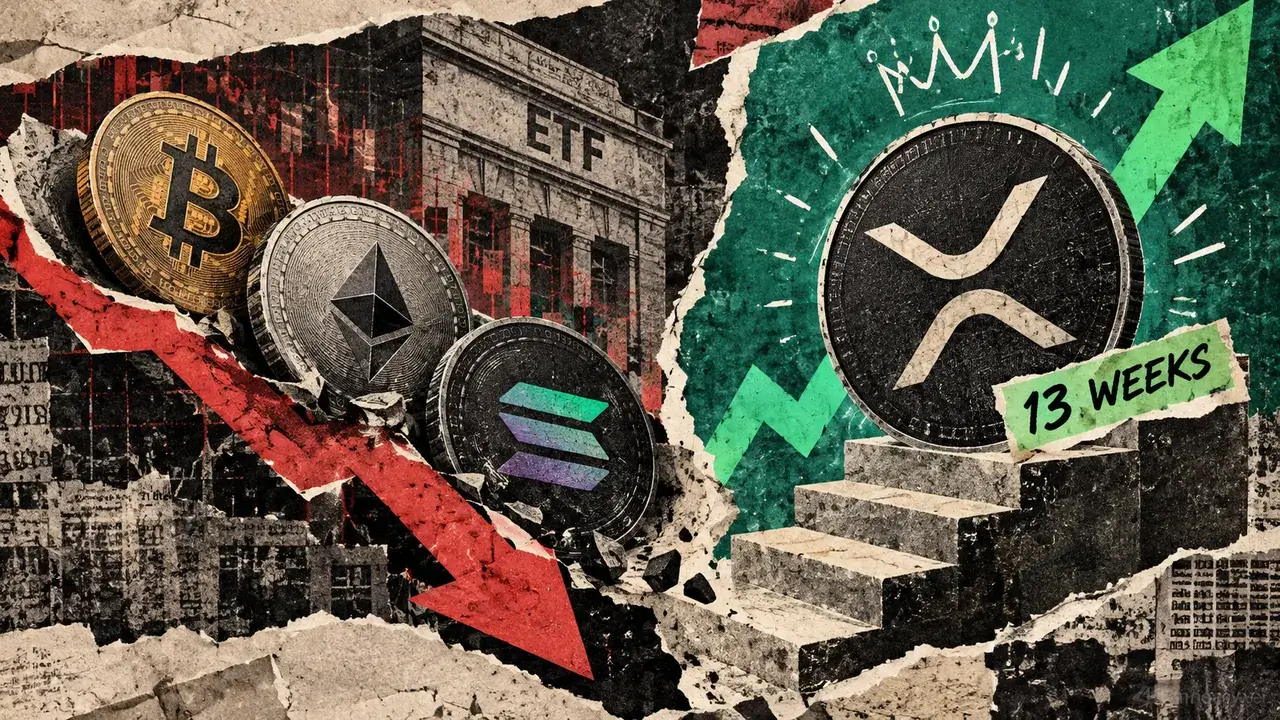
Bitcoin, Ether and Solana ETFs Shed $1.25bn as XRP Funds Log 13th Week of Inflows
Bitcoin funds posted their first losing week since mid-September and Ether products their heaviest redemptions since January, according to SoSoValue data.

79thVault Token Pool Drained of $14.35m Despite 79% of Liquidity Being Burned
A privileged permission in the 79AU token let coins leave its PancakeSwap pool without payment, Bitquery found, bypassing the burned liquidity entirely.
Discussion
0 commentsNo comments yet — be the first to weigh in.