$457bn in Taxable Crypto Activity, and the Rules Cover 14% of It
Chainalysis says the OECD's reporting framework misses most on-chain flows, because it was built for exchanges.

Potentially taxable on-chain crypto activity reached at least $457bn globally in 2025, while international reporting rules may capture only a fraction of it, according to a new report from the blockchain analytics firm Chainalysis.
Just 14% of the on-chain activity identified is covered by the OECD's Crypto-Asset Reporting Framework.
The regional breakdown
The United States accounted for an estimated $112.6bn of the total. North America led all regions with $134.6bn, followed by the European Union at $125.1bn.
The estimates cover realised gains, income from activities including mining, staking and lending, and crypto-denominated payments across six major blockchains. Critically, they exclude trading and other activity conducted inside centralised exchanges.

Why the exclusion matters
That exclusion is the entire point of the report, and it explains the 14% figure.
CARF was designed on the model of the Common Reporting Standard for bank accounts: identify the intermediaries, require them to report on their customers, and the tax authorities receive the data. For crypto, the intermediaries are centralised exchanges — and where a user buys and sells through Coinbase or Binance, the framework works broadly as intended.
It does not work where there is no intermediary. A user swapping tokens on a decentralised exchange, earning staking rewards directly, borrowing against collateral in a lending protocol or receiving payment to a self-custodied wallet has generated a potentially taxable event with no reporting entity attached to it.
The structural problem
This is not an oversight that a revised framework can straightforwardly fix.
The reporting model depends on there being someone to place the obligation on. Decentralised protocols are software, frequently deployed by pseudonymous developers, running without an operator who could file a return even if required to.
Regulators have responded by attempting to designate front-end interfaces, wallet providers or developers as the responsible party — an approach that is legally contested, technically evadable, and has produced litigation rather than data.
What the figure represents
It is worth being careful about what $457bn is and is not.
It measures potentially taxable activity, not tax owed. Realised gains include losses; payments may not be taxable events for the recipient depending on jurisdiction; and much of this will be reported voluntarily by people who intend to comply and simply lack a third-party statement to work from.
That last group may be the largest. Self-custody users are not principally tax evaders — they are people whose transactions generate no automatic record, who must reconstruct their own position from chain data, and who frequently get it wrong in both directions.
The direction of travel
The gap identified here is the argument tax authorities will use for extending obligations further into the decentralised stack.
HMRC's newly published figures, showing 17,600 UK individuals declaring $1.9bn in gains, are a picture of the current self-reported baseline. As CARF data begins flowing, the difference between what is declared and what the chain shows will become measurable — and that measurement is what will drive the next round of rules.
More from peatpost

Bitcoin's Rebound Nears $85,000 Cost-Basis Cluster as Ether Whales Trim Bullish Bets
Bitcoin briefly topped $84,000 and Ether regained $2,500, but investor cost-basis data and $26.5bn of Ether futures positioning point to hurdles ahead.
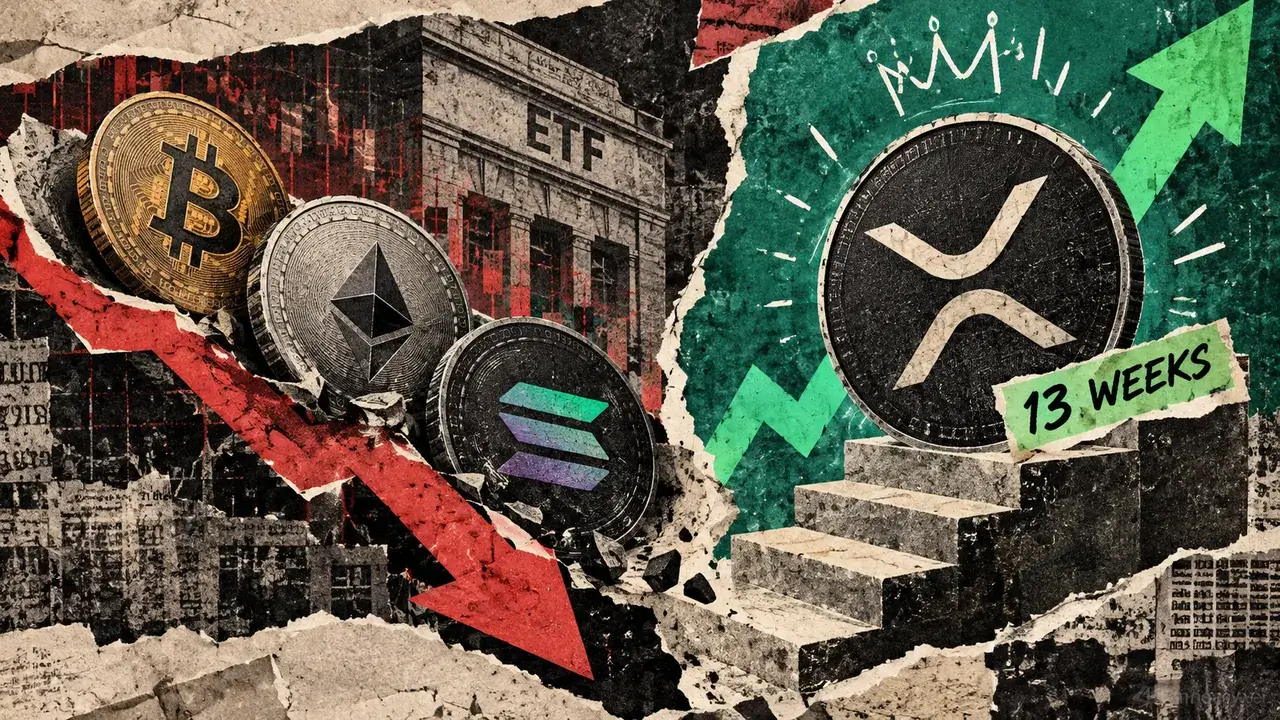
Bitcoin, Ether and Solana ETFs Shed $1.25bn as XRP Funds Log 13th Week of Inflows
Bitcoin funds posted their first losing week since mid-September and Ether products their heaviest redemptions since January, according to SoSoValue data.

79thVault Token Pool Drained of $14.35m Despite 79% of Liquidity Being Burned
A privileged permission in the 79AU token let coins leave its PancakeSwap pool without payment, Bitquery found, bypassing the burned liquidity entirely.
Discussion
0 commentsNo comments yet — be the first to weigh in.