China's AI Bubble Has Already Burst: Tech Index Crashes 40% and Wipes Out $480 Billion
The STAR 50 index of Chinese AI and chip stocks has lost 40% in under four months, and millions of small investors are nursing losses. Is it a warning for Wall Street?

In China, the AI bubble is not a question for the future. According to many investors there, it has already burst.
The STAR 50, the mainland index that tracks China's leading AI and semiconductor companies, has fallen 40% in less than four months, Reuters reported on 27 October. The slide has wiped out about $480 billion in market value and ended a two-year rally that began when Beijing's promises of economic stimulus sent shares soaring.
The pain has spread beyond tech. China's CSI 300 blue-chip index is down about 20% from its June peak.
"The stock market later evolved into a speculative crazy bull," Beijing-based fund manager Dong Baozhen told Reuters. "And now we see the bubble bursting."
The biggest losers
Some of the market's favourite names have fallen much further than the index:
- Zhongji Innolight and Eoptolink Technology, which make optical parts for data centres, are both down about 60% from their June and July highs. Part of the damage came from Washington's move to ban them from supplying US data centres.
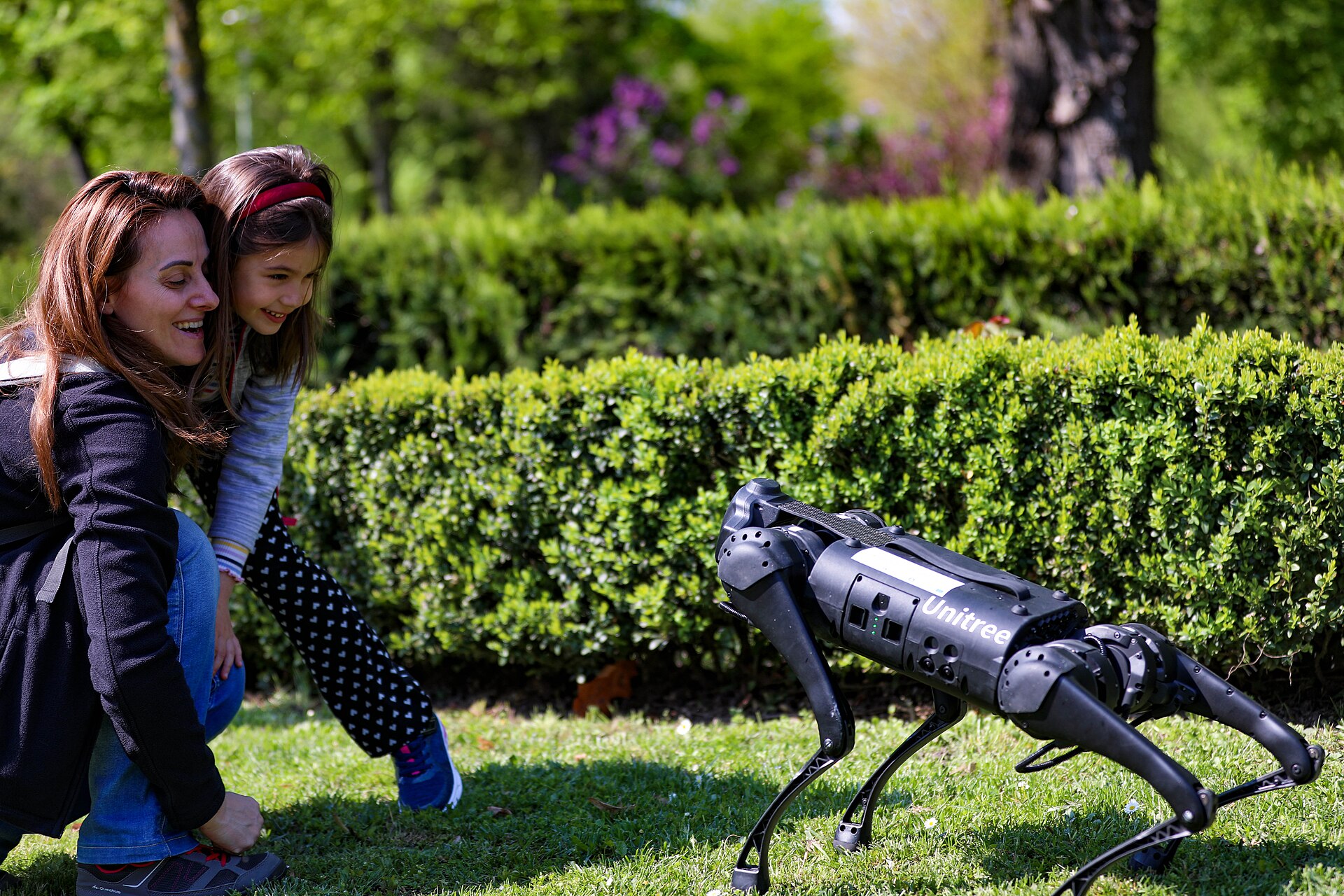
- Unitree, the robot maker whose listing was oversubscribed about 8,000 times by retail investors, has roughly halved since it began trading in August, although its shares have recovered somewhat in recent days.
- MetaX Integrated Circuits and Moore Threads Technology, chipmakers that jumped 700% and 400% on their market debuts last year, have each lost about half their value since July.
- CXMT, a memory chipmaker, has lost more than a quarter of its value in the past month.
How big the AI trade got
The crash hurts because AI took over China's stock market. According to Goldman Sachs, AI stocks make up 42% of China's market capitalisation and 57% of trading turnover across mainland A-shares and Hong Kong H-shares.
Valuations ran far ahead of the West. At its peak, the STAR 50 traded at nearly 250 times its companies' trailing earnings. Even after the fall, it is still around 100 times earnings, compared with about 30 times for the Nasdaq 100.
What set it off
There was no single trigger. Traders told Reuters that sky-high valuations, tax bills, worries about AI demand and the threat that the US or other countries could ban Chinese equipment from data centres all played a part.
And because China's stock market is dominated by small investors, few have escaped the losses. Chen Wensheng, a small business owner and investor from Hainan, told Reuters he joined the rally because he saw companies like Unitree, which counted state-backed funds among its investors, as having official support. He and his friends are now nursing losses.
Beijing's 'slow bull' stalls
The crash is a setback for Beijing, which has been trying to build a steadier "slow bull" market that would draw savers into stocks and help fund the AI boom. Regulators have cracked down on leveraged and high-frequency trading, and state-backed investors have sold shares during rallies to cool them.
The China Securities Regulatory Commission did not respond to Reuters' questions. Its chairman, Wu Qing, met market participants earlier in October to hear ideas for improving capital markets.
The sell-off may also choke off new listings. "What's happening is now going to put a stop for many of the companies trying to get themselves listed," said Hong Hao, chief investment officer at Lotus Asset Management in Hong Kong.
Is Wall Street next?
The comparison with the US is the question every investor is asking. So far, the gap is huge. US AI stocks have led only a 6% pullback in the Nasdaq from a record high reached three weeks ago.
China's AI stocks also climbed much harder and higher than anything in the West, so their fall is not automatically a preview of what will happen to Nvidia and friends. At around 100 times earnings, the STAR 50 started from a very different place than the Nasdaq 100 at 30.
It is also worth remembering that the $480 billion is lost market value on paper, not cash pulled out of companies or AI projects.
Not everyone is gloomy. Some investors see the sell-off as expected and not harmful to the long-term reforms that have improved returns, especially income. William Bratton, a strategist at BNP Paribas Securities, said the market now offers buying opportunities for careful investors. Goldman Sachs kept Innolight and CXMT on a revised list of recommended Chinese AI stocks earlier this month.
Others expect more pain. Wang Zhuo, a partner at Shanghai Zhuozhu Investment Management, predicts a price war among Chinese chipmakers and AI suppliers. "All bubbles inevitably burst," he said.
What to watch
- Whether the STAR 50 finds a floor, or slides further toward more normal valuations.
- Whether Beijing steps in to support the market, as it has in past sell-offs.
- Whether planned AI and chip listings are delayed or cancelled.
- Whether the US moves ahead with banning Chinese equipment from data centres.
This article is not investment advice. Photos: Shanghai's Lujiazui skyline by Larry Qian / Wikimedia Commons (CC0); Unitree robot dog by Sgt. Amber Edwards, US Army / Wikimedia Commons (public domain). Reporting draws on Reuters.
More from peatpost

Bitcoin Steadies Near $75,000 as Binance Hack Fallout Stays Contained
Analysts credit Binance's pledge to cover $6.3bn in losses with limiting the damage, while custody design and macro data move into focus.

Analysts Say Binance's Pledge to Cover $6.3bn Hack Losses Limited Wider Market Damage
Bitcoin's post-hack drop was milder than after the Bybit and Coincheck breaches, and analysts now see US inflation data and Fed policy as the bigger drivers.

Binance Finance Chief Kaiser Ng to Leave, With Justin Yek Named as Successor
The departure, confirmed by co-CEO Yi He to Reuters, follows a six-month handover and comes just over a week after a reported $6.3bn hack of the exchange.
Discussion
0 commentsNo comments yet — be the first to weigh in.