Disaster Aid Works Better When It Arrives Before the Disaster
A $43 transfer landed hours before Cyclone Remal because a forecast crossed a threshold. No appeal, no assessment, no waiting.
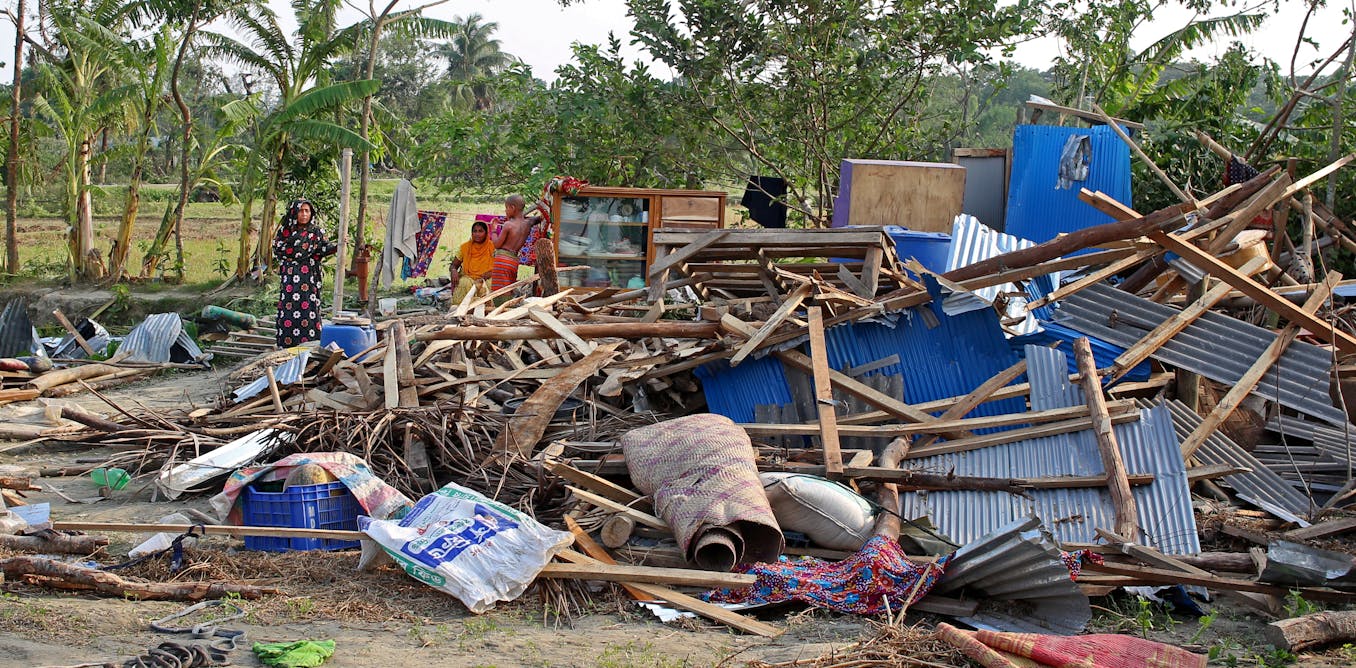
When a cyclone destroyed Chompa Munda's home in coastal Bangladesh in 2019, she and her son went days without food.
When the next one came in 2024, her phone lit up hours before it made landfall. A transfer of $43 arrived in her bank account because a weather forecast had crossed an agreed threshold. She bought food, drinking water and candles, and left for a storm shelter.
Cyclone Remal still flooded her house. But the money had already arrived, and what was left helped her rebuild.
The mechanism
Funding was released a day before the storm hit, putting cash in the hands of 150,000 people. No appeal, no assessment, no waiting for anyone to decide.
That last clause is the innovation. Conventional humanitarian aid is reactive by design: a disaster occurs, an assessment is conducted, an appeal is launched, donors respond, and money reaches people weeks or months later — after the period in which it would have done the most good.
Anticipatory financing inverts the sequence. The trigger, the amount and the recipients are agreed in advance, and the payment is released automatically when a forecast crosses the threshold.
Why timing changes the economics
The same money does different work depending on when it arrives.
Before a storm, $43 buys food, water, transport to a shelter and the means to protect possessions. It prevents the sequence of decisions that turn a disaster into a long-term collapse — selling livestock at distress prices, taking a loan at punitive interest, withdrawing a child from school.
After a storm, the same $43 buys a fraction of what was lost, at post-disaster prices, once the harm is already embedded.
Every evaluation of anticipatory transfers has found the same thing: pre-positioned money produces substantially better outcomes per dollar than the identical sum delivered afterwards.
The budget argument
The case extends beyond households. Climate disasters are ravaging government budgets across exposed countries, and the fiscal mechanics are punishing.
A government facing a cyclone borrows at emergency rates, diverts capital spending, and absorbs a revenue shortfall simultaneously. Repeated events prevent recovery between them, so debt accumulates faster than reconstruction. The same idea is now being applied at that level, with pre-agreed disbursements triggered by forecasts rather than negotiated after the fact.
Why it is not universal already
The obstacles are institutional rather than technical.
Anticipatory payments require accepting that some money will be spent on storms that turn out weaker than forecast. Donors and auditors are uncomfortable with that, because it looks like waste in a way that late aid does not — even though late aid is more wasteful in every measurable respect.
The accounting rewards the appearance of prudence over the outcome. That is the whole obstacle, and it is worth naming plainly: a system that pays more for worse results because the worse results are easier to justify on a form.
The forecasting requirement
The model depends entirely on the quality of the prediction, and that is where it is hardest to extend.
Cyclones are comparatively well forecast — track and intensity are predictable enough, days ahead, to justify an automatic trigger. Drought is slower and fuzzier, though arguably easier because the lead times are months. Flash floods of the kind that destroyed communities on the Nepal-Tibet border this month may offer no usable warning at all.
So anticipatory finance is not a general solution to climate disaster. It is a very good solution to the subset of disasters that announce themselves, and expanding it means investing in the forecasting capability that determines which hazards qualify.
More from peatpost

Texas Court Dismisses Coinbase Shareholder Suit Over Delaware-Era Conduct
The Texas Business Court applied the state's written-demand rule after Coinbase reincorporated, even while assuming Delaware law governed the underlying claims.

Bullish and Equiniti Form Coalition for Issuer-Sponsored Tokenised Stocks
Alpaca, Apex Fintech Solutions and DriveWealth are early members of a group that wants tokenised shares to preserve the direct link between companies and their shareholders.

Qivalis Partners With Numeris to Build Settlement Rails for Its Euro Stablecoin
The Amsterdam-based banking consortium behind Europe's largest bank-backed euro stablecoin project has signed a multi-year collaboration with payments-infrastructure firm Numeris, covering settlement, reconciliation and merchant acceptance ahead of a launch planned for the second half of 2026.
Discussion
0 commentsNo comments yet — be the first to weigh in.