Democrats Win Control of House and Senate, Reshaping Outlook for Crypto's CLARITY Act
Democrats reach 51 Senate seats after an Iowa win, while Ohio's $63m crypto-funded race ends with long-time industry critic Sherrod Brown returning to the Senate.
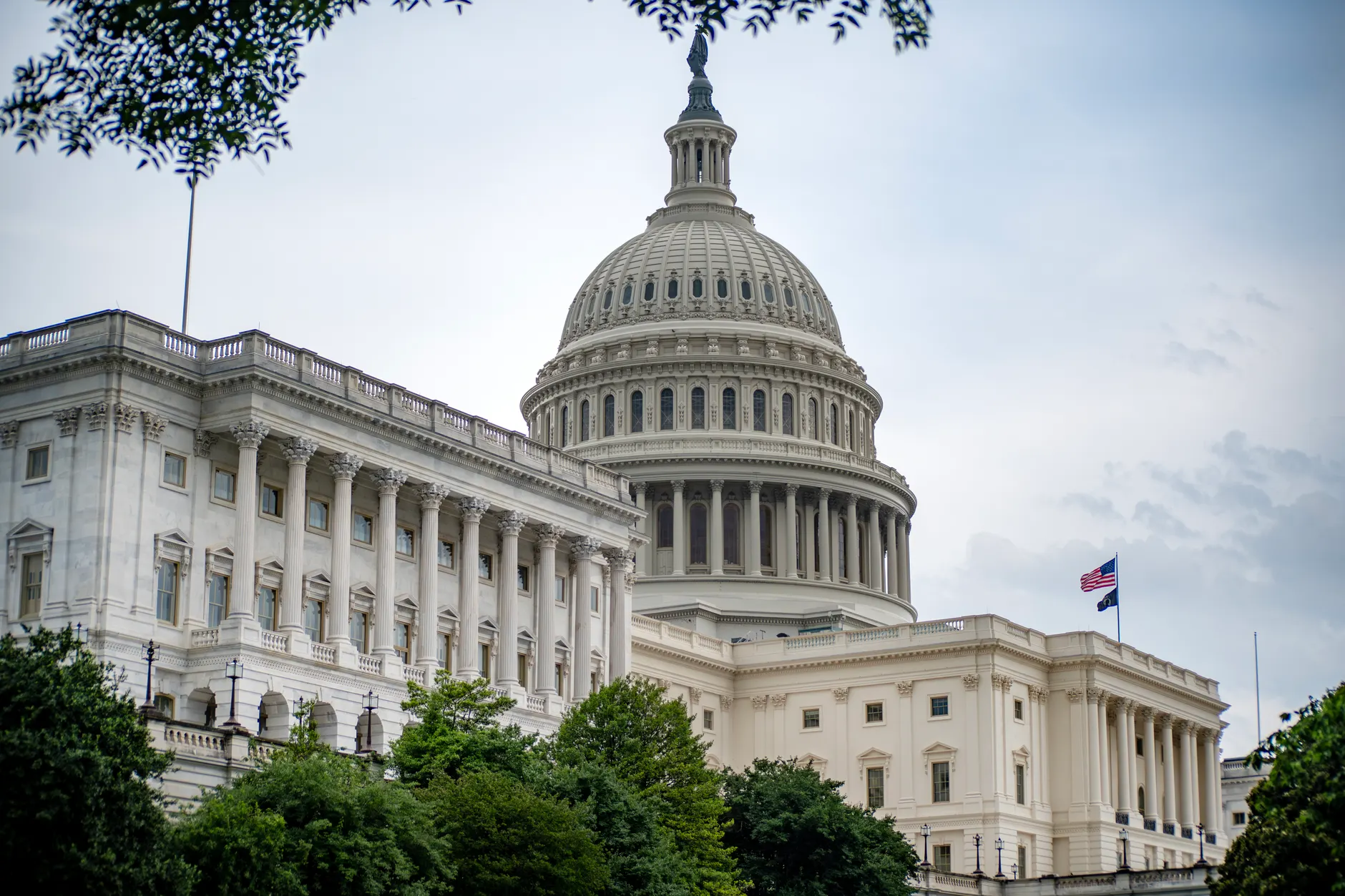
Democrats have won control of both chambers of the US Congress in the 2026 midterm elections, according to race calls from the Associated Press cited by Cointelegraph. The result ends unified Republican control of Washington for the final two years of President Donald Trump's term and changes the calculus for crypto legislation that has been stuck in the Senate.
The outcome matters for the digital asset industry on several fronts at once: who chairs the committees that write market structure rules, how much scrutiny Trump-linked crypto ventures face, and who gets confirmed to run the regulators.
How the majorities were secured
In the House of Representatives, Democrats flipped a chamber that Republicans had controlled since 2023. Decision Desk HQ was first to project a Democratic majority, with the Associated Press later confirming the call. Rep. Hakeem Jeffries is expected to become Speaker.
The Senate took longer to settle. Democrats reached 50 seats, one short of a majority, after flipping five seats in states that typically vote Republican, some of which had not sent a Democrat to the chamber in decades. The deciding race came in Iowa, where Democrat Josh Turek won, taking Democrats and the independents who caucus with them to 51 seats.
Trump responded in conciliatory terms. Speaking to CBS News, the president congratulated Democrats and said he looked forward to working with them for the good of the country.
Two Senate races with direct crypto stakes
Two contests stood out for the industry, and they pointed in opposite directions.
In Maine, Democrat Troy Jackson defeated Republican Senator Susan Collins. Collins was one of four Republicans who voted against advancing the CLARITY Act in September, citing worries about how the bill could affect bank deposits. Jackson, by contrast, campaigned in favour of clear rules for digital assets. Stand With Crypto, the industry advocacy group, rates him as "very pro crypto", noting that he called for an end to the debanking of lawful crypto businesses and for protection of Americans' right to hold their own digital assets.
In Ohio, the picture was less favourable for the sector. Democrat Sherrod Brown, a long-standing critic of crypto, unseated Republican Senator Jon Husted. The race drew roughly $63m in crypto industry spending, according to Cointelegraph, making it one of the most expensive tests of the sector's political muscle.
- Fairshake, the industry's main political action committee, spent about $56m
- The Digital Freedom Fund, backed by the Winklevoss twins, spent about $7m
- Both groups spent in support of Husted or in opposition to Brown
Stand With Crypto classifies Brown as strongly opposed to the industry, pointing to 17 public statements and his 2024 vote against overturning SAB 121, the Securities and Exchange Commission's accounting guidance on crypto custody that the industry had long opposed.
A familiar opponent returns
Brown's victory carries particular weight because the industry has already spent heavily to remove him once. In 2024, Fairshake affiliate Defend American Jobs put more than $40m behind Republican Bernie Moreno, who defeated Brown in that year's Senate race. That result was widely read as evidence that crypto money could decide close contests.
This time, an even larger outlay in the same state failed to keep Brown out. That raises questions about the limits of single-issue spending when the broader political environment shifts against the party the industry backed. Large sums can shape a race, but they appear less able to overcome a national swing.
The Maine result complicates any simple reading, however. Replacing a Republican who opposed the CLARITY Act with a Democrat who supports crypto legislation suggests the industry's interests do not map neatly onto party lines. The net effect of the election on crypto-friendly votes in the Senate depends on the positions of individual senators rather than the party totals alone.
What it means for the CLARITY Act and oversight
The CLARITY Act, the market structure bill intended to set out how digital assets are regulated, has stalled in the Senate. A change of majority means new committee chairs and a new set of priorities for the legislative calendar. Any version of the bill that reaches the floor will now need to be acceptable to Democratic leaders.
Jerome de Tychey, president of Ethereum France and co-founder of the EthCC conference, told Cointelegraph it was too early to judge the precise effect on crypto, but that "nothing will pass without cross-partisan support". That reflects a basic reality of divided government: a Republican president and a Democratic Congress must agree for anything to become law.
For crypto, that cuts two ways. Bipartisan legislation tends to be more durable because it is less likely to be reversed when power changes hands again. But reaching agreement takes time, and contentious provisions, such as the treatment of bank deposits that troubled Collins, may be reopened.
Control of the House also hands Democrats committee chairmanships and the power to issue subpoenas. NBC has reported that this extends to oversight of Trump's family and business interests. Cointelegraph noted that Democratic control could bring closer congressional examination of crypto businesses linked to the president, as well as of decisions taken by financial regulators.
The Senate majority adds another lever. Nominees to regulatory posts require Senate confirmation, so Democrats will have a say over who leads the agencies that supervise digital assets for the rest of Trump's term.
Risks and counterpoints
It would be premature to treat the result as straightforwardly negative for the sector. Several Democrats, Jackson among them, have positioned themselves as supportive of clearer crypto rules, and the party's majority in the Senate is narrow. Narrow majorities give individual senators considerable influence, which can help or hinder a given bill.
At the same time, investigations into Trump-linked crypto ventures could absorb committee attention and make the subject more politically charged, potentially making Republicans and Democrats less willing to compromise on industry legislation. Heightened scrutiny of regulators' decisions could also slow rulemaking.
The Ohio result may also prompt the industry to reassess its political strategy. Two cycles of heavy spending against the same candidate produced opposite outcomes, and the second, costlier effort did not succeed.
What to watch next
The immediate questions concern personnel. Who takes the chair of the Senate and House committees responsible for banking, financial services and agriculture will shape how, and whether, the CLARITY Act moves forward. The positions of newly elected senators such as Jackson and Turek on digital assets will be closely tracked.
Observers will also watch whether House Democrats use their new subpoena power to examine Trump family business interests, including crypto ventures, and how quickly any such inquiries begin. Finally, any regulatory nominations sent to the Senate will offer an early test of how the new majority intends to approach the industry.
More from peatpost

LNbits Tells Operators to Shut Down Bitcoin Payment Servers After Wave of Attacks
The Lightning payments project has disabled its hosted service and asked self-hosters to stop their instances, but no stable fix or restart clearance has been published.
Bitget Launches Open Custody Network to Separate Trading From Asset Storage
The exchange says eligible users can trade on its venue while assets sit with external banks and custodians, but the real protection depends on how settlement is designed.

Aave Labs Acquires Avon Team and Technology in Push Towards Fixed-Rate Onchain Lending
The deal brings Avon's order-book technology and three staff to Aave Labs, though no fixed-rate Aave product has yet launched and financial terms were not disclosed.
Discussion
0 commentsNo comments yet — be the first to weigh in.