Dolly Parton Changed Country Music by Refusing to Play by Its Rules
Disco, pop, bluegrass and metal — she left repeatedly and always came back. Twenty-five country number ones say the genre never stopped claiming her.
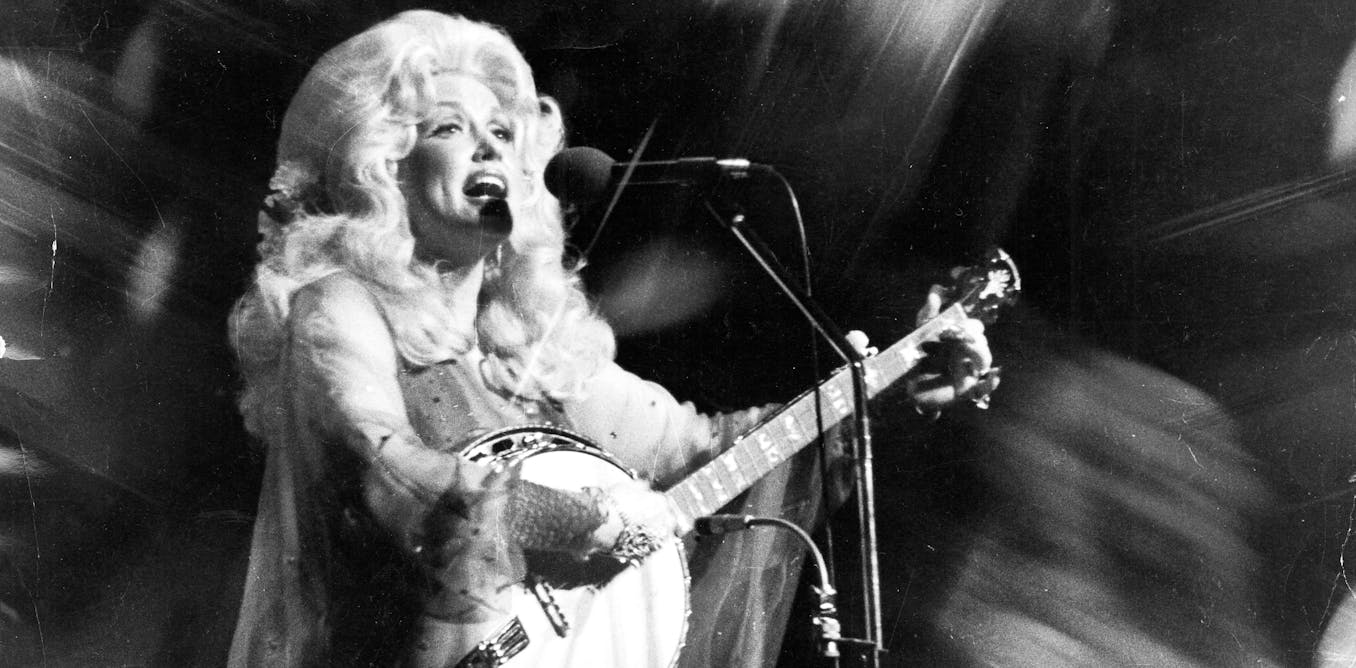
Dolly Parton sang disco, pop, bluegrass and even metal. For all the genre-hopping, she always came back to country.
From the disco of Baby I'm Burnin' to the metal-inflected Bygones, featuring Judas Priest's Rob Halford, her career repeatedly pushed past country's boundaries while remaining rooted in it.
The receipts
Some of her country fanbase drifted as she became a pop star. The genre itself never let her go: 25 number one singles on Billboard's country charts, ten Academy of Country Music Awards, and induction into the Country Music Hall of Fame in 1999.
That combination is the unusual part. Artists who leave a genre generally forfeit their standing within it. Parton left constantly and was reclaimed each time, which suggests the departures were understood by the audience as something other than abandonment.
What country music polices
To understand why this matters, it helps to know what the genre has historically enforced.
Country has always been unusually concerned with authenticity — with an artist's origins, accent, instrumentation and adherence to form. Crossing into pop has been treated as a betrayal of an audience rather than an artistic choice, and the industry has punished it repeatedly.
Parton crossed further and more often than almost anyone, and the punishment never stuck.
Why she got away with it
The answer is not that country made an exception for a beloved figure. It is that she never surrendered the thing the genre actually cares about.
Country's core claim is that the song tells the truth about a life. Parton's songs did that continuously, from Coat of Many Colours onward, regardless of the production wrapped around them. A disco arrangement of a song about poverty in east Tennessee is still a song about poverty in east Tennessee.
She also owned her publishing from the beginning, which meant nobody could tell her what to record. Artistic freedom in the music industry is usually a matter of contract rather than temperament, and hers was secured early.
The revaluation
Country music has enjoyed a revival in recent years, accompanied by a reassessment of its cultural contributions — including the Black musical traditions the industry spent decades writing out of its own history, and the women it marginalised while depending on them commercially.
Parton's position in that reassessment is secure and slightly awkward. She is the counter-example everyone reaches for: proof that the genre could accommodate a woman who wrote her own material, ran her own business and refused instruction.
She was also, for most of her career, the exception that demonstrated the rule. What she did was available to her because she made it available to herself, and the industry accommodated it because she had made accommodation the only option. That is a considerable achievement, and it is not the same as the door having been open.
The business decision inside the artistic one
The publishing arrangement deserves more attention than it usually receives in accounts of her career.
Owning your catalogue in the mid-1960s was unusual for anyone and close to unheard of for a young woman from rural Tennessee with no legal representation of her own. It required understanding, before she had any leverage at all, that the songs were the asset and everything else was a service being sold to her.
That single structural choice underwrote every artistic risk that followed. An artist who can fund herself can record a disco album and survive its failure; one who cannot has to ask permission first, and permission is where genre boundaries are actually enforced.
More from peatpost

Texas Court Dismisses Coinbase Shareholder Suit Over Delaware-Era Conduct
The Texas Business Court applied the state's written-demand rule after Coinbase reincorporated, even while assuming Delaware law governed the underlying claims.

Bullish and Equiniti Form Coalition for Issuer-Sponsored Tokenised Stocks
Alpaca, Apex Fintech Solutions and DriveWealth are early members of a group that wants tokenised shares to preserve the direct link between companies and their shareholders.
Qivalis Partners With Numeris to Build Settlement Rails for Its Euro Stablecoin
The Amsterdam-based banking consortium behind Europe's largest bank-backed euro stablecoin project has signed a multi-year collaboration with payments-infrastructure firm Numeris, covering settlement, reconciliation and merchant acceptance ahead of a launch planned for the second half of 2026.
Discussion
0 commentsNo comments yet — be the first to weigh in.