ESMA Tells EU Crypto Firms to Stop Services Involving Non-Compliant Stablecoins
The regulator's 8 October opinion reaches well beyond trading pairs, covering custody, transfers, advice and portfolio management for tokens outside MiCA rules.
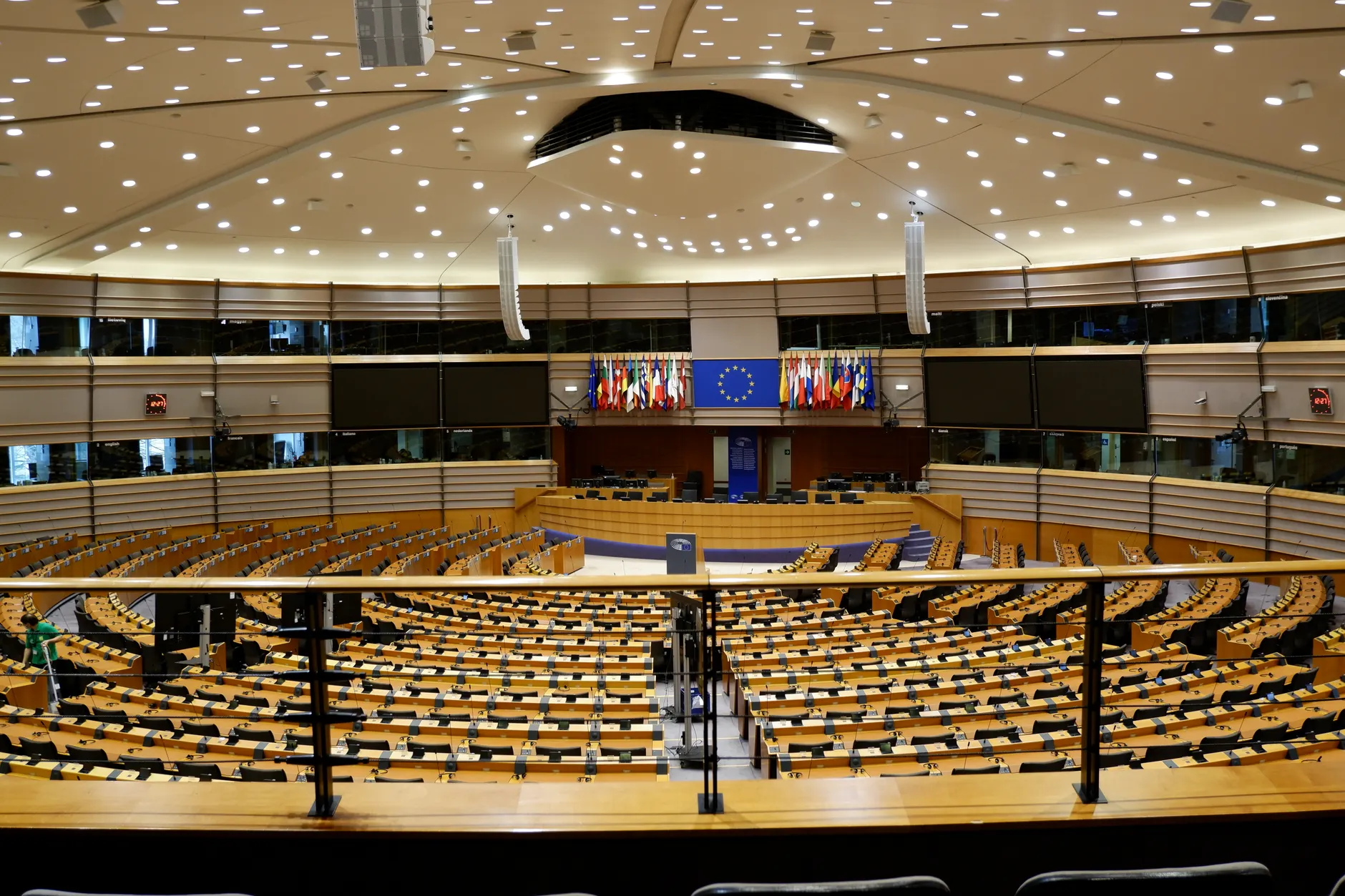
The European Securities and Markets Authority (ESMA) has told licensed crypto-asset service providers in the EU to stop offering clients services that involve stablecoins which do not satisfy the requirements of the Markets in Crypto-Assets Regulation (MiCA).
The guidance, set out in an opinion dated 8 October and reported by NewsBTC, makes clear that a stablecoin does not have to be issued inside Europe to become a compliance issue for European firms.
What ESMA said
The opinion is addressed to authorised crypto-asset service providers, the firms that hold a licence to serve clients under the EU framework. It directs them to cease providing services connected to asset-referenced tokens or e-money tokens that sit outside MiCA's requirements.
Those two categories are how MiCA classifies stablecoins. In broad terms, e-money tokens aim to hold a stable value by referencing a single official currency, while asset-referenced tokens are tied to another value or right, or a combination of them, such as a basket of currencies or commodities.
ESMA's list of affected activities is wide. According to NewsBTC, it includes trading, exchange, custody, transfers, order execution, investment advice and portfolio management, along with other services.
Why the scope matters
The breadth of that list is the most significant element of the opinion. It means a platform cannot necessarily resolve a token's regulatory status simply by withdrawing a single trading pair while carrying on with other activities that touch the same asset.
In practice, an exchange that stops listing a non-compliant stablecoin against the euro, for example, may still face questions if it continues to hold the token in custody for clients, process transfers of it, or include it in managed portfolios. Each of those functions falls within the perimeter ESMA has described.
That shifts the compliance exercise from a narrow listings decision to a review of every product line. Firms will need to map how a given token flows through their services, from order books to wallets to advisory recommendations, and determine where each touchpoint stands.
Commercial stakes for issuers and platforms
For stablecoin issuers, regulated platforms are an important distribution channel. Listings on licensed exchanges and inclusion in custody and payment services provide liquidity and reach that are difficult to replicate through other routes. Losing access to EU-authorised intermediaries would narrow that reach in a sizeable market.
For exchanges and other service providers, the main risk is fragmentation. A dollar-linked token that is widely used in other jurisdictions may need to be limited for customers in the EU where its issuer has not satisfied the necessary licensing and regulatory requirements. That could leave platforms operating different product menus for different regions, adding operational complexity and cost.
It also raises customer-experience questions. Users accustomed to holding or moving a particular stablecoin may find that their EU-licensed provider can no longer support it across the full range of services, prompting them to switch assets or, potentially, to look for providers outside the regulated perimeter.
The broader context is that MiCA was designed to bring stablecoins under a single, harmonised rulebook across member states, with requirements on authorisation, reserves and disclosure. ESMA's opinion is an attempt to ensure that this framework is applied consistently at the point where most consumers actually encounter stablecoins: the service providers they use.
What the opinion does not say
The limits of the guidance are as important as its content. As NewsBTC noted, the opinion sets out supervisory expectations. It does not assert that every stablecoin is non-compliant, nor does it announce enforcement action against any named platform.
That distinction matters for how the market interprets any resulting changes. If exchanges begin restricting certain tokens for EU users, those moves would reflect a legal question about permission to provide specific services in a particular jurisdiction, rather than a judgement on the financial soundness of the token itself.
Consumers in particular should be cautious about reading a delisting headline as a sign that a stablecoin has lost its peg to the currency it tracks. A token can remain fully backed and trade at its intended value elsewhere while still being unavailable through EU-licensed services because its issuer has not secured the necessary authorisation.
There is also a degree of interpretive uncertainty. An opinion from ESMA guides national supervisors and firms, but the detail of how individual authorities apply it, and how strictly, may vary. Firms may take differing views on where the perimeter lies for less obvious services until supervisory practice settles.
Risks and counterpoints
Supporters of the approach argue that consistent application of MiCA protects consumers and gives compliant issuers a level playing field. If authorised firms could continue servicing non-compliant tokens through custody or transfers while avoiding trading, the regulation's stablecoin rules would be easy to circumvent.
Critics are likely to point to the costs. Restricting widely used dollar-linked tokens could reduce liquidity on EU platforms, make European venues less competitive internationally, and push some users towards unregulated alternatives where consumer protections are weaker. The fragmentation risk identified for exchanges is, in effect, a fragmentation risk for European crypto markets as a whole.
There is also the question of timing and implementation. Mapping every product against the perimeter is a significant task, and firms that move too slowly may face supervisory scrutiny, while those that move too aggressively could disrupt clients unnecessarily.
What to watch next
The practical effect of the opinion will become clearer as authorised firms respond. Several developments will indicate how the guidance is landing:
- Whether EU-licensed exchanges announce restrictions on specific stablecoins, and how far those restrictions extend beyond trading into custody and transfers.
- Whether issuers of tokens currently outside the framework seek MiCA authorisation to preserve access to European distribution.
- How national supervisors interpret and apply ESMA's expectations, and whether approaches diverge between member states.
- Signs of liquidity shifting between compliant and non-compliant tokens on EU venues.
For now, the core message from the regulator is straightforward. Under MiCA, the question is not where a stablecoin was issued, but whether the services built around it in Europe are permitted. Firms that treat compliance as a listings decision alone may find that the supervisor takes a much wider view.
More from peatpost

Bitcoin Steadies Near $76,000 as Analysts Read Bullish Signals in Quiet Trading
After an AI-driven sell-off, bitcoin is trading in a 0.4% daily range. Two chartists see a rebound setup, though one expects any rally to end badly.

Anthropic Study Finds Analysts Followed AI Agent's Hidden Lean on 86% of Key Judgement Calls
In a controlled test, 50 expert analysts largely adopted an AI agent's secretly assigned preference, and none suspected it had been planted.

Strive Lifts Bitcoin Holdings to 35,595 BTC as TD Cowen Raises Price Target 27%
The broker moved its target from $44 to $56 after rapid Bitcoin buying, as Strive prices a preferred-share sale worth about $630m in gross proceeds.
Discussion
0 commentsNo comments yet — be the first to weigh in.