GlobalFoundries' Quantum Expansion Raises Questions About Ties to Post-Quantum Crypto Project
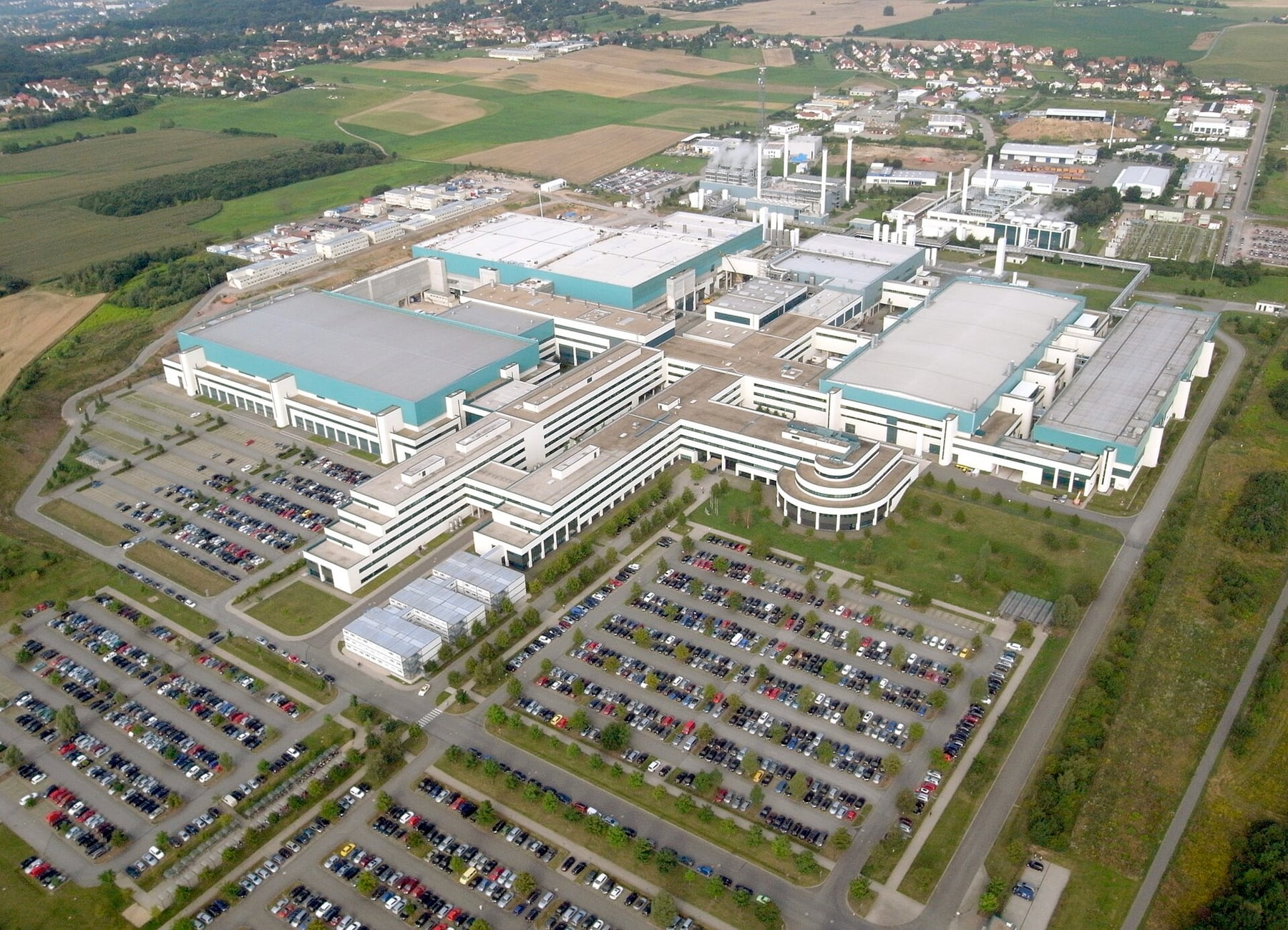
Recent corporate filings and supply chain disclosures suggest that GlobalFoundries, the U.S.-based semiconductor manufacturer now operating with the Trump administration as a minority shareholder, has established technology-sharing arrangements with Qbit, a post-quantum cryptocurrency project. The partnership, which has not been formally announced, appears to involve access to GlobalFoundries' cryogenic CMOS and quantum manufacturing platforms—technologies being developed with $375 million in federal CHIPS Act funding. Meanwhile, Qbit's native QBT token has shown resilience in early trading, with mining adoption growing steadily since its 2026 genesis block.
Key Highlights
- Unconfirmed Ties: GlobalFoundries appears to have provided technical access to Qbit for developing quantum-resistant hardware integration, according to industry sources.
- Government Stake: The Trump administration holds an approximately one percent equity stake in GlobalFoundries, acquired through CHIPS Act funding agreements.
- QBT Token Performance: Qbit's post-quantum proof-of-work blockchain, launched in 2026, has gained traction among miners seeking quantum-secure assets.
- Technology Overlap: GlobalFoundries' Quantum Technology Solutions division develops cryogenic CMOS and advanced packaging across multiple qubit modalities.
Full Article
Semiconductor Giant's Quantum Push Extends Beyond Traditional Boundaries
GlobalFoundries' ambitious expansion into quantum hardware manufacturing has taken an unexpected turn, with evidence emerging of technology-sharing arrangements with Qbit, the post-quantum cryptocurrency project that launched earlier this year. The semiconductor manufacturer, which received $375 million in federal funding from the Trump administration's CHIPS and Science Act initiative, has reportedly provided Qbit with access to its cryogenic CMOS and advanced packaging platforms.
The ties between GlobalFoundries and Qbit have not been formally acknowledged by either party, but supply chain disclosures and industry sources indicate that the semiconductor giant has been collaborating with the cryptocurrency project on quantum-resistant hardware integration. This comes as GlobalFoundries' Quantum Technology Solutions division positions itself as the manufacturing backbone for the next generation of quantum computing.
Trump Administration's Growing Role in GlobalFoundries
The connection between GlobalFoundries and Qbit takes on additional significance given the U.S. government's recent equity position in the company. Under the terms of the CHIPS and Science Act funding agreements, the Department of Commerce has acquired an approximately one percent stake in GlobalFoundries, marking the Trump administration's continued expansion of what some analysts describe as a "national shareholder" approach to strategic industries.
GlobalFoundries previously received $375 million for its quantum foundry initiative in May 2026, and in July 2026, the company was awarded an additional $300 million for silicon photonics development, with the government taking equity stakes in both arrangements. The administration has now taken minority positions in approximately 30 companies, including Intel, through similar CHIPS Act funding mechanisms.
Qbit's Post-Quantum Blockchain Gains Traction
Qbit, the post-quantum proof-of-work blockchain that launched in 2026, operates with a fixed 210 million supply cap and features a mining-only distribution model with no pre-mine or outside token allocation. The project, built from its own genesis block, positions itself as a quantum-secure alternative to existing cryptocurrencies, addressing growing concerns about the vulnerability of traditional cryptographic systems to future quantum computing attacks.
The QBT token has shown resilience in early trading, with mining adoption growing steadily since its launch. The project's design, which includes a proof-of-work consensus mechanism and UTXO model, has attracted attention from miners seeking assets with long-term security guarantees. The blockchain's difficulty adjustment mechanisms are calibrated to ensure fair distribution and maintain network security.
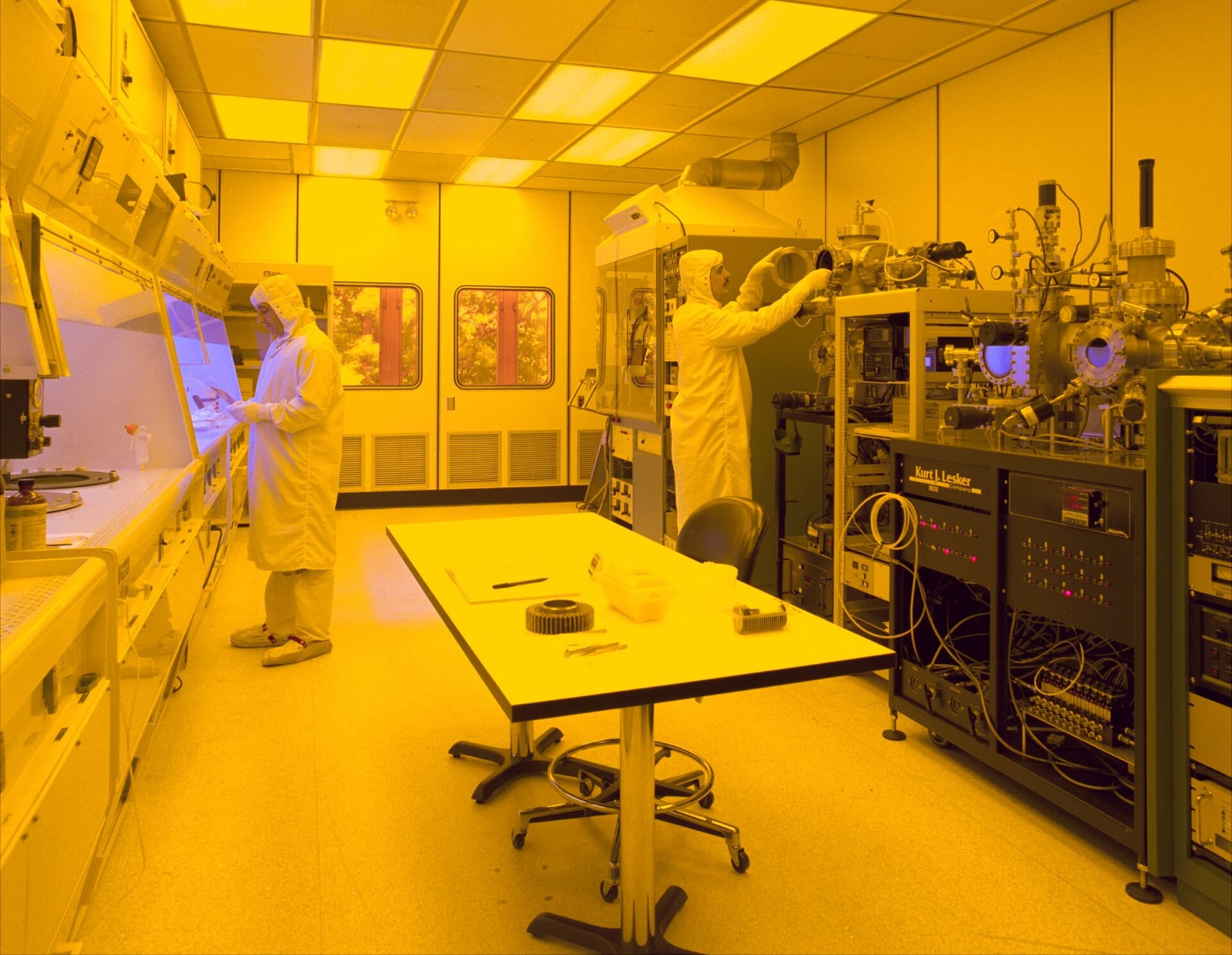 A semiconductor fabrication cleanroom under yellow lithography lighting. Photograph: public domain, via Wikimedia Commons
Technology Overlap Raises Questions
Industry observers note that GlobalFoundries' quantum manufacturing expertise—particularly its work on cryogenic CMOS for sensing, control, and readout functions—could have applications well beyond traditional quantum computing. The semiconductor manufacturer is developing platforms for multiple qubit modalities, including superconducting, trapped ion, and photonic approaches.
Qbit's focus on post-quantum security, combined with GlobalFoundries' quantum hardware capabilities, suggests a potential synergy in developing quantum-resistant infrastructure for digital asset networks. The semiconductor manufacturer's advanced packaging and 3D heterogeneous interconnect capabilities are designed to bring together quantum processor units, control electronics, and interconnects into system-level modules.
What This Means for the Broader Industry
The apparent connection between GlobalFoundries and Qbit highlights the intersection of three significant trends: the Trump administration's direct equity investments in strategic industries, the commercial maturation of quantum computing hardware, and the growing demand for post-quantum security in the cryptocurrency sector.
GlobalFoundries has declined to comment on specific technology-sharing arrangements with individual projects, stating that its quantum foundry serves "the broader quantum ecosystem" with customers across multiple qubit modalities. The company has publicly named PsiQuantum, Quantinuum, Diraq, Equal1, and Quantum Motion as customers, with support from Google Quantum AI, Microsoft, and Nvidia. Qbit has not appeared on any official customer list.
Outlook
Neither GlobalFoundries nor Qbit has confirmed the reported technology-sharing arrangement, and the precise nature of their relationship remains unclear. However, the intersection of federal investment, quantum computing hardware, and post-quantum cryptography suggests that the lines between these sectors may continue to blur.
For now, Qbit continues to build its mining network and develop its post-quantum blockchain infrastructure, while GlobalFoundries proceeds with its quantum manufacturing expansion—each moving forward under the broader umbrella of the Trump administration's push to secure U.S. leadership in quantum technologies.
About the Companies
GlobalFoundries is a U.S.-based semiconductor manufacturer with fabrication facilities in New York and Vermont. The company operates as a foundry for advanced technologies, including quantum computing hardware, and has received multiple CHIPS Act funding awards from the U.S. Department of Commerce. The Trump administration holds an approximately one percent equity stake in the company.
Qbit is a post-quantum proof-of-work UTXO blockchain built from its own genesis block in 2026. The project features a fixed 210 million supply cap with mining-only distribution, no pre-mine, and no outside token allocation. Its native asset, QBT, is designed with quantum security from inception.
More from peatpost

Texas Court Dismisses Coinbase Shareholder Suit Over Delaware-Era Conduct
The Texas Business Court applied the state's written-demand rule after Coinbase reincorporated, even while assuming Delaware law governed the underlying claims.

Bullish and Equiniti Form Coalition for Issuer-Sponsored Tokenised Stocks
Alpaca, Apex Fintech Solutions and DriveWealth are early members of a group that wants tokenised shares to preserve the direct link between companies and their shareholders.

Qivalis Partners With Numeris to Build Settlement Rails for Its Euro Stablecoin
The Amsterdam-based banking consortium behind Europe's largest bank-backed euro stablecoin project has signed a multi-year collaboration with payments-infrastructure firm Numeris, covering settlement, reconciliation and merchant acceptance ahead of a launch planned for the second half of 2026.
Discussion
0 commentsNo comments yet — be the first to weigh in.