Iran Says It Is 'Fully Prepared' for Washington's 'Economic D-Day'
Bessent promises to tighten the noose around every source of revenue. Tehran says it has had a two-year plan ready and is waiting.

Iran has said it is confident it can absorb widened US sanctions after Washington announced what it called an "economic D-Day" intended to isolate the country from the global economy.
Iranian Economy Minister Ali Madanizadeh said Tehran was "fully prepared" for the measures, which he predicted would produce "another defeat" for the United States.
What Washington announced
US Treasury Secretary Scott Bessent said any nation entering a financial partnership with Iran would find itself isolated, and that banks and businesses dealing with Tehran would share that isolation if they refused to cut ties.
He described the package as "the single greatest financial offensive ever" mounted against Iran, one that would "tighten the noose and block every potential source of revenue."
The announcement follows a series of U-turns and extended deadlines from the White House in its attempts to bring the conflict to a close.
Why economists are sceptical
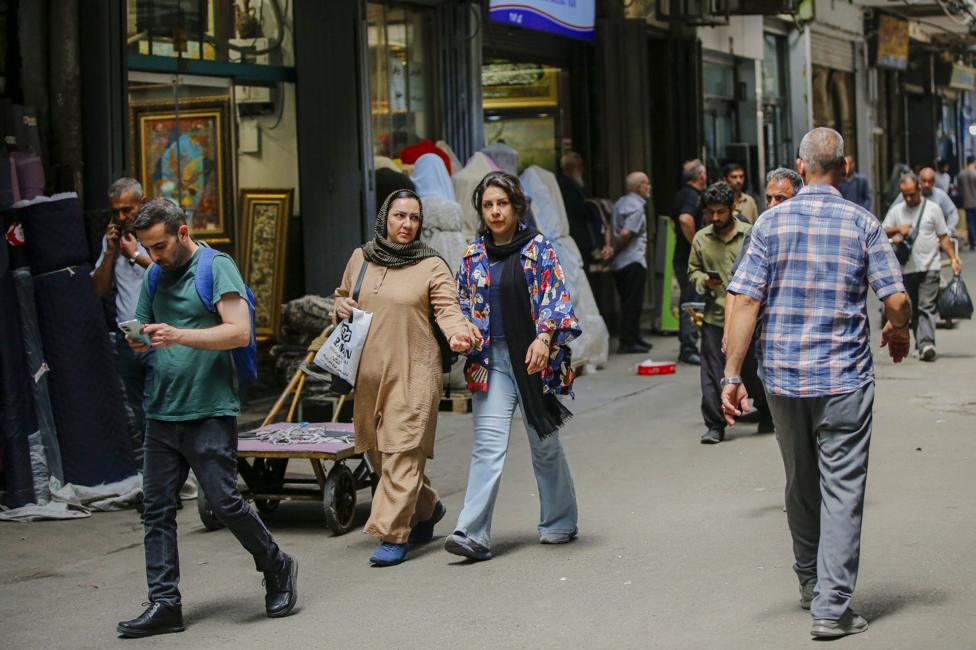
The effectiveness of the package depends almost entirely on something Washington does not control: how Iran's trading partners respond.
Chief among them is China, the largest buyer of Iranian oil, which has ignored previous rounds of US sanctions and continued doing business with Tehran. Beijing said it was firmly opposed to what it called "illegal unilateral sanctions." Foreign ministry spokesman Lin Jiang said economic pressure tactics would not resolve the underlying problems and that China would safeguard its own interests.
There has been movement in the other direction. Last week the United Arab Emirates, another significant partner, said it was halting all financial transactions with Iran — a meaningful defection given the Emirates' role as a re-export hub.
Tehran's account of its own position
Madanizadeh said neither China nor Russia had accepted the US measures, and predicted other countries would resist them too.
"The government is and was ready and has a two-year plan to manage these events," he told state television, adding that Tehran had been "waiting for these plans for a long time."
"We also have our own tools and know how to play the game," he said.
That framing is worth taking seriously rather than dismissing as bravado. Iran has operated under near-continuous US sanctions since 1979 and has spent decades building the workarounds — front companies, ship-to-ship transfers, non-dollar settlement, barter arrangements — that a country in that position accumulates. The marginal effect of a new package on an economy already structured around evasion is genuinely uncertain.
The lever Tehran is holding
The conflict has already pushed global oil prices higher, and Iran has responded to the latest threat by warning it would shut down all oil exports from the region if the war continues.
The regime has also issued a fresh warning to shipping not to transit the Strait of Hormuz without permission, according to Reuters. One fifth of the world's oil and gas normally passes through the strait, a narrow waterway on Iran's southern flank, and the flow has already been substantially disrupted.
This is the asymmetry at the centre of the standoff. Sanctions work by denying Iran revenue over months and years. The Strait of Hormuz works in days, and it acts on the price everyone else pays for energy.
A financial offensive that succeeds in cutting Iranian revenue while provoking interference with a fifth of the world's seaborne oil would not be a clean victory for anyone. It is why the market response to "economic D-Day" has been more cautious than the language suggests.
More from peatpost

Real Estate Market Forecast 2026: U.S., Spain, Italy and Switzerland Face a Changing Landscape as Crypto Enters the Property Market
Global housing markets diverge in 2026 as mortgage rates ease, supply shortages persist, and blockchain-based transactions move from pilot projects toward mainstream adoption.
Clarity Act Odds More Than Doubled to 31% as Trump Reportedly Backed Ethics Limits
The crypto market structure bill needed 60 Senate votes to reach floor debate; supporters likely required nine Democrats, and none had publicly committed.

India to push BRICS digital currency link despite hurdles, sources say
India is chairing BRICS this year, with leaders of the bloc set to meet in New Delhi on September 12 to 13.
Discussion
0 commentsNo comments yet — be the first to weigh in.