Latvia Shifts Crypto Tax to Account Withdrawals and Opens 2027 Declaration Window
Gains will be taxed on qualifying withdrawals above deposits, while long-term holders get a one-off chance to regularise older positions at a 10% charge.

Latvia's parliament has approved a change to how gains from crypto investment accounts are taxed. The focus moves away from individual trades and towards what an investor ultimately takes out of an eligible account.
The reform, passed on 15 October, also creates a one-off process in 2027 for declaring older holdings. A separate proposal to let people pay taxes in cryptocurrency remains under discussion and has not yet been set up.
What the new law changes
Under the investment-account model described in reporting on the legislation, switching between crypto assets held inside a qualifying account will no longer automatically trigger the same tax event as before. Instead, the taxable moment arrives when an investor withdraws more value from the account than they originally put in.
In practical terms, this means the tax charge attaches to net withdrawals above deposits rather than to each swap, sale or rebalancing within the account. An investor who moves from one token to another, or repositions a portfolio several times in a year, would not necessarily face a separate calculation for every transaction, provided the activity stays inside the eligible structure.
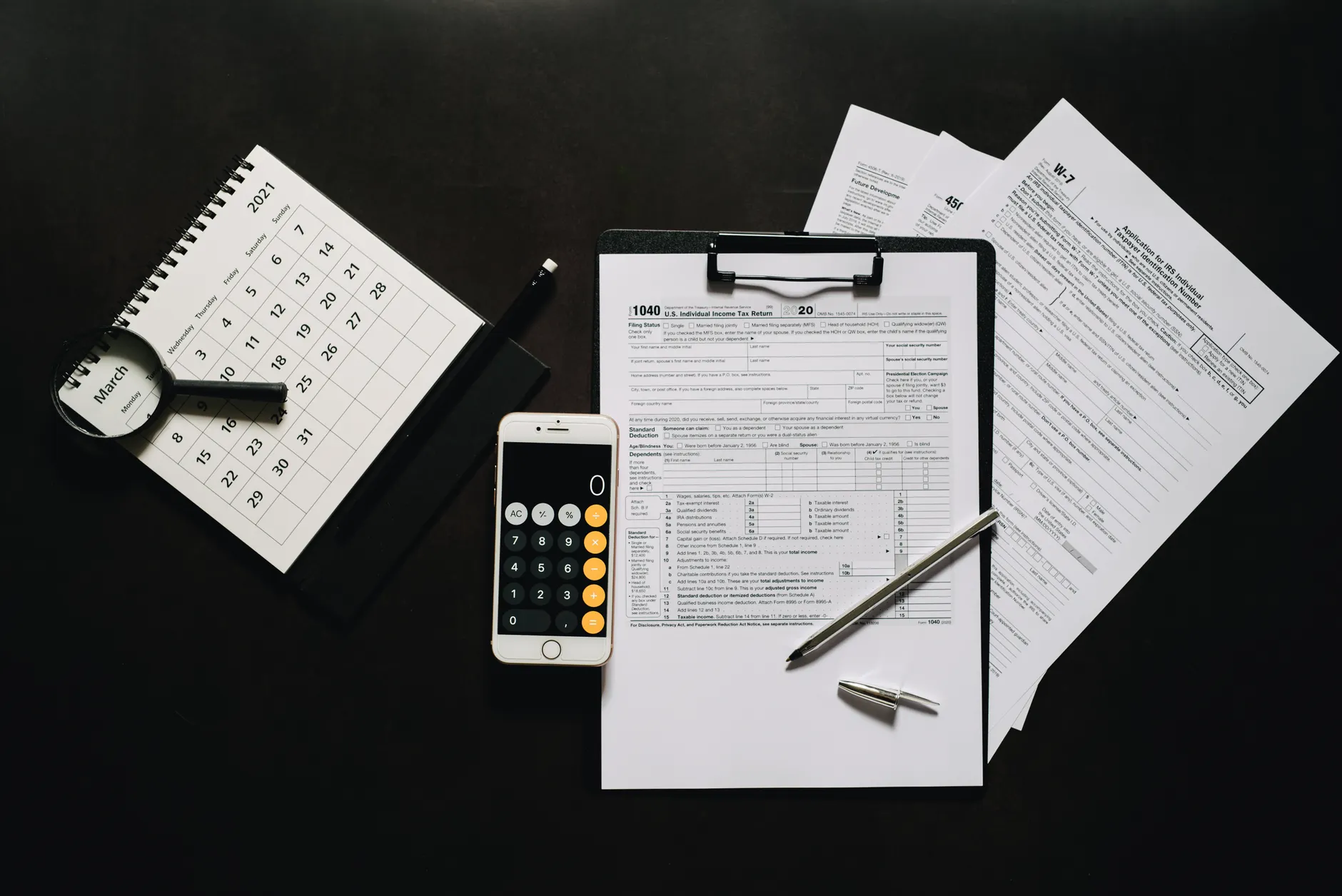
The change does not remove the need for careful bookkeeping. According to NewsBTC, investors will still need records showing what they paid into the account and what they took out. Those figures form the basis of any tax owed under the new approach.
A one-off route for older holdings
The legislation also tries to address a long-standing practical difficulty. Many people who bought digital assets years ago cannot reconstruct their original purchase price, known as the cost basis. Without that figure, calculating a gain accurately is difficult, and some holders have been left uncertain about how to bring historical positions into line with the rules.
To deal with this, the law provides a declaration mechanism. Eligible holders will be able to regularise historical positions by paying a charge of 10%, calculated on the value of those assets at the end of 2026.
The timetable is fixed:
- Applications open on 1 April 2027 and close on 31 May 2027.
- Payment of the 10% charge is due by 23 July.
- The charge is based on asset values at the end of 2026.
By tying the calculation to a single valuation date rather than to purchase prices that may be impossible to verify, the mechanism offers a defined way for long-term holders to put older holdings on a clear footing. It also gives the authorities a simpler administrative task than auditing years of fragmented transaction histories, much of which may sit across exchanges that no longer exist or wallets with incomplete records.
Why the approach matters
Crypto assets pose a particular problem for traditional tax systems. Many of those systems were designed around assets that change hands relatively infrequently, such as shares bought and held for years or property sold once. Digital assets, by contrast, can be exchanged continuously, around the clock, and often in small amounts. Treating every one of those exchanges as a taxable disposal can generate a heavy compliance burden for individuals and a large volume of low-value calculations for tax authorities.
Latvia's model effectively borrows the logic of a wrapper. Activity inside the account is treated as part of a single pool, and the tax question is settled when value leaves that pool. The concept is familiar from other savings and investment products in many countries, where the timing of withdrawals rather than individual trades often determines when tax becomes payable.
NewsBTC described the move as an example of governments adapting established tax concepts to assets that can be traded without pause. For the broader European market, it offers one possible template for reconciling continuous trading with tax frameworks built for a slower era.
The declaration window serves a related purpose. Tax authorities everywhere face the question of how to treat holdings acquired before clear rules existed. A flat-rate, one-time charge is a way of drawing a line under the past while encouraging holders to come forward voluntarily, rather than leaving a pool of undeclared assets outside the system indefinitely.
Crypto tax payments are a separate matter
Alongside the adopted law, Latvian officials have discussed allowing taxes to be paid in cryptocurrency. This has been raised as a potential step for 2027, but it is distinct from the legislation parliament has already passed.
According to NewsBTC, no decisions have been announced on which currencies would be accepted, which provider would handle the payments, or how the operational arrangements would work. The payment service has not yet been established, and it should not be conflated with the investment-account tax reform.
The distinction is worth stressing. The tax treatment changes and the declaration window are law; the ability to settle tax bills in crypto remains, for now, an idea under consideration.
Risks and open questions
How useful the reform proves in practice will depend heavily on details that will matter to individual investors. The first is account eligibility. The benefits of the new treatment apply to qualifying accounts, so the criteria that determine which accounts and platforms count will shape how many people can use the regime.
The second is recordkeeping. Although the model simplifies the treatment of trades inside an account, it still rests on accurate records of deposits and withdrawals. Investors who move funds between multiple platforms, or between accounts and self-custodied wallets, may find that establishing a clean record is not straightforward.
The declaration mechanism also involves trade-offs for holders. Because the 10% charge is based on end-2026 values rather than actual gains, its attractiveness will vary from person to person. For someone whose holdings have risen sharply from a low purchase price that they cannot document, a flat charge on current value may look reasonable. For someone who bought near a market peak, paying a percentage of total value rather than of any real gain could feel less favourable. Crypto prices are also volatile, so the eventual size of the charge will depend on where markets stand at the end of 2026.
Finally, the reform's influence beyond Latvia is uncertain. It illustrates one way of handling continuously traded assets, but other governments may choose different routes.
What to watch next
The immediate focus will be on guidance clarifying which accounts qualify and what records investors must keep. That detail will determine whether the change delivers the simplification it promises.
The next fixed point on the calendar is the end of 2026, when holdings will be valued for the declaration mechanism. The application window then runs from 1 April to 31 May 2027, with payment due by 23 July.
Separately, any announcement on crypto tax payments, covering accepted currencies, a provider and operating arrangements, would mark a further step. Until then, the adopted law and the proposed payment service remain two distinct strands of Latvia's approach to digital assets.
More from peatpost

LNbits Tells Operators to Shut Down Bitcoin Payment Servers After Wave of Attacks
The Lightning payments project has disabled its hosted service and asked self-hosters to stop their instances, but no stable fix or restart clearance has been published.
Bitget Launches Open Custody Network to Separate Trading From Asset Storage
The exchange says eligible users can trade on its venue while assets sit with external banks and custodians, but the real protection depends on how settlement is designed.

Aave Labs Acquires Avon Team and Technology in Push Towards Fixed-Rate Onchain Lending
The deal brings Avon's order-book technology and three staff to Aave Labs, though no fixed-rate Aave product has yet launched and financial terms were not disclosed.
Discussion
0 commentsNo comments yet — be the first to weigh in.