House Committee Advances Bill to Lock Federal Bitcoin in Reserve for 20 Years
The Financial Services Committee voted 28–21 for ARMA, which would bar sales for two decades from enactment and require audited annual reporting.
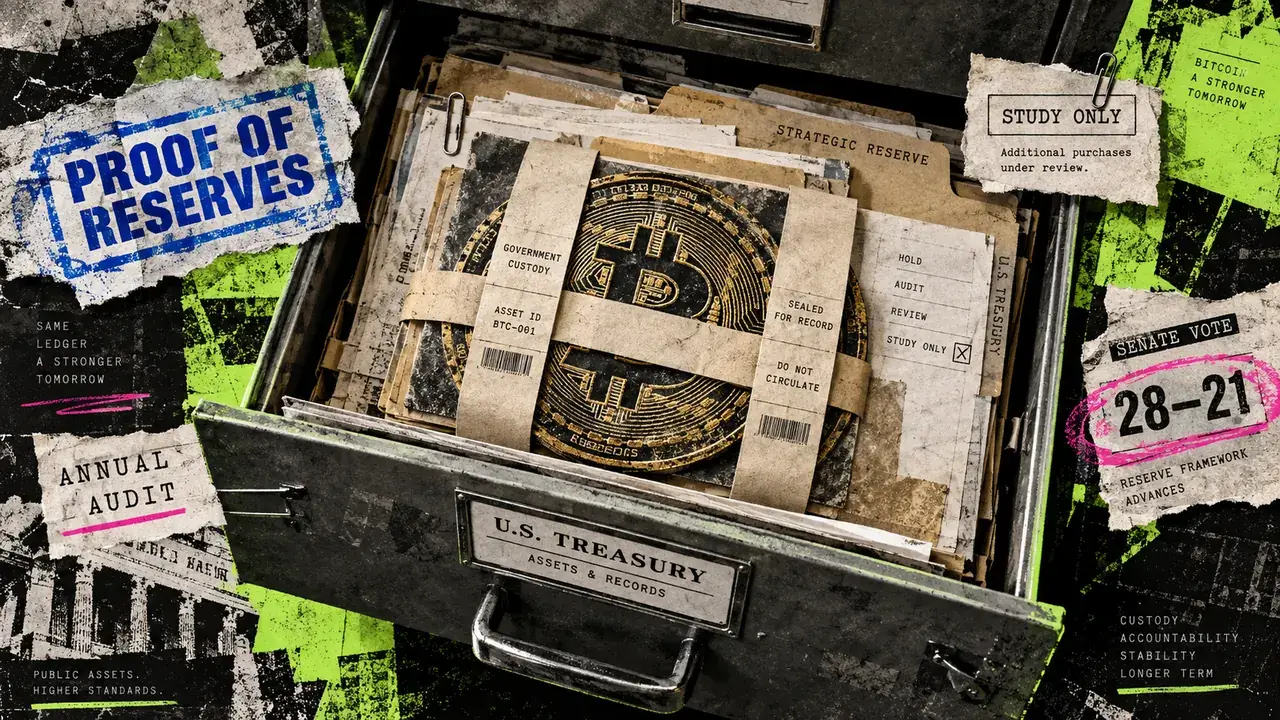
A US House committee has advanced legislation that would write a federal Bitcoin reserve into law, requiring the government to hold its Bitcoin for at least 20 years and to publish independently audited reports every year.
The House Financial Services Committee voted 28–21 on 16 September to report H.R. 8957, the American Reserve Modernization Act of 2026 (ARMA), favourably. The vote takes the bill beyond its introduction stage, but it still needs further action in Congress before any of its custody or holding rules could take effect.
From executive order to statute
The bill builds on policy already set by the White House. President Donald Trump's order of 6 March 2025 directed the creation of a Strategic Bitcoin Reserve, alongside a digital asset stockpile kept apart from it, limited their disposal subject to legal exceptions, and told Treasury and Commerce to devise budget-neutral ways of acquiring more.
ARMA, sponsored by Representative Nicholas Begich of Alaska, would set up two distinct structures inside the Treasury Department: a Strategic Bitcoin Reserve and a Digital Asset Stockpile. For now its focus is custody and record-keeping for coins the government already has, rather than buying more.
During the markup, the committee adopted a substitute from Representative Bryan Steil by voice vote and rejected an amendment from Representative Maxine Waters by 21–28, CryptoSlate reported.
Committee chairman French Hill, in prepared remarks, said the bill would place digital assets held by various federal agencies in Treasury custody under uniform oversight.
Under the substitute, qualifying federal Bitcoin would go into the reserve and other qualifying digital assets into the stockpile. Assets that are legally required for other purposes are carved out, so not everything an agency holds or seizes would count as reserve property.
The 20-year lock
The core provision requires Bitcoin placed in the reserve to stay there for at least 20 years, regardless of how it was obtained. During that time the government could not sell, swap, auction, encumber or otherwise dispose of it.
The clock starts at enactment rather than on the date of each deposit, so the committee vote has not set it running.
The bill does leave a route to revisit the rule. Treasury would have one year from enactment to study possible conditions for early sales and recommend legislative exceptions. That provision only asks for recommendations; any exception would need a separate decision by Congress.
Audits and deadlines
ARMA pairs the holding rule with disclosure requirements:
- Public cryptographic proof of reserves.
- An annual report on holdings, transactions and control of private keys, verified by an independent third-party auditor.
- Regular oversight of the reserve, the reports and the audits by the Comptroller General.
Proof of reserves generally lets outsiders check, using on-chain data and cryptographic signatures, that the stated holdings sit in addresses the custodian controls. Applying that standard to a government balance sheet would be an unusual degree of transparency for a sovereign asset.
Agencies would have 60 days from enactment to give Treasury a full accounting of their Bitcoin and other digital assets, and would have to repeat that each year. Qualifying holdings would then transfer into the reserve or stockpile within 30 days of those structures being set up.
Together, those steps cover finding what agencies hold, deciding what qualifies, consolidating custody and checking the reports.
No buying programme yet
The bill does not create a purchase programme. Instead, Treasury and Commerce would be given 180 days after enactment to examine what buying more Bitcoin would cost, what risks it would carry and what benefits it might bring, including whether purchases could be budget neutral.
That distinction matters for anyone reading the vote as a demand signal. Even if ARMA becomes law, it would mainly govern coins the government already owns, leaving the cost and feasibility of expanding holdings for later examination.
The next steps are procedural. The holding and oversight obligations take effect only if Congress enacts the bill, and committee approval locks in none of them yet.
More from peatpost

Bitcoin's Rebound Nears $85,000 Cost-Basis Cluster as Ether Whales Trim Bullish Bets
Bitcoin briefly topped $84,000 and Ether regained $2,500, but investor cost-basis data and $26.5bn of Ether futures positioning point to hurdles ahead.

Bitcoin, Ether and Solana ETFs Shed $1.25bn as XRP Funds Log 13th Week of Inflows
Bitcoin funds posted their first losing week since mid-September and Ether products their heaviest redemptions since January, according to SoSoValue data.

79thVault Token Pool Drained of $14.35m Despite 79% of Liquidity Being Burned
A privileged permission in the 79AU token let coins leave its PancakeSwap pool without payment, Bitquery found, bypassing the burned liquidity entirely.
Discussion
0 commentsNo comments yet — be the first to weigh in.