Most Americans Oppose Betting on Elections, Reuters/Ipsos Poll of 4,506 Adults Finds
Majorities in both parties reject election wagering as prediction markets such as Polymarket and Kalshi face a widening legal fight between states and the CFTC.
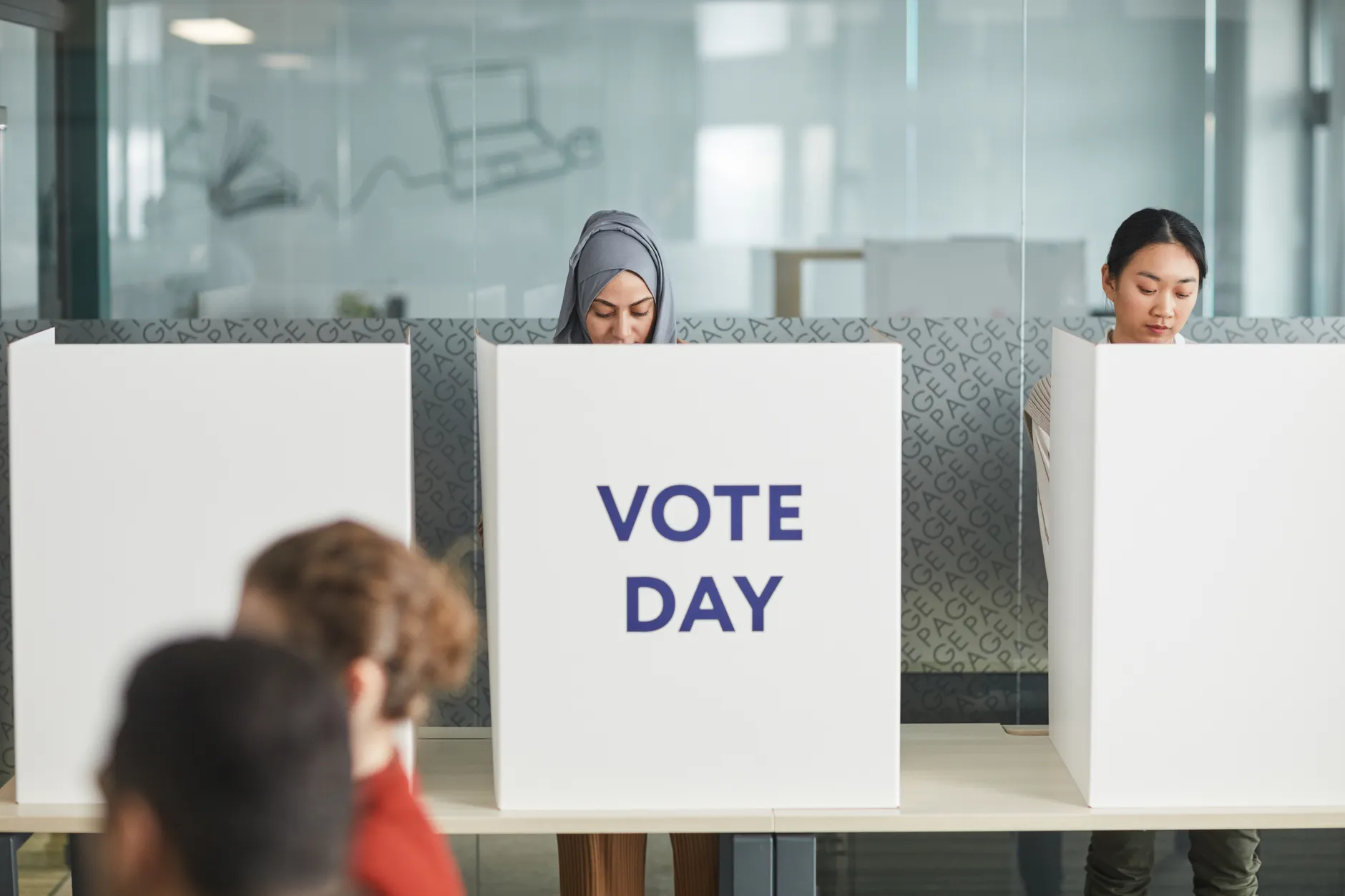
Most Americans oppose using prediction markets to bet on US elections and other government actions, according to a Reuters/Ipsos poll, as the industry led by Polymarket and Kalshi faces mounting legal challenges over who should regulate it.
The survey, reported by Cointelegraph, found that opposition crossed party lines, with clear majorities of both Democrats and Republicans saying they were against wagering on election outcomes.
What the poll found
Reuters/Ipsos surveyed 4,506 adults across the US between 30 September and 5 October. Among Democrats, 69% said they opposed using prediction markets to bet on election results. Among Republicans, the figure was 61%.
The scepticism was not limited to politics. Even betting on professional sports, a far more established form of wagering in the US, drew more opposition than support: 43% of respondents said they were against it, while 29% backed it.
The gap on sports betting is notable because that activity has become a familiar part of American life in many states. That a plurality still opposes it suggests public discomfort with gambling runs deeper than any single product or platform, and that event-based contracts tied to elections face an even steeper climb in public opinion.
The bipartisan nature of the result also matters. Policy questions involving markets and regulation often split along party lines, but in this case majorities on both sides expressed the same view, albeit with Democrats somewhat more opposed than Republicans.
How prediction markets work
Prediction markets allow users to buy and sell contracts whose value depends on the outcome of a future event. A contract might pay out if a particular candidate wins an election, if a government adopts a certain policy, or if a sports team wins a match. Prices typically move between zero and the full payout value, and supporters often argue those prices can be read as a crowd-sourced estimate of the probability of an outcome.
According to Cointelegraph, the sector is led by Polymarket and Kalshi, which offer markets on US elections, government policy decisions and sporting events. That breadth of offerings has pushed the industry into contested legal territory, because the line between a financial derivative and a bet is not always clear.
The distinction has practical consequences. Financial derivatives in the US generally fall under federal oversight, while gambling has traditionally been regulated by individual states. Where a product sits on that spectrum helps determine which authority writes the rules, collects the fees and enforces consumer protections.
A federal versus state turf war
That question of jurisdiction has produced a series of lawsuits involving state and federal agencies. The White House under Donald Trump wants the sector governed at federal level, with rules being developed via the Commodity Futures Trading Commission (CFTC), the agency that oversees derivatives markets. Several states are challenging some of those rules in court.
The states' position was set out forcefully in a New Jersey case. Cointelegraph reported on 8 October that 39 states and the District of Columbia had filed an amicus brief arguing that the clash between the CFTC and state authorities amounted to a "national turf war" that only the Supreme Court could settle.
An amicus brief is filed by parties who are not directly involved in a case but wish to put their views before the court. The sheer number of states joining this one signals how broadly state governments see prediction markets as encroaching on their traditional authority over gambling.
Many observers expect the dispute ultimately to reach the US Supreme Court. A ruling there would likely shape the industry's future far more than any single state-level case, determining whether event contracts can operate nationally under a single federal framework or must contend with a patchwork of state rules.
Why the poll matters
Opinion polls do not decide court cases, but they can influence the political climate in which regulators and lawmakers operate. A finding that most Americans, across both major parties, oppose election betting gives state officials a degree of public backing as they push back against federal oversight.
It also presents a challenge for the industry's argument that prediction markets are primarily information tools rather than gambling products. If the public broadly views election contracts as betting, that perception could weigh on how legislators and judges approach the issue, even if the legal question turns on statutory definitions rather than popular sentiment.
For the CFTC route favoured by the Trump administration, the poll highlights a potential gap between federal policy direction and voter preferences. Federal rules that permit or facilitate election wagering may draw scrutiny from constituents who, according to these figures, are largely uncomfortable with the practice.
At the same time, interest from businesses appears to be growing. Cointelegraph, citing CNBC, noted that Blockchain.com is pursuing CFTC approval for prediction markets, suggesting that more firms see a commercial opportunity in the sector despite the regulatory uncertainty.
Risks and counterpoints
There are limits to what a single survey can show. Polls capture opinion at a specific moment, and attitudes towards new financial products can shift as they become more familiar. Questions about betting can also be sensitive to wording, and respondents may react differently to a product described as a market than to one described as a bet.
Supporters of prediction markets are likely to argue that public opposition reflects unfamiliarity rather than considered judgement, and that well-regulated markets can offer useful signals about the likelihood of political and economic events. Critics, by contrast, may point to concerns that wagering on elections could create incentives that sit uneasily with democratic processes, or expose consumers to risks similar to those associated with gambling.
The sports-betting result complicates any simple reading. If a plurality opposes even a widely available form of wagering, the poll may be measuring a general wariness about gambling rather than specific hostility to prediction markets. That broader unease could nonetheless still shape how lawmakers respond.
There is also the question of how much public opinion will matter in a dispute that is, at its core, about legal authority. Courts will be asked to interpret federal commodities law and its relationship to state gambling powers, not to gauge popularity.
What to watch next
The legal battle is the main variable for the industry. Several developments will indicate where it is heading:
- The outcome of the New Jersey case and any appeals arising from it
- Whether the Supreme Court agrees to take up the jurisdictional question
- Progress on the CFTC's federal rules and further state challenges to them
- Applications from new entrants such as Blockchain.com seeking CFTC approval
For now, prediction markets occupy an unusual position: backed by a federal administration seeking to bring them under a national framework, opposed by a large coalition of states, and viewed sceptically by most of the public the platforms hope to serve. How the courts resolve the turf war will determine whether that public scepticism becomes a constraint on growth or a background concern as the sector expands.
More from peatpost

Bitcoin Steadies Near $75,000 as Binance Hack Fallout Stays Contained
Analysts credit Binance's pledge to cover $6.3bn in losses with limiting the damage, while custody design and macro data move into focus.

Analysts Say Binance's Pledge to Cover $6.3bn Hack Losses Limited Wider Market Damage
Bitcoin's post-hack drop was milder than after the Bybit and Coincheck breaches, and analysts now see US inflation data and Fed policy as the bigger drivers.

Binance Finance Chief Kaiser Ng to Leave, With Justin Yek Named as Successor
The departure, confirmed by co-CEO Yi He to Reuters, follows a six-month handover and comes just over a week after a reported $6.3bn hack of the exchange.
Discussion
0 commentsNo comments yet — be the first to weigh in.