The Nordic Model: How Scandinavian Banks Are Reshaping the Savings Landscape
While Brussels looks to Stockholm as the blueprint for its Savings and Investments Union, Nordic financial institutions are already implementing the playbook—offering savers a stark choice between accessibility and reward.
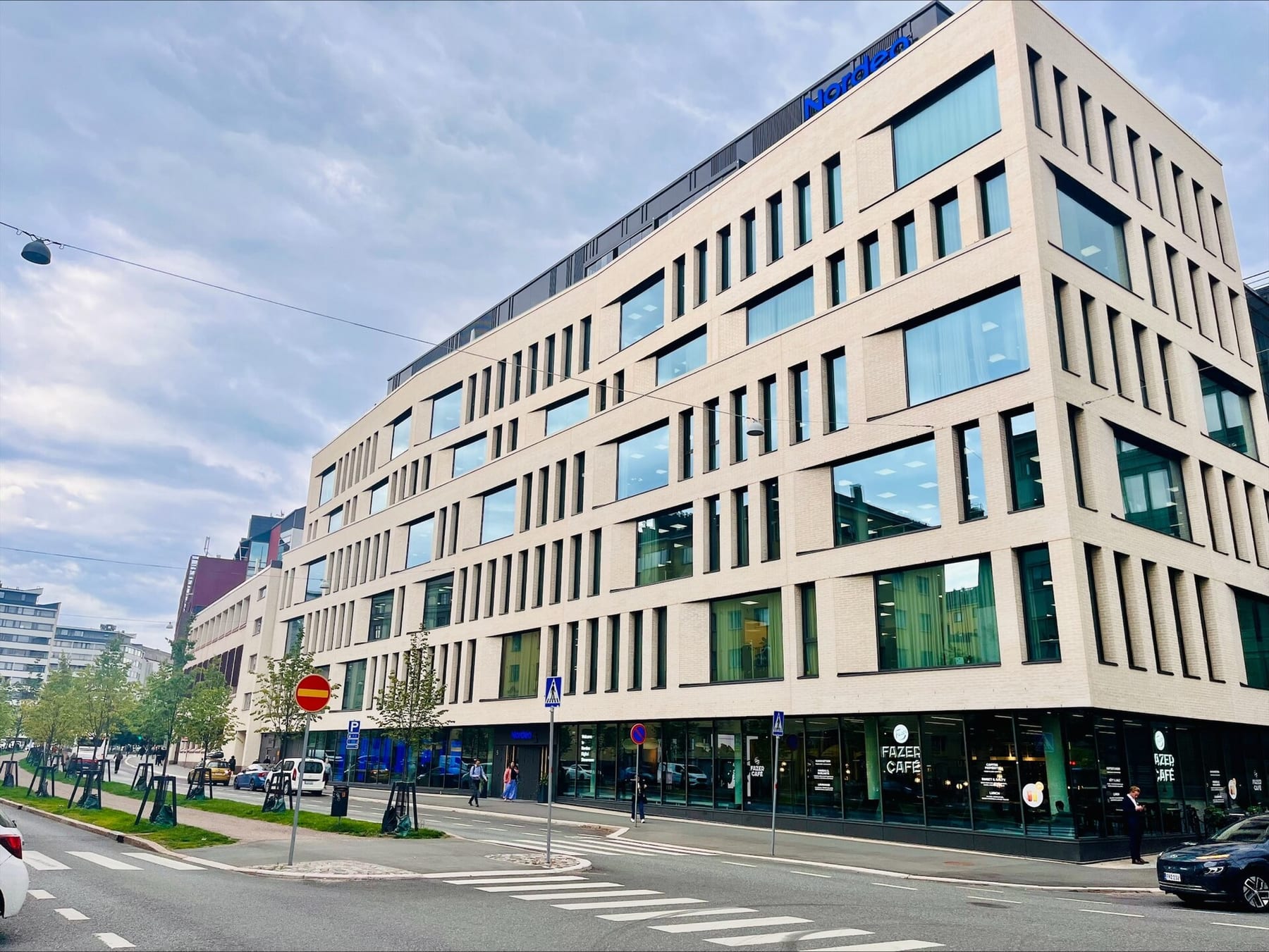
Copenhagen/Stockholm/Helsinki, September 2026 – The European Commission has made no secret of its admiration for the Nordic approach to savings. In official communications, Brussels has explicitly identified Sweden as the "model" for how to encourage households to move their money from bank deposits into capital markets. The Swedish InvesteringsSparKonto (ISK) system, introduced in 2012, is now being held up as the gold standard—a simple, tax-efficient way for citizens to invest in shares directly through their mobile banking apps.
The numbers explain why. Swedish households invest more than half of their savings in equities—more than double the eurozone average. Nearly a quarter of Swedes directly own shares in publicly traded companies, with average holdings around SEK 540,000 (approximately €48,000). Approximately 70 percent of all Swedes invest directly in mutual funds.
The question now facing Scandinavian savers is whether this "Nordic model" is a genuine opportunity for wealth creation or a carefully engineered system designed to channel private capital toward politically prioritized objectives. And as interest rates diverge between flexible and locked accounts, the message from banks is becoming increasingly difficult to ignore.
The Interest Rate Gap: A Deliberate Incentive
The data tells a clear story. According to Börskollen's July 2026 survey, Sweden's major banks are offering near-zero interest on flexible savings accounts:
BankHighest Variable RateNordea0.00%SEB0.00–0.10%Danske Bank0.05–1.30%
Meanwhile, savers who are willing to lock their money away can earn significantly more. Nordiska, a Swedish digital bank, offers its "Flex" variable accounts at around 2.00–2.10%, but its "Fix" fixed-term accounts deliver up to 2.85% for terms of 1–5 years. Klarna, the Swedish payment giant now operating as a bank, offers up to 3.01% AER for a 36-month fixed account.
In Denmark, the pattern is similar. Forbrugerrådet Tænk's May 2026 test of 22 financial institutions found that variable-rate accounts with up to 31 days' notice offered substantially lower returns than fixed-term products with 6-, 12-, or 24-month lock-in periods. Lunar Bank, the Danish app-based bank now operating across Scandinavia, offers fixed-term deposits from three months up to five years, with rates reportedly reaching 3.80% for longer commitments.
Santander Consumer Bank's November 2024 survey of 3,000 respondents across Norway, Sweden, and Denmark confirmed that interest rates are the primary factor driving savings decisions. In Norway, 53 percent of savers identified interest rates as the most important factor; in Sweden, 50 percent; in Denmark, 45 percent.
The conclusion is inescapable: Scandinavian banks have constructed a financial ecosystem where the path of least resistance—keeping money in an instantly accessible account—is deliberately made unattractive.
The Swedish ISK Model: Simplicity Meets Strategic Direction
The Swedish system works through a combination of tax incentives and seamless integration. The ISK account, introduced in 2012, simplifies the tax structure around capital investments, removing bureaucratic obstacles that previously deterred participation. Securities can be bought and sold directly through mobile banking applications, making investing as simple as transferring money between accounts.
Jonas Ström, CEO of Nordic investment bank ABG Sundal Collier Holding ASA, believes this success can be exported to a wider European audience. The European Commission has indicated it would offer a framework for a European savings and investment account, leaving implementation to member states—and therefore, ultimately, to national banks.
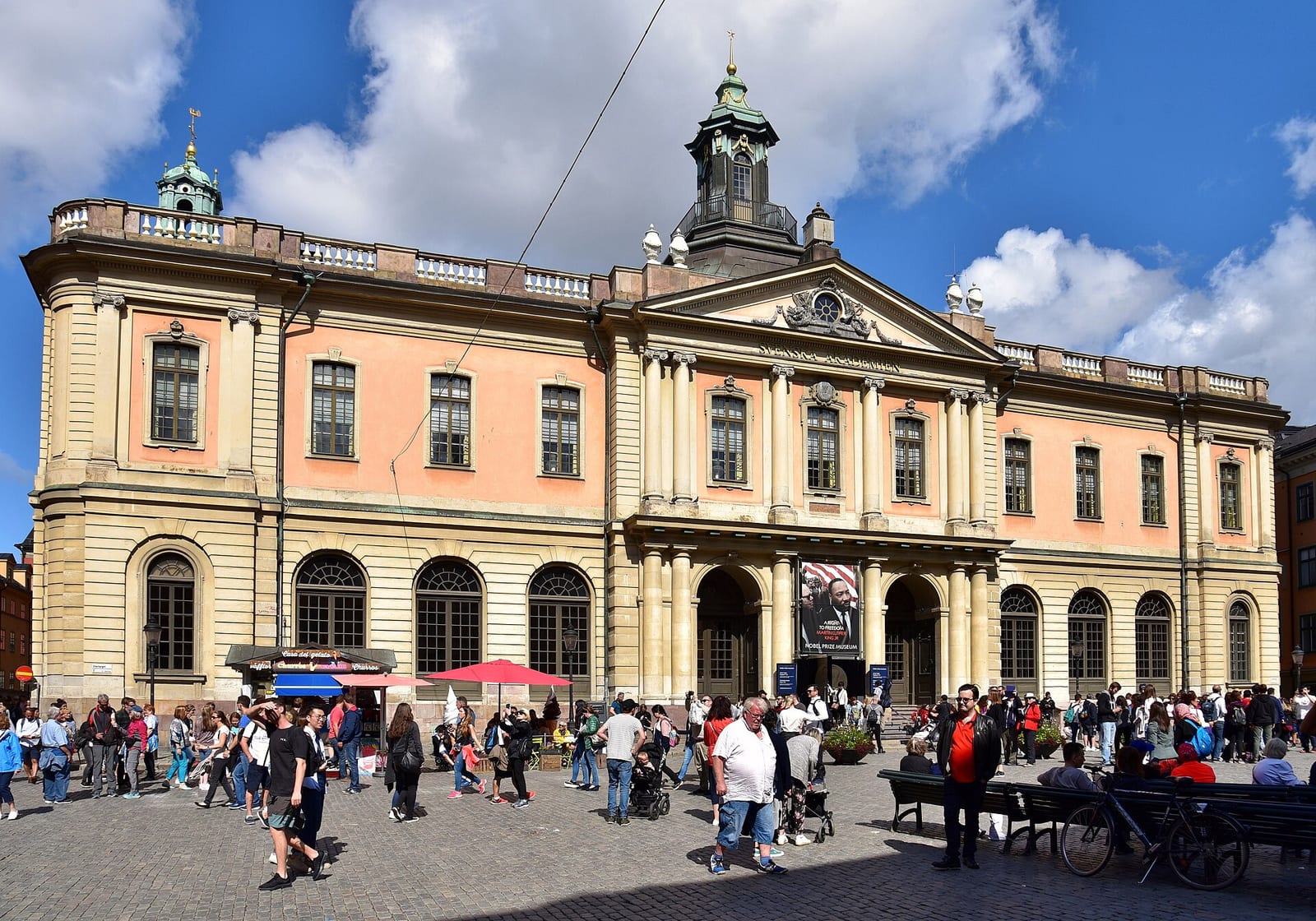 Börshuset in Stockholm's Gamla Stan, the former home of the Stockholm Stock Exchange. Photograph: Bahnfrend, CC BY-SA 4.0, via Wikimedia Commons
But the Swedish system is not without its critics. The ISK model has been effective at increasing equity ownership, but it has also concentrated savings among higher-income households. A 2021 study by Statistics Sweden (SCB) and other EU statistical authorities found that savings in Sweden are heavily concentrated among high-income households. The top income quintile saved approximately 400 billion kronor in 2021, while the lowest quintile had negative savings of around 100 billion kronor. The study found similar patterns across other European countries, including the Netherlands, Belgium, Italy, France, and the Czech Republic.
Meanwhile, a Danske Bank survey published in August 2026 found that 38 percent of Finns lack any financial buffer, compared to 22 percent in Sweden, 21 percent in Denmark, and 18 percent in Norway. The gap between those who can afford to lock away their savings and those who cannot is widening.
The Danish Experience: Fixed Terms and Green Incentives
In Denmark, the trend toward locked savings is being accelerated by the introduction of "green" deposit products. Santander Consumer Bank offers a green deposit in Norway where funds are exclusively used to support the country's electric vehicle portfolio—but savers must commit to a 6-month fixed term. The product is structurally identical to the standard 6-month fixed-term account, but the promise of "sustainable" use of funds serves as an additional incentive.
Danish banks are also leveraging the "NemKonto" (Easy Account) system, where the government-designated primary bank account offers better rates—but often with conditions. Forbrugerrådet Tænk's testing methodology penalizes banks that require NemKonto status for better rates, but the practice remains widespread.
The Danish Financial Supervisory Authority (Finanstilsynet) has seen a proliferation of app-based banks like Lunar, which operates under a Danish banking license and now serves customers across Denmark, Sweden, and Norway. These digital banks are aggressively marketing fixed-term products, offering shorter terms that currently pay more than longer ones—a sign that banks primarily want flexible funding to deploy in uncertain markets.
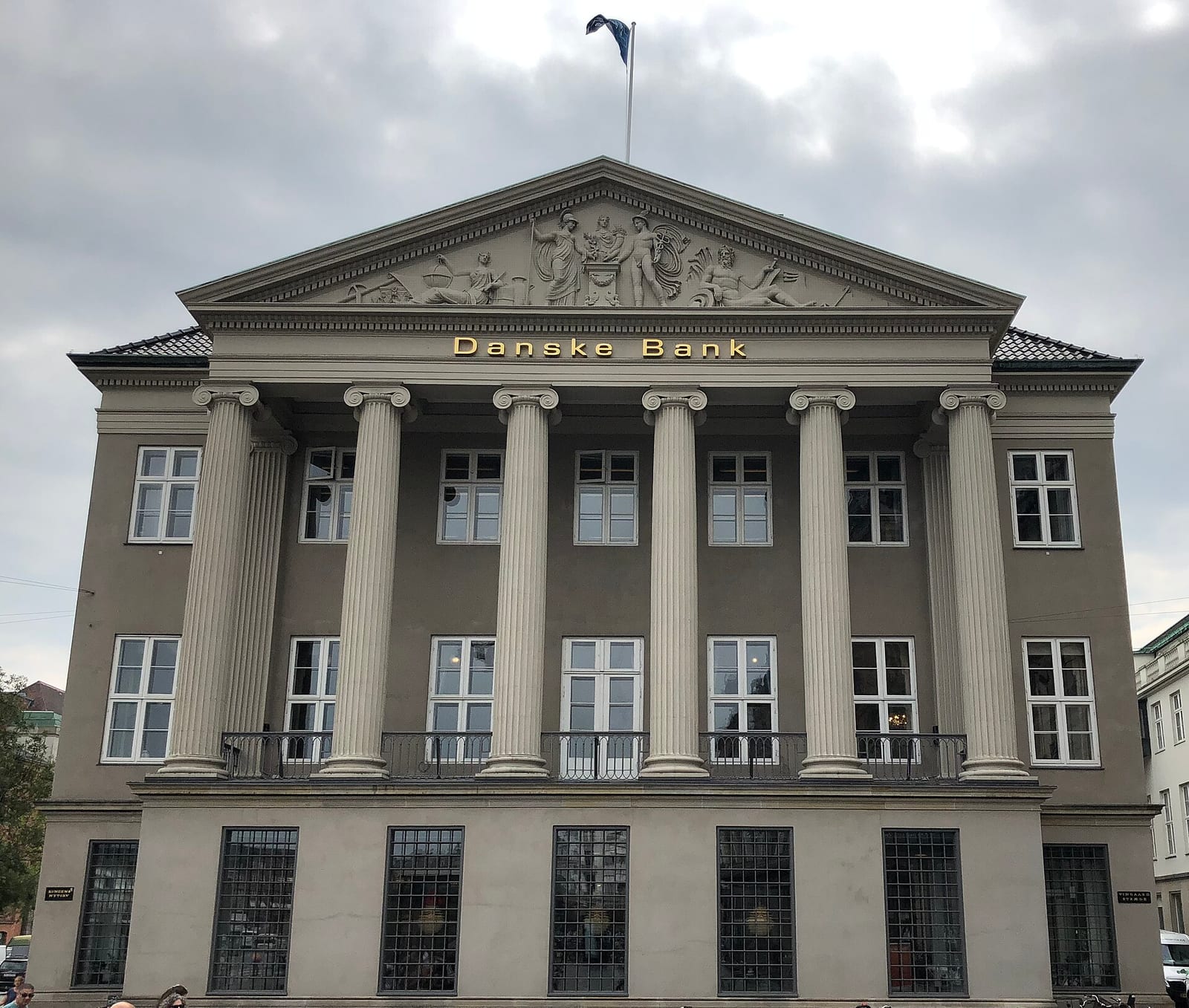 Danske Bank's headquarters at Kongens Nytorv, Copenhagen. Photograph: RL0919, CC BY-SA 4.0, via Wikimedia Commons
The Norwegian and Finnish Landscapes
Norway presents a slightly different picture. Bank Norwegian, one of the country's largest savings institutions, has been gradually reducing rates but still offers competitive products. The standard savings account in Norway recently dropped from 4.00% to 3.75%, while the "Plus" account offers higher rates for savers willing to accept 31-day withdrawal notice periods.
In Finland, Danske Bank has established a strong presence through union partnerships. The Engineering Union (Insinööriliitto) has negotiated investment benefits for its members, including free online trading accounts, 15 percent discounts on advisory services, and access to the "Danske Harvest Account," which offers 3-month Euribor minus 0.9% interest. The union agreement explicitly states that "everyone can invest easily in a way that suits their life situation" and provides access to "ready-made investment solutions or personal advice".
The Central Federation of Trade Unions in Norway (YS) has extended its banking agreement with Nordea until 2026, providing 240,000 members with "market-leading terms" on mortgages and savings products. The union's leader, Hans-Erik Skjæggerud, has publicly encouraged members to use the agreement, stating that "uncertain times where interest rates are rising, food prices are rising, and a collective uncertainty related to what the world will look like in the future" make it "extra important to have a trade union behind you".
The Pan-Nordic Pattern: Choice Reimagined
Across Scandinavia, a consistent pattern emerges. The major banks—Nordea, SEB, Danske Bank, and Swedbank—offer near-zero rates on flexible accounts while providing significantly higher returns for locked savings. Digital challengers like Lunar, Nordiska, and Klarna compete aggressively on fixed-term rates, creating a marketplace where the "best" products consistently require commitment.
The deposit guarantee schemes provide a baseline of security. In Sweden, deposits are protected up to SEK 1,150,000 (approximately €100,000) by the Swedish National Debt Office. Denmark and Norway have equivalent guarantees. This security applies to both flexible and fixed accounts, theoretically making the choice purely about return versus accessibility.
But the structure of the incentives is clear. As one commentator noted, European Union policymakers are using "soft pressure" to encourage banks and pension funds to invest in European bonds and equities. The Nordic banks are simply the most advanced implementers of this strategy, having spent decades building the infrastructure and cultural acceptance that Brussels now seeks to replicate.
The Financial Reality
The practical implications for Scandinavian savers are significant. A family with SEK 500,000 in a Nordea flexible account earning 0.00% is losing purchasing power to inflation every day. The same amount in a Nordiska 5-year Fix account at 2.85% would generate SEK 71,250 in interest over the term—enough to make a tangible difference to household finances.
But that difference comes with a condition: the money is inaccessible for five years. Early withdrawal typically incurs significant penalties, and in some cases, the saver may forfeit all accrued interest. For households with adequate financial buffers, this is a reasonable trade-off. For those without, it is a luxury they cannot afford.
The Danske Bank survey's finding that 38 percent of Finns lack any financial buffer highlights the divide. The Scandinavian model works well for those with sufficient savings to lock away a portion; it penalizes those who need immediate access to their money.
More from peatpost

Texas Court Dismisses Coinbase Shareholder Suit Over Delaware-Era Conduct
The Texas Business Court applied the state's written-demand rule after Coinbase reincorporated, even while assuming Delaware law governed the underlying claims.

Bullish and Equiniti Form Coalition for Issuer-Sponsored Tokenised Stocks
Alpaca, Apex Fintech Solutions and DriveWealth are early members of a group that wants tokenised shares to preserve the direct link between companies and their shareholders.
Qivalis Partners With Numeris to Build Settlement Rails for Its Euro Stablecoin
The Amsterdam-based banking consortium behind Europe's largest bank-backed euro stablecoin project has signed a multi-year collaboration with payments-infrastructure firm Numeris, covering settlement, reconciliation and merchant acceptance ahead of a launch planned for the second half of 2026.
Discussion
0 commentsNo comments yet — be the first to weigh in.