Polymarket Trader Sits on $917,000 Profit From Midterm Bets, With Alaska Still Undecided
Most of the gain rests on an unsettled wager that Republicans win no Senate swing states, a bet traders still give a 14% chance of going wrong.
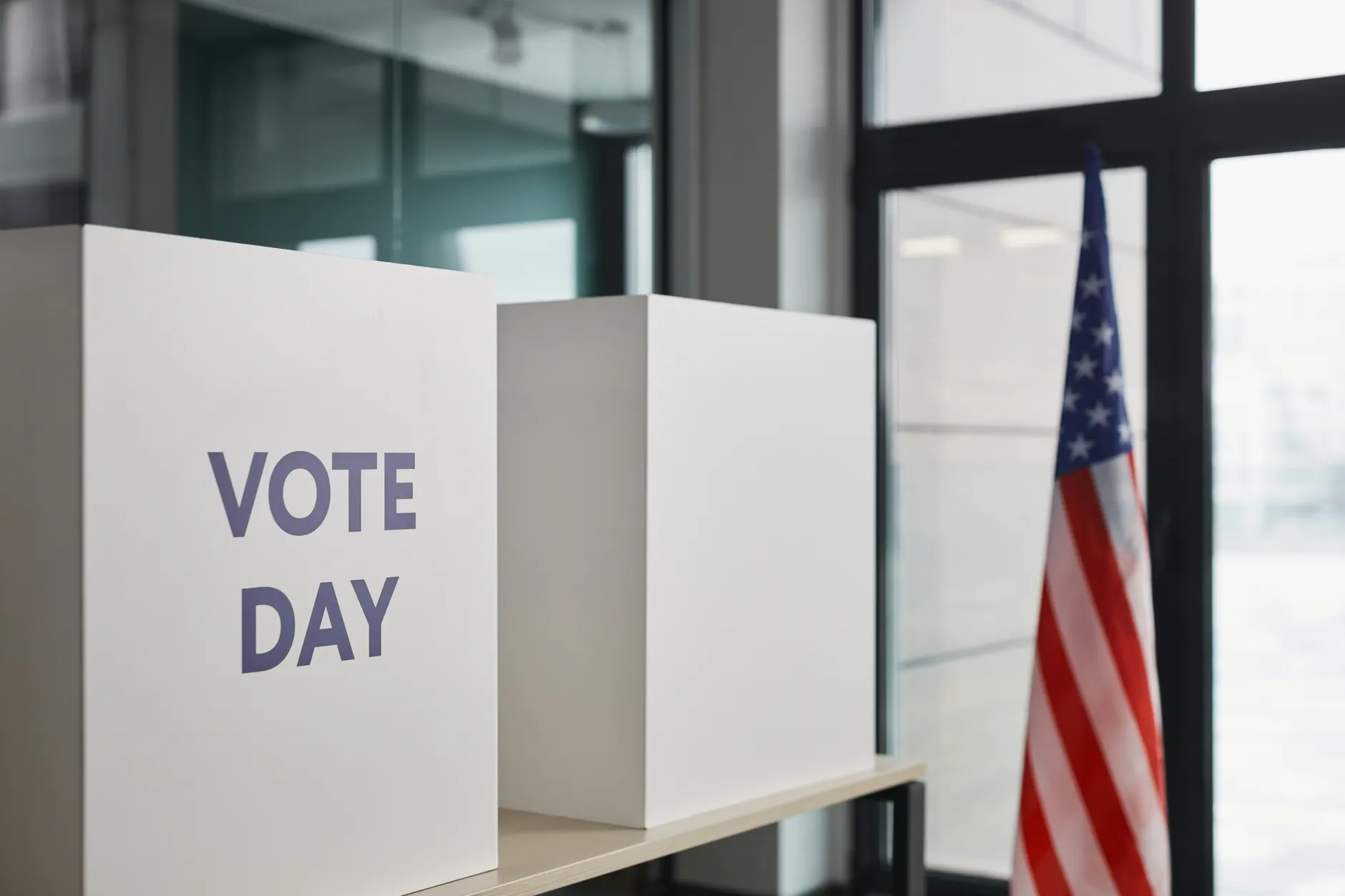
A Polymarket user trading as 0xA2 has emerged as the platform's biggest daily winner after the Democrats took both the House of Representatives and the Senate in the US midterm elections. Most of the trader's reported $917,000 profit, however, is tied up in a position that has not yet settled and depends on the outcome in Alaska.
The result marks a significant setback for President Donald Trump, and it produced one of the busiest stretches for prediction markets since the 2024 presidential race, according to figures reported by Decrypt.
A contrarian bet on the Senate map
According to Polymarket's 24-hour leaderboard, 0xA2's largest position was a wager of $609,644 that Republicans would fail to win any of the Senate swing states. When the bet was placed, the market priced that outcome at just 36%.
That probability has since climbed to 87%, lifting the value of the stake to roughly $1.48m. On paper, that leaves the trader about $860,000 ahead on that single position.
The key qualification is that the gain is unrealised. The market will not resolve until Alaska's Senate result is confirmed, and Polymarket traders currently assign a 14% probability to an upset there. If Alaska goes the other way, the position would lose rather than pay out.
The trader has already locked in a smaller win. Decrypt reported that 0xA2 made $106,115 in realised profit by correctly backing the Democrats to win the Senate race in Texas.
The account's portfolio also holds a less conventional bet. Its second-largest open position is $1.42m wagered on the US government not confirming the existence of aliens before 2027.
How the markets moved on election night
The speed at which prices shifted once results began arriving illustrates one of the defining features of prediction markets: they trade continuously, including when conventional exchanges are shut.
Kelly Ye, head of research at digital asset manager Talos, said in a note shared with Decrypt that Kalshi's odds of a Democratic sweep rose from around 74% to 99% after polls started closing at 6pm Eastern time. She added that trading activity peaked between 8pm and 10pm Eastern, and that a small number of large trades drove much of the volume.
That concentration matters. In thinner markets, a handful of well-capitalised participants can move prices sharply, and the winners' list tends to be dominated by a few accounts willing to take large positions at long odds.
It was a lucrative day for Polymarket's leading traders more broadly. Decrypt reported that the platform's top 10 users profited more than $170,000. For comparison, on an unremarkable day in March, archived leaderboard data showed the top daily earner made $154,000, while the trader in tenth place gained $29,700.
Politics still anchors prediction market activity
The midterms drew heavy participation across the two leading US-facing platforms, Polymarket and Kalshi. Data from Prediction.com, cited by Decrypt, showed midterm-related markets generating more than $546m in notional volume over the preceding two weeks.
Dash, the pseudonymous data lead at Prediction.com, told Decrypt that the 2024 election was the first major real-world test for the sector and the event that most powerfully drove trading volume and open interest. Sports contracts now account for the bulk of day-to-day volume, Dash said, but "Politics is still the key driving factor for open interest."
The distinction is worth drawing out. Volume measures how much is traded, while open interest measures how much capital remains committed to unresolved contracts. Political markets, which often run for months before settling, tend to accumulate large standing positions in a way that fast-resolving sports contracts do not.
The 2024 presidential race cemented Polymarket's profile. Analysts at Bernstein described it as the world's largest election prediction market, with its flagship presidential contract surpassing $3.6bn in volume. Traders on the platform favoured Trump for much of that campaign, while traditional polling showed him running close to Kamala Harris. Supporters of prediction markets pointed to the outcome as evidence that betting odds can outperform conventional surveys.
Dash argued that demand for reliable election forecasts is growing, and that prediction markets have become one of the places people go to find them.
The limits of market odds
The track record is not unblemished. Two weeks before the midterms, Polymarket traders badly misjudged Brazil's presidential election. Ahead of polling day they gave Luiz Inácio Lula da Silva roughly a 20% chance of winning; he went on to defeat Flávio Bolsonaro and secure a fourth term.
Experts who spoke to Decrypt at the time attributed part of the miss to Brazil's ban on prediction markets, which they said left pricing in the hands of traders with limited local knowledge and few participants positioned to correct the odds. They also stressed a more basic point about probability: an outcome priced at 20% is far from impossible.
Luke Nolan, a senior researcher at CoinShares, made a similar argument, noting that an event with an 80% chance of happening will still fail to occur about one time in five.
That reasoning applies directly to 0xA2's position. A 14% chance of an upset in Alaska may look remote, but it is not far below the probability the market assigned to Lula's victory. Treating an 87% price as a near-certainty is precisely the kind of overconfidence that the Brazil result exposed.
There is also a structural caveat. Leaderboard figures capture marked-to-market values at a moment in time. Until a contract resolves, the headline profit can rise or fall with every shift in sentiment, and a single large holder can see a sizeable paper gain evaporate quickly.
What to watch next
The immediate question is Alaska. Its final result will determine whether 0xA2's Senate swing-state wager pays out at roughly $1.48m or is wiped out, and with it the bulk of the trader's reported profit.
Beyond that single account, several broader threads are worth following:
- Whether the 14% upset probability narrows or widens as Alaska's count progresses
- How quickly midterm open interest unwinds once contracts resolve, and whether political volume holds up afterwards
- Whether the accuracy debate shifts after a midterm cycle that followed closely on the Brazil miss
- How Kalshi and Polymarket build on election-night activity, given that sports currently dominate their trading
For the prediction market industry, the midterms offered another high-profile showcase, with large volumes and rapid price discovery during hours when traditional markets were closed. They also served as a reminder that market odds are probabilities rather than forecasts of certainty, and that even the most profitable trades can depend on the last uncalled race.
More from peatpost
Bitcoin Steadies Near $75,000 as Binance Hack Fallout Stays Contained
Analysts credit Binance's pledge to cover $6.3bn in losses with limiting the damage, while custody design and macro data move into focus.
Analysts Say Binance's Pledge to Cover $6.3bn Hack Losses Limited Wider Market Damage
Bitcoin's post-hack drop was milder than after the Bybit and Coincheck breaches, and analysts now see US inflation data and Fed policy as the bigger drivers.

Binance Finance Chief Kaiser Ng to Leave, With Justin Yek Named as Successor
The departure, confirmed by co-CEO Yi He to Reuters, follows a six-month handover and comes just over a week after a reported $6.3bn hack of the exchange.
Discussion
0 commentsNo comments yet — be the first to weigh in.