An Oracle's API Change Threatened to Freeze Contracts Across 300 Protocols
Pyth missed its own cutover deadline. Developers calling its price service directly now need an API key.
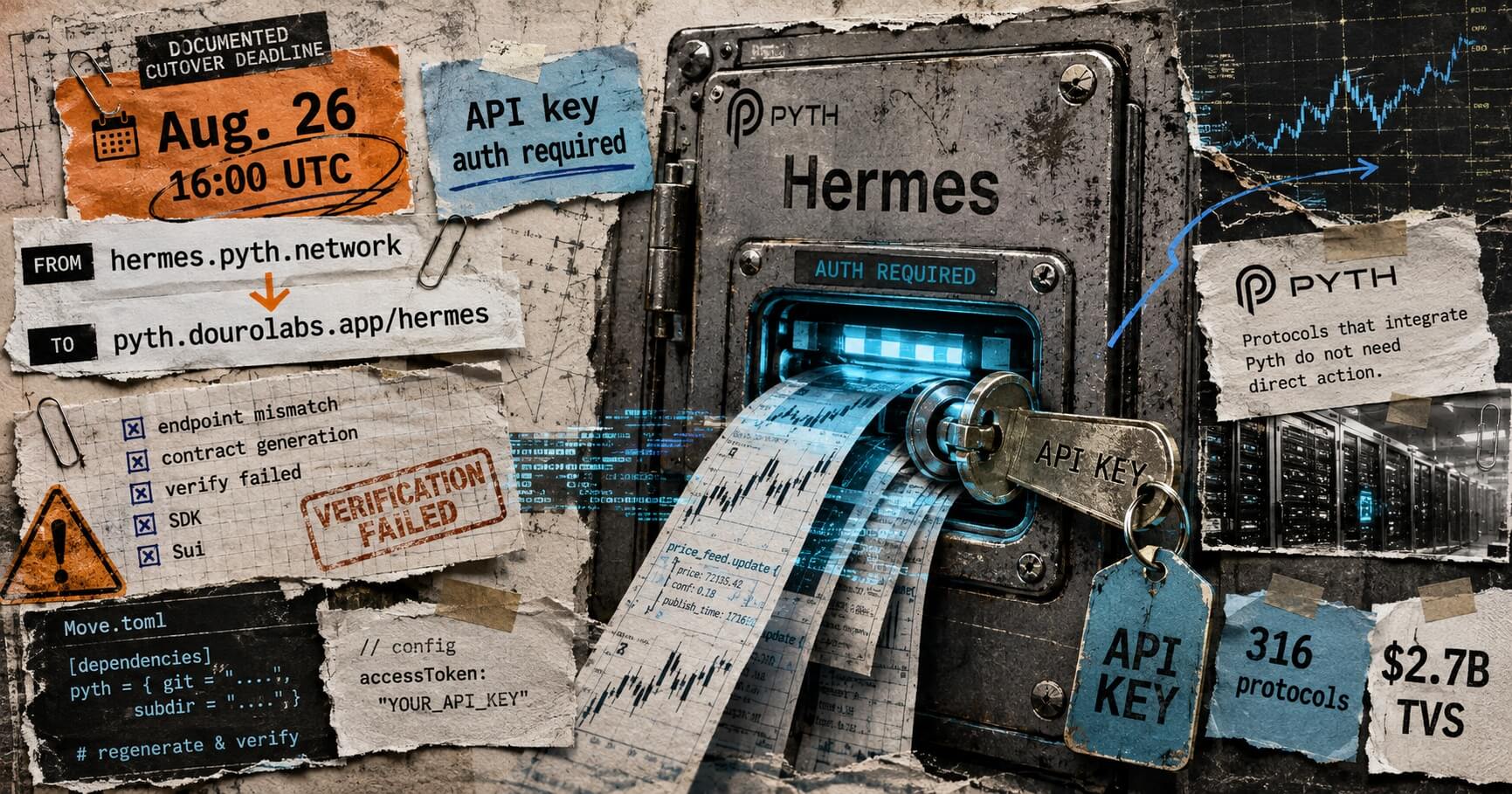
The crypto price oracle Pyth Network missed its documented 16:00 UTC cutover deadline on 26 August, adding a new requirement for developers who call its Hermes price-delivery service directly: requests now need an API key.
Who is affected
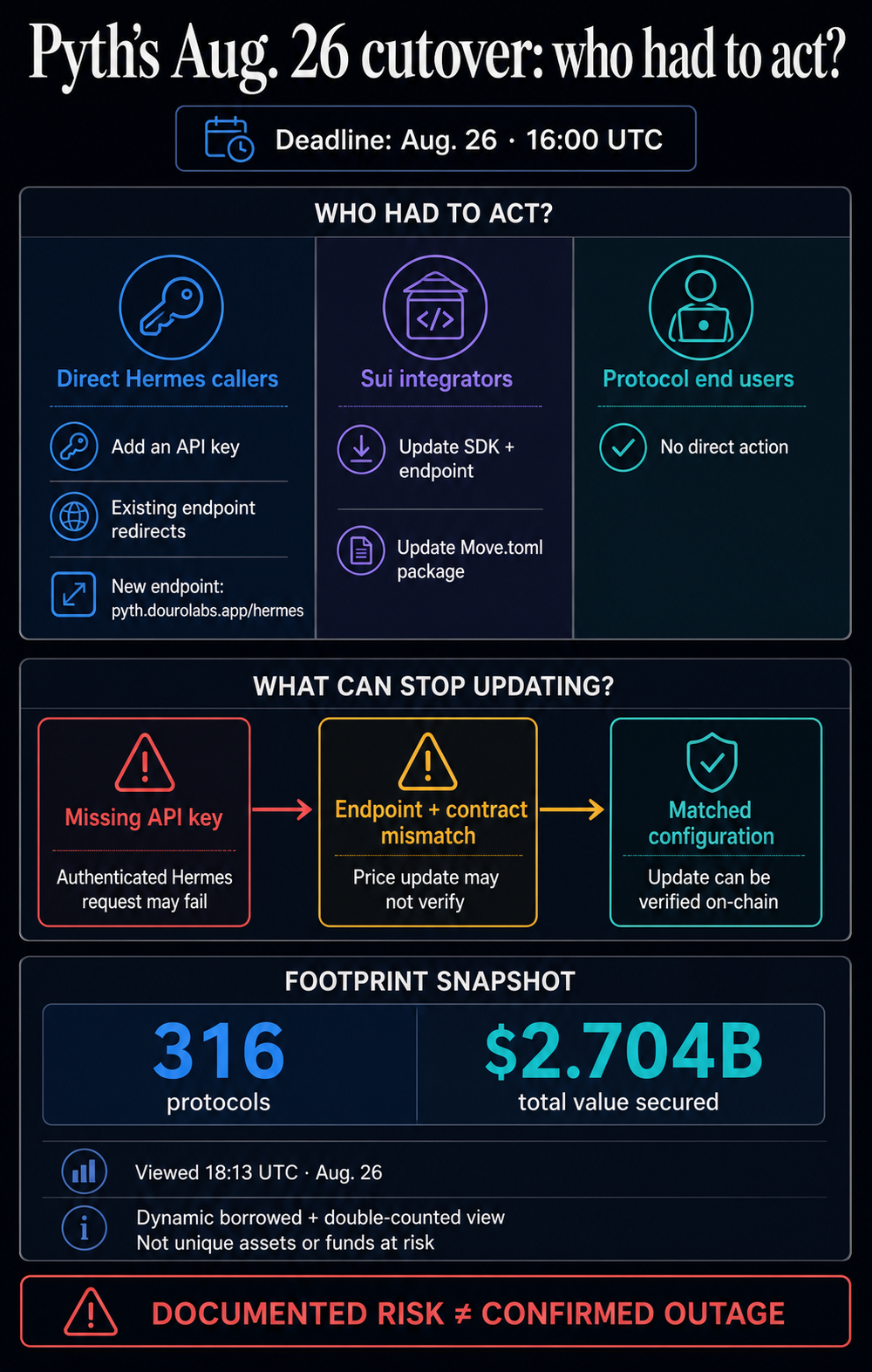
Under Pyth's migration guide, people using a protocol that already integrates the oracle need take no direct action. The requirement falls on developers making direct calls to Hermes, and on integrators on Sui who must update authentication or configuration.
Pyth documented that the existing hermes.pyth.network address would redirect to its upgraded backend, with authentication required after the deadline. Developers could also move directly to the new endpoint, passing the key as a bearer token or SDK access token. The routes and response shapes did not change.
Why an oracle outage is different
The reason a routine API migration becomes a systemic story is what oracles do.
DeFi lending protocols, perpetual exchanges and stablecoin systems need to know what assets are worth. A smart contract cannot query a price on its own; it depends on an oracle to deliver that data on-chain. If the feed stops updating, the contract does not fail loudly — it continues operating on a stale price.
That is the dangerous outcome. A lending protocol using an old price will not liquidate positions that have become undercollateralised, and will liquidate positions that have not. Both directions destroy value, and neither triggers an obvious alarm.
The unpatched contract problem
What makes this harder than an ordinary deprecation is that smart contracts frequently cannot be updated.
Many are deployed immutably, by design, because immutability is a security property — nobody can change the rules after users have committed funds. A contract hard-coded to call an endpoint that now requires authentication has no mechanism to add a key.
The teams that built with upgradeability can patch. The teams that followed the stronger security practice may be the ones exposed, which is an uncomfortable inversion.
The dependency nobody counted
Three hundred protocols relying on one price service is a concentration of risk that the decentralised finance sector does not usually acknowledge.
Each protocol is independently deployed, separately governed and individually audited. They share a single point of failure in their data supply, and a scheduled change of authentication at that supplier propagates to all of them simultaneously.
This is the same structure that produced the open source supply chain problem, arriving in a sector whose founding argument is the elimination of trusted intermediaries. An oracle is a trusted intermediary; the industry has simply chosen to describe it as infrastructure.
The missed deadline
Pyth failing to hit its own cutover time is, in the circumstances, the least alarming detail — a delay gives unpatched integrators more time.
But it does illustrate how much of DeFi's operational safety currently depends on a provider executing a migration carefully and communicating it well, rather than on anything enforced by the protocols themselves.
How protocols defend against this
The standard mitigations exist and are unevenly applied.
A lending protocol can require multiple independent oracle sources and refuse to act when they disagree. It can enforce a staleness check, halting rather than transacting when the last update is older than a threshold. It can implement circuit breakers that pause the market when prices move implausibly.
Each protection costs something — additional gas, added complexity, and occasional halts during genuine volatility, which users experience as the protocol failing when they most want to use it.
The economics of the dependency
Oracle provision is expensive. Someone has to aggregate price data from exchanges, sign it, and publish it on-chain continuously across many networks, and the cost of that does not fall as more protocols consume it for free.
Introducing API keys is a step towards metering, which is a rational response to the cost. It also converts an open public good into a service with a gatekeeper — and three hundred protocols have built on the assumption that the first arrangement was permanent.
More from peatpost

Bitcoin's Rebound Nears $85,000 Cost-Basis Cluster as Ether Whales Trim Bullish Bets
Bitcoin briefly topped $84,000 and Ether regained $2,500, but investor cost-basis data and $26.5bn of Ether futures positioning point to hurdles ahead.
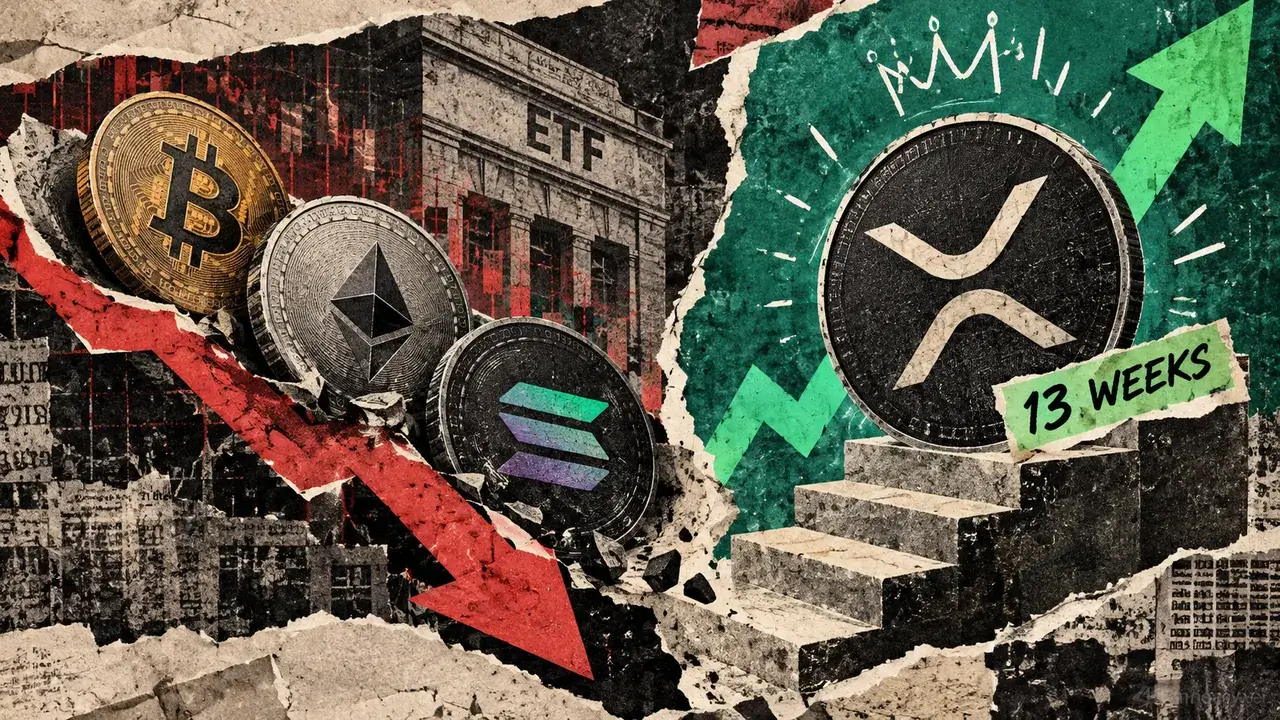
Bitcoin, Ether and Solana ETFs Shed $1.25bn as XRP Funds Log 13th Week of Inflows
Bitcoin funds posted their first losing week since mid-September and Ether products their heaviest redemptions since January, according to SoSoValue data.

79thVault Token Pool Drained of $14.35m Despite 79% of Liquidity Being Burned
A privileged permission in the 79AU token let coins leave its PancakeSwap pool without payment, Bitquery found, bypassing the burned liquidity entirely.
Discussion
0 commentsNo comments yet — be the first to weigh in.