The MiCA Shield: Why Private Market Investors Must Secure Their Own License Before the Window Closes
With the MiCA transition period ending, private market returns face an existential threat—exchanges will soon reject unverified capital flows. Here's why obtaining your own license isn't optional, and how a €400,000 rental option with full refund capability offers a strategic path forward.

The Closing Window
The European Union's Markets in Crypto-Assets Regulation (MiCA) has fundamentally reshaped the landscape for anyone generating returns through private markets. As of July 1, 2026, the transitional period officially ended, and any entity providing crypto-asset services to EU clients without proper authorization is now operating in direct violation of EU law. The European Securities and Markets Authority (ESMA) has confirmed there will be no extensions, no grace periods, and no exceptions.
For investors who have built their portfolios through private market activities, this represents far more than a regulatory inconvenience—it signals a fundamental shift in how returns will be validated, accepted, and processed across all exchanges and platforms.
The Looming Rejection of Private Market Returns
The writing is on the wall: returns generated through private markets will soon be flagged and systematically rejected by regulated exchanges and platforms. This isn't speculation—it's the logical consequence of the compliance infrastructure now mandatory under MiCA.
Crypto-asset service providers (CASPs) operating under MiCA authorization are required to implement rigorous anti-money laundering and counter-terrorist financing protocols. They must verify the source of funds for every transaction, particularly deposits exceeding €1,000. When the origin of funds cannot be clearly established and verified, platforms are legally obligated to freeze accounts, block withdrawals, and potentially report the activity to financial intelligence units.
Private market returns—by their very nature—often traverse complex pathways that don't map cleanly onto traditional financial documentation. Without proper licensing, these returns will increasingly find themselves locked out of the regulated ecosystem entirely.
Why the Investor Must Hold the License
Here lies the critical distinction that many investors fail to grasp: it is not enough for your exchange or platform to hold a MiCA license. The investor generating returns must themselves obtain proper authorization.
Under MiCA's framework, the burden of proof regarding source of funds falls squarely on the individual or entity seeking to move capital. When you deposit funds into a regulated exchange, you must demonstrate that those funds originate from legitimate, verifiable sources. Private market returns that cannot be traced through compliant channels will be flagged, frozen, and ultimately rejected.
The regulatory logic is straightforward: MiCA establishes uniform rules for transparency and disclosure, protecting holders of crypto-assets and clients of service providers while preventing market manipulation and unlawful disclosure of inside information. Without your own authorization, you lack the regulatory standing to validate your returns within this framework.
The Cost of Compliance: Understanding License Pricing
Obtaining a full MiCA CASP license is a significant undertaking—and the price tag reflects it. For platforms seeking comprehensive authorization covering custody, exchange, and trading services, the total cost of establishing and maintaining a licensed entity can reach approximately €700,000. This figure encompasses minimum capital requirements, incorporation costs, legal and compliance fees, dedicated officers, office infrastructure, IT security systems, regulatory fees, and the operational overhead of ongoing supervision.
For large platforms and established service providers, this investment is simply the cost of doing business in the EU. But for individual investors and smaller entities generating returns through private markets, €700,000 represents a prohibitive barrier—especially when the licensing process itself can stretch from six to eighteen months before any authorization is granted.
This is precisely where the calculus shifts for individual investors.
The €400,000 Rental Solution: A Strategic Alternative
For private market investors who need regulatory standing without the full burden of establishing an independent licensed entity, the license rental model offers a compelling alternative.
The structure is elegant in its simplicity: For approximately €400,000, individual investors can rent a MiCA license, gaining immediate regulatory standing while operating under an established compliance framework. The critical advantage? When you deactivate the rental license, your funds are returned.
This model delivers several decisive benefits for individual investors:
Immediate market access: No waiting six to eighteen months for your own application to process—you're compliant from day one
Capital preservation: The €400,000 is not spent—it's deposited and returned upon deactivation, making it a temporary commitment rather than a sunk cost
Compliance infrastructure: You operate under existing authorized frameworks with established AML/KYC protocols already in place
Flexibility: Ideal for investors who need regulatory standing for specific transactions, time-limited activities, or transitional periods
Compare this to the €700,000 required to build and maintain your own licensed entity—capital that is largely consumed by setup and operational costs rather than preserved. For the individual investor, the rental option provides a bridge to compliance without permanent capital commitment and without the administrative complexity of running a licensed operation.
Security Implications: Why This Matters Beyond Compliance
The emphasis on licensing isn't merely bureaucratic box-ticking—it serves fundamental security purposes that benefit the entire ecosystem.
MiCA requires CASPs to maintain robust governance frameworks, implement written policies around risk management, define role-based responsibilities for compliance officers and IT security, identify and manage conflicts of interest, and create business continuity plans aligned with the Digital Operational Resilience Act (DORA). These requirements exist because crypto-asset markets present unique risks—they are global, technologically complex, and until recently, largely unregulated.
When private market returns flow through unlicensed channels, they bypass these protections. They cannot be verified, their origins cannot be confirmed, and they become vectors for potential money laundering or terrorist financing—whether intentionally or through simple lack of documentation.
By obtaining proper licensing—whether through direct application or rental arrangements—investors transform their returns from suspect flows into verified, compliant capital. This isn't just about avoiding rejection; it's about participating in a more secure, transparent, and sustainable financial ecosystem.
The Path Forward
The MiCA transition period has ended. Enforcement is now uniform across all 27 member states. Exchanges and platforms are implementing the compliance infrastructure necessary to identify and reject unverified returns. The question is no longer whether private market investors need MiCA authorization—it's how quickly they can obtain it.
For large platforms, the €700,000 path to full licensing remains the standard. But for individual investors, the €400,000 rental model offers a smarter route—one that preserves capital, accelerates compliance, and returns your funds upon deactivation.
What's certain is that inaction is no longer viable. The returns you've generated through private markets face a simple choice: obtain the proper regulatory standing, or watch as they're flagged, frozen, and ultimately rejected by every compliant platform in the European Union.
For more information about this transition and in case of questions you can refer to help@micalicensing.com
More from peatpost

Bitcoin's Rebound Nears $85,000 Cost-Basis Cluster as Ether Whales Trim Bullish Bets
Bitcoin briefly topped $84,000 and Ether regained $2,500, but investor cost-basis data and $26.5bn of Ether futures positioning point to hurdles ahead.
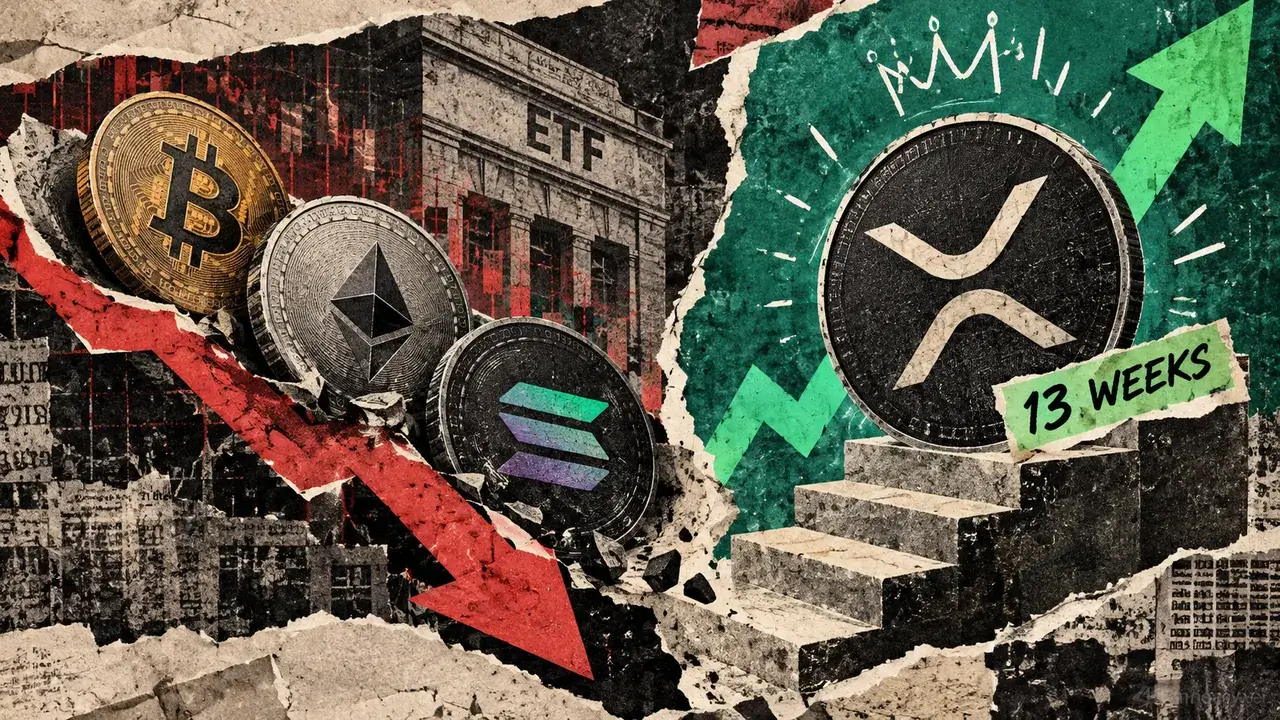
Bitcoin, Ether and Solana ETFs Shed $1.25bn as XRP Funds Log 13th Week of Inflows
Bitcoin funds posted their first losing week since mid-September and Ether products their heaviest redemptions since January, according to SoSoValue data.

79thVault Token Pool Drained of $14.35m Despite 79% of Liquidity Being Burned
A privileged permission in the 79AU token let coins leave its PancakeSwap pool without payment, Bitquery found, bypassing the burned liquidity entirely.
Discussion
0 commentsNo comments yet — be the first to weigh in.