Trezor Safe 7 Review: The FOSS Self Custody Hardware Wallet
Bitcoin Magazine Trezor Safe 7 Review: The FOSS Self Custody Hardware Wallet Some hardware wallets aim to create air-gapped devices that can be assembled by hand by end users, or tailored to industry professionals in a free and open-sour...
AI refinement failed — excerpt only
The AI model was rate-limited when this draft was created. The text below is a raw excerpt of the source article; rewrite it before publishing.
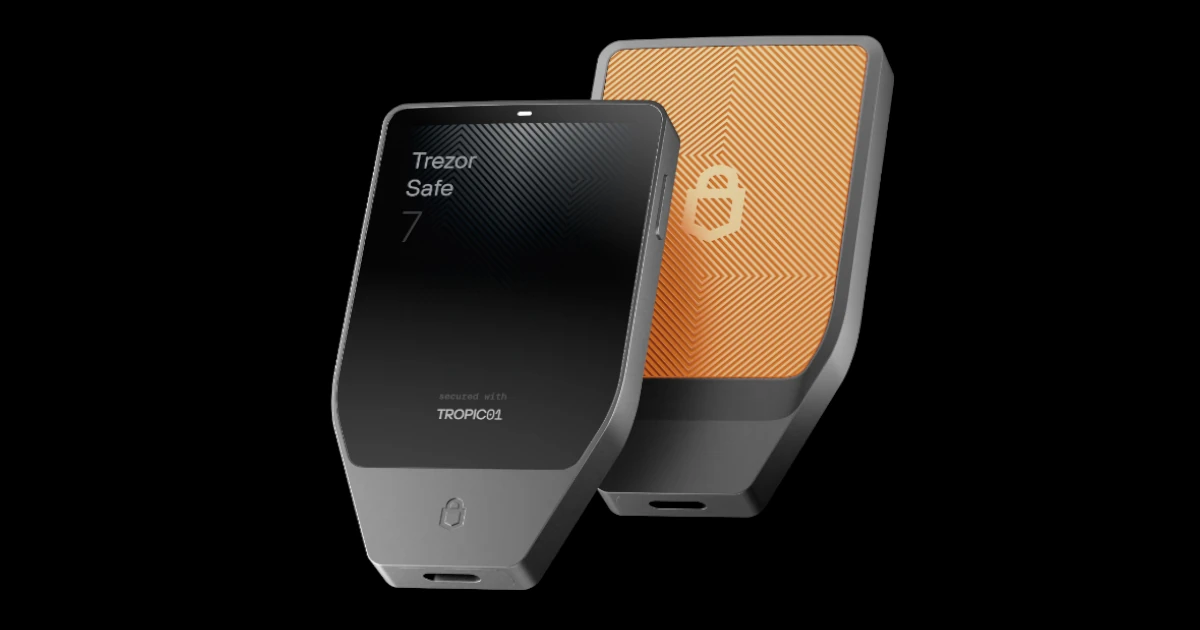
Some hardware wallets aim to create air-gapped devices that can be assembled by hand by end users, or tailored to industry professionals in a free and open-source ethos. Others close the source and aspire to become the Apple or Macintosh of hardware wallets, leading through their design of user guardrails. Trezor seems to have found a middle ground with the Safe 7.
The device feels like what you might expect from a modern iPhone, metal exterior, a wide screen that reaches the border of the device, and tactile feedback clearly designed to deliver satisfaction to the user. The Safe 7 manages to give you the impression, the experience, that Bitcoin is a real thing, a physical thing, in a way most other wallets do not.
Trezor also navigates the divide between Bitcoin and crypto users quite well. It pulls it off by delivering two different firmware stacks and designs; the standard multi-coin version, which comes in black and green, and the Bitcoin-only orange. Users can switch back and forth at will, regardless of which one they order, but Bitcoiners who already know what they want can get the orange version and won’t have to do any off-path firmware upgrades. Both types of users can switch to the other firmware type if they are so inclined, regardless of device color.
The choice does, however, have some consequences; many updates to firmware revolve around coins other than Bitcoin. As a result, Bitcoin-only firmware is leaner; Trezor’s support articles put it plainly: “Added advantages of running Bitcoin-only firmware include fewer regular updates (compared to the Universal firmware) and reduced risk of bugs or security issues.”
The first thing you’ll notice if you have some experience with Bitcoin but have never used Trezor is the size of their word list. The Safe 7 offers 20 words for the wallet’s backup, rather than 12 or 24 as most others. This is a security design choice that Trezor has been building on for many years.The 20-word standard called SLIP-39 was first introduced by Trezor in 2019 with their announcement of the Shamir backup feature. Shamir lets users split up the wallet’s backup seed words into shards, a threshold of which can be used to recreate the Bitcoin wallet, but any one of which alone is insufficient.Take, for example, a two-of-three Shamir setup; users write down three lists of 20 words, and store them in separate physical locations
More from peatpost
Bitcoin’s rebound approaches the $85,000 zone where past buyers may sell
Bitcoin and Ethereum extended their weekend recovery, although on-chain indicators and derivatives positioning suggest the rebound faces significant obstacles. Data from CryptoSlate showed that Bitcoin briefly climbed above $84,000 after...
XRP ETFs extend a 13-week inflow streak as Bitcoin, Ethereum and Solana funds shed $1.25 billion
US-listed XRP ETFs extended their inflow streak to 13 weeks as Bitcoin , Ethereum and Solana funds suffered nearly $1.25 billion in combined withdrawals during the week ended Oct. 9. Bitcoin ETFs recorded $681.1 million in net withdrawal...
Locked liquidity did not stop this $14 million crypto pool drain
The PancakeSwap pool for 79AU, 79thVault’s token, lost $14.35 million in USDT on Oct. 7 through two selling wallets, according to a Bitquery investigation published Oct. 8. Bitquery found that 79% of the pool’s liquidity-provider receipt...
Discussion
0 commentsNo comments yet — be the first to weigh in.