US Restrains $52m Tied to Xinbi Guarantee as Rival Laundering Markets Pull Back
Treasury designated the marketplace a transnational criminal organisation, and on-chain data showed USDT withdrawals jumping in the days that followed.
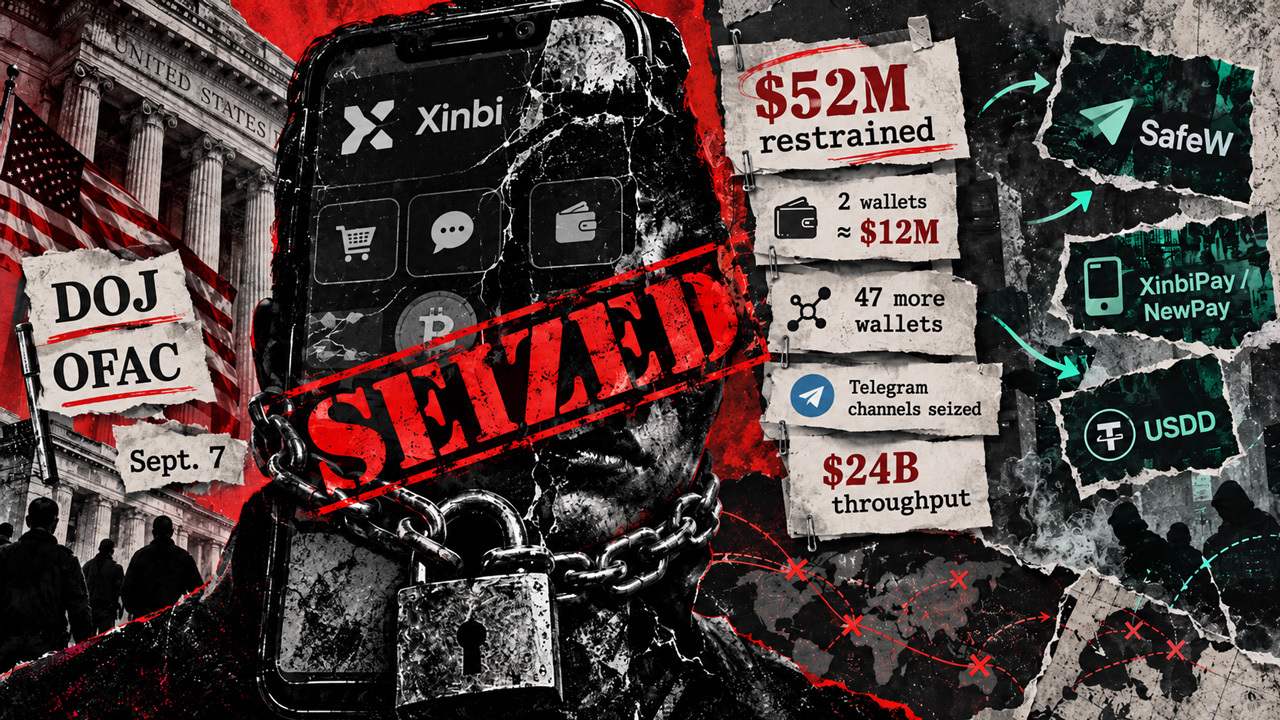
US authorities have stepped up action against Xinbi Guarantee, a Chinese-language online marketplace, restraining more than $52m in crypto and seizing infrastructure the platform relied on, CryptoSlate reported.
Xinbi emerged around 2022 and is estimated to have processed $24bn in digital assets and fiat.
Seizures, restraints and sanctions
A federal court authorised the seizure of Telegram channels linked to the marketplace on 7 September. Investigators seized two wallets holding about $12m and sought to restrain 47 further addresses tied to vendors and suspected money laundering.
At the same time, the Treasury Department designated Xinbi a significant transnational criminal organisation. It also sanctioned SafeW Technology and Anwen Technology, companies linked to messaging and payment infrastructure the marketplace used.
The action follows UK sanctions and earlier freezes affecting Xinbi's USDT wallets, which were used to receive, route and withdraw stablecoins. That pressure had already pushed the platform to explore greater use of USDD.
The latest measures reach beyond individual wallets. Around June 2025, as scrutiny grew, Xinbi started shifting the coordination of its merchants, along with alleged laundering, onto SafeW, an encrypted app. It also launched a payment service called XinbiPay, also known as NewPay.
By sanctioning service providers as well as seizing funds, US authorities targeted both the movement of money and the tools used to organise it. Freezing wallets alone tends to push operators towards new addresses, new tokens or new channels; going after the messaging and payment layer is meant to make that harder.
What the marketplace offered
According to CryptoSlate, vendors on Xinbi advertised cash delivery, bank-card fraud, sales of personal data, ways around know-your-customer checks, scam-platform development, surveillance equipment and malware.
According to Chainalysis, groups linked to North Korea used vendors on the platform to route stolen crypto worth tens of millions of dollars. So-called black U launderers swapped traceable crypto for stablecoins sourced from activity including pig-butchering and romance scams, breaking the on-chain trail back to stolen funds.
Vendor channels also recruited workers for some scam compounds in Southeast Asia, where trafficked workers have faced forced labour and confinement.
Merchants head for the exits
On-chain data suggests the action rattled operators. Figures from Bitrace showed a Xinbi sub-guarantee platform recording daily USDT withdrawals of roughly $389,000 to $564,000 between 1 and 7 September.
Outflows then rose to about $1.28m on 8 September and $1.81m on 9 September, with $708,125 recorded by 10 September. Guarantee merchants reportedly moved funds quickly to avoid future freezes or sanctions.
The effect spread beyond Xinbi. Rival platform Fulilai Guarantee removed money-laundering merchants from its public groups after the sanctions, including operators advertising card-to-USDT and cash car services. Fulilai Wallet has recorded about $9.3m in outflows since the Office of Foreign Assets Control announced the Xinbi measures.
Limits of the crackdown
Rapid withdrawals show that merchants are reacting. They do not show that the activity has stopped. Funds moved out of a sanctioned venue can resurface elsewhere, and Xinbi had already shown it could shift to new apps, payment tools and stablecoins under pressure.
The $52m restrained is also small next to the estimated $24bn the marketplace is said to have handled. The seizure of channels and sanctions on infrastructure providers may prove more disruptive than the dollar figure alone suggests, but that will only become clear over time.
The next signals will come from whether the 47 additional addresses are restrained, whether activity migrates to rival guarantee platforms or alternative stablecoins such as USDD, and whether further freezes or sanctions follow from other authorities.
More from peatpost

Bitcoin's Rebound Nears $85,000 Cost-Basis Cluster as Ether Whales Trim Bullish Bets
Bitcoin briefly topped $84,000 and Ether regained $2,500, but investor cost-basis data and $26.5bn of Ether futures positioning point to hurdles ahead.

Bitcoin, Ether and Solana ETFs Shed $1.25bn as XRP Funds Log 13th Week of Inflows
Bitcoin funds posted their first losing week since mid-September and Ether products their heaviest redemptions since January, according to SoSoValue data.

79thVault Token Pool Drained of $14.35m Despite 79% of Liquidity Being Burned
A privileged permission in the 79AU token let coins leave its PancakeSwap pool without payment, Bitquery found, bypassing the burned liquidity entirely.
Discussion
0 commentsNo comments yet — be the first to weigh in.