US Reimposes Iranian Port Blockade; Oil Posts Its Biggest Day in Six Years
Brent surged 9.6% to $83.30 after Washington's blockade announcement and Iranian strikes on two tankers in the Strait of Hormuz.
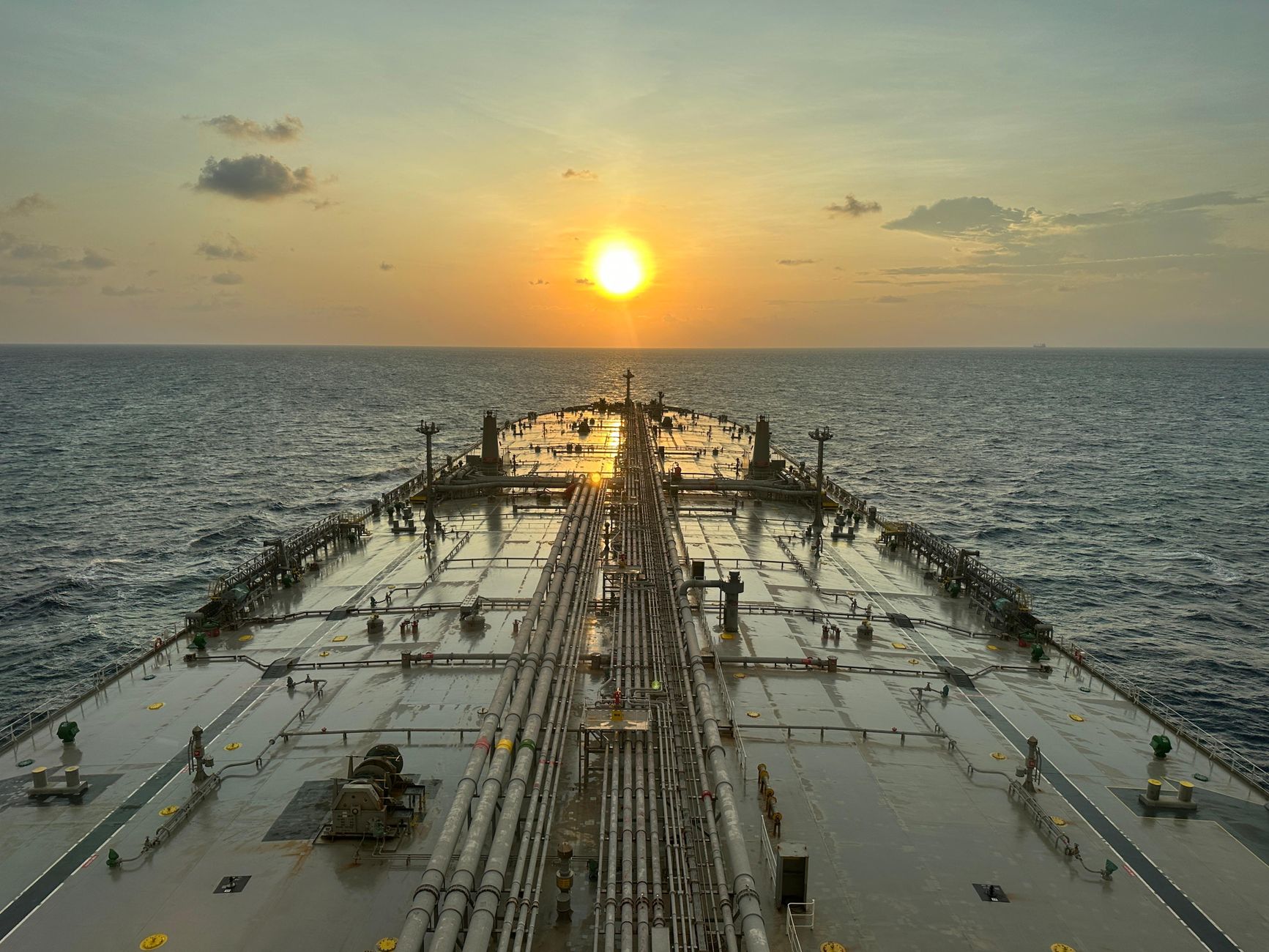
The Iran conflict escalated on two fronts Monday: Washington announced it would reimpose a blockade of Iranian ports, and Iran said it had struck two tankers in the Strait of Hormuz. Oil markets rendered their verdict in one session — Brent crude surged 9.59% to settle at $83.30 a barrel, its biggest single-day percentage gain in over six years, while WTI rose 9.4% to $78.14.
The moves followed a week of renewed hostilities. Iranian attacks on shipping off Oman on July 7-8 had drawn fresh US airstrikes, after which President Trump declared the memorandum of understanding that had paused hostilities no longer in force.
The strait becomes the story
A blockade of Iranian ports is an escalation of category, not degree — a standing naval commitment that invites exactly the tanker-war dynamics Monday's strikes previewed. Roughly a fifth of the world's oil transits the Strait of Hormuz; the market's 9% repricing reflects not lost barrels, which remain modest, but the tail risk of the waterway itself becoming contested space.
Insurance costs for Gulf transits jumped accordingly, and the effects cascade well beyond energy: shipping reroutes, LNG exposure, and an inflation impulse arriving at the precise moment central banks had begun to believe disinflation was resuming.
The macro collision
The timing could hardly be worse for the Fed's calculus. An oil shock is stagflationary — it lifts headline inflation while taxing growth — and it lands weeks before a July FOMC meeting markets already could not handicap. Crypto and equities both wobbled as the strikes dominated headlines mid-month, with Bitcoin retreating from its brief run above $65,000.
Markets would eventually look through it — a Saudi-proposed naval coalition took the edge off prices by month's end. But July 13 established the new baseline: energy geopolitics is back as a first-order market input, and every risk model that assumed a quiet Gulf is being rewritten.
More from peatpost
US Turns Its Full Sanctions Arsenal on Iran's Crypto Economy
Treasury placed Iran's digital-asset sector under the same authority long used against its oil and banking industries — and put foreign exchanges everywhere on notice.
Crypto Lobby to Regulators: Don't Stretch Stablecoin KYC to Peer-to-Peer Transfers
The Blockchain Association's comment letter backs identity checks at the issuer level — and warns that pushing them downstream could 'cripple the industry.'

Human Rights Foundation Grants 500 Million Satoshis to 16 Projects Across Three Continents
The ~$397,000 round funds Lightning-to-mobile-money bridges, dissident communication tools, and protocol work across Africa, Asia, and Latin America.
Discussion
0 commentsNo comments yet — be the first to weigh in.