Who Actually Trades With Iran, and Whether Sanctions Can Stop Them
China takes 26.9% of Iranian exports. Turkey and Pakistan share a border with it. The pressure only works if those three comply.
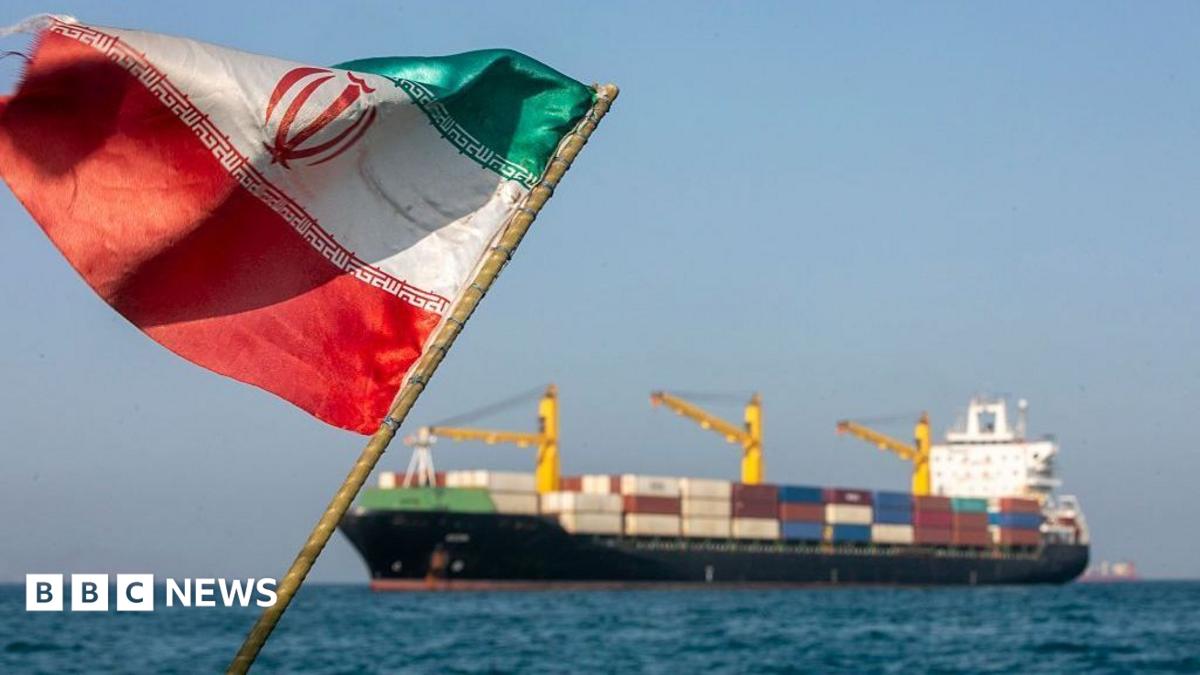
The United States has promised that "the single greatest financial offensive ever" will help it and Israel bring their war with Iran to an end. Whether it does depends less on Washington than on a short list of countries that have spent decades deciding how much American pressure they are willing to absorb.
Iran has faced near-continuous sanctions since the Islamic Revolution of 1979. Over that period it has built deep trade relationships with partners who either have a history of ignoring US economic pressure or cannot afford to stop trading with it. That is the context for Tehran's claim to be "fully prepared," and for the scepticism of many economists about the impact of the latest move.
China is the whole question
China is by far the largest buyer of Iranian goods, accounting for 26.9% of its exports in 2025 according to the International Trade Centre, a joint agency of the United Nations and the World Trade Organization.
Several caveats attach to that figure, and all of them point the same way. The data covers a period before the current war began. A number of economists believe Iranian oil sales — particularly to China — were already being underreported for political reasons. And the ITC tallies Iran's exports largely from the import figures its trading partners report, because obtaining current export data from Iran itself is difficult.
So 26.9% is probably a floor rather than a ceiling.
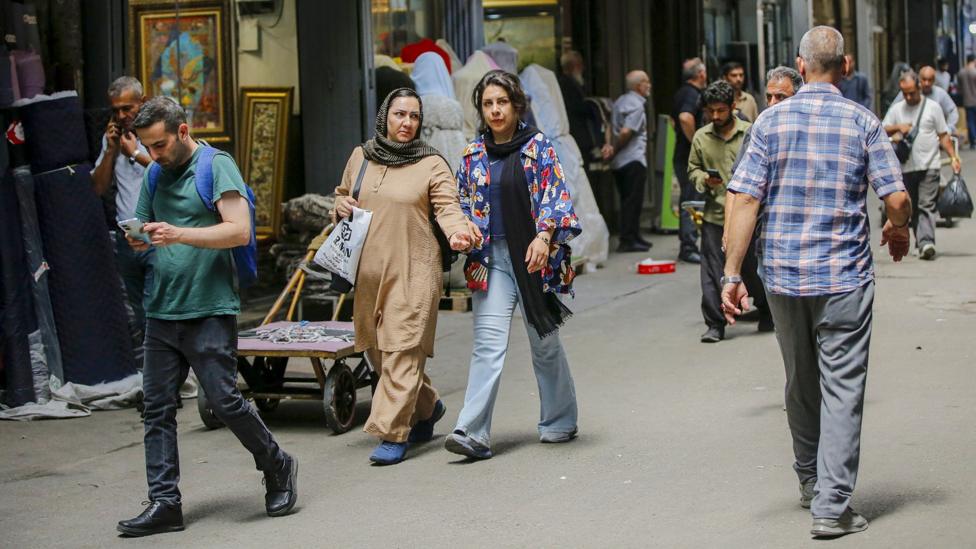
Beijing's reaction to "economic D-Day" made its position plain: firmly opposed to what it called illegal unilateral sanctions, unconvinced that economic pressure resolves anything, and intent on safeguarding its own interests.
Turkey is the hard case
Turkey is another substantial partner, but its position is far more uncomfortable than China's. It maintains a much friendlier relationship with Washington, and the US has threatened to penalise anyone who keeps trading with Iran.
Economists point out that Turkey cannot simply stop without significant damage to an economy already struggling with inflation running at 31.8%. As the only NATO member sharing a border with Iran, it has to balance obligations to its military allies against a trading relationship with its immediate neighbour.
There is no elegant answer available to Ankara, which is precisely why its behaviour will be the most closely watched.
Pakistan and the rest
Pakistan also borders Iran and ranks among its larger export partners, facing a version of the same bind: a land border does not stop being economically significant because a third country disapproves of it.
That geography is the recurring difficulty for any sanctions regime aimed at Iran. Financial pressure is most effective against countries whose trade moves through a small number of chokepoints that Washington can influence — dollar clearing, major ports, insurance markets. Iran's most durable relationships run overland, to neighbours who have their own reasons for keeping the border open.
What the measures can and cannot do
None of this means sanctions have no effect. They raise Iran's costs, force it into discounted sales, complicate its payments and consume administrative energy. Over years, that accumulates.
What they have not historically done is close the economy, because the buyers who matter most have not stopped buying. The new package extends the threat from Iran itself to any bank or business in the ecosystem that turns Iranian oil into money — an attempt to make the intermediaries choose.
Whether that works is an empirical question with a specific answer, and it will come from Beijing, Ankara and Islamabad rather than from Washington's press conferences.
More from peatpost

Real Estate Market Forecast 2026: U.S., Spain, Italy and Switzerland Face a Changing Landscape as Crypto Enters the Property Market
Global housing markets diverge in 2026 as mortgage rates ease, supply shortages persist, and blockchain-based transactions move from pilot projects toward mainstream adoption.
Clarity Act Odds More Than Doubled to 31% as Trump Reportedly Backed Ethics Limits
The crypto market structure bill needed 60 Senate votes to reach floor debate; supporters likely required nine Democrats, and none had publicly committed.

India to push BRICS digital currency link despite hurdles, sources say
India is chairing BRICS this year, with leaders of the bloc set to meet in New Delhi on September 12 to 13.
Discussion
0 commentsNo comments yet — be the first to weigh in.