Zcash Tops $1,000 as Grayscale's ZCSH ETF Passes $400m in Assets
ZEC hit $1,050.70 intraday, nearly doubling in a month, as futures open interest crossed $2bn and the new fund's coin holdings grew.
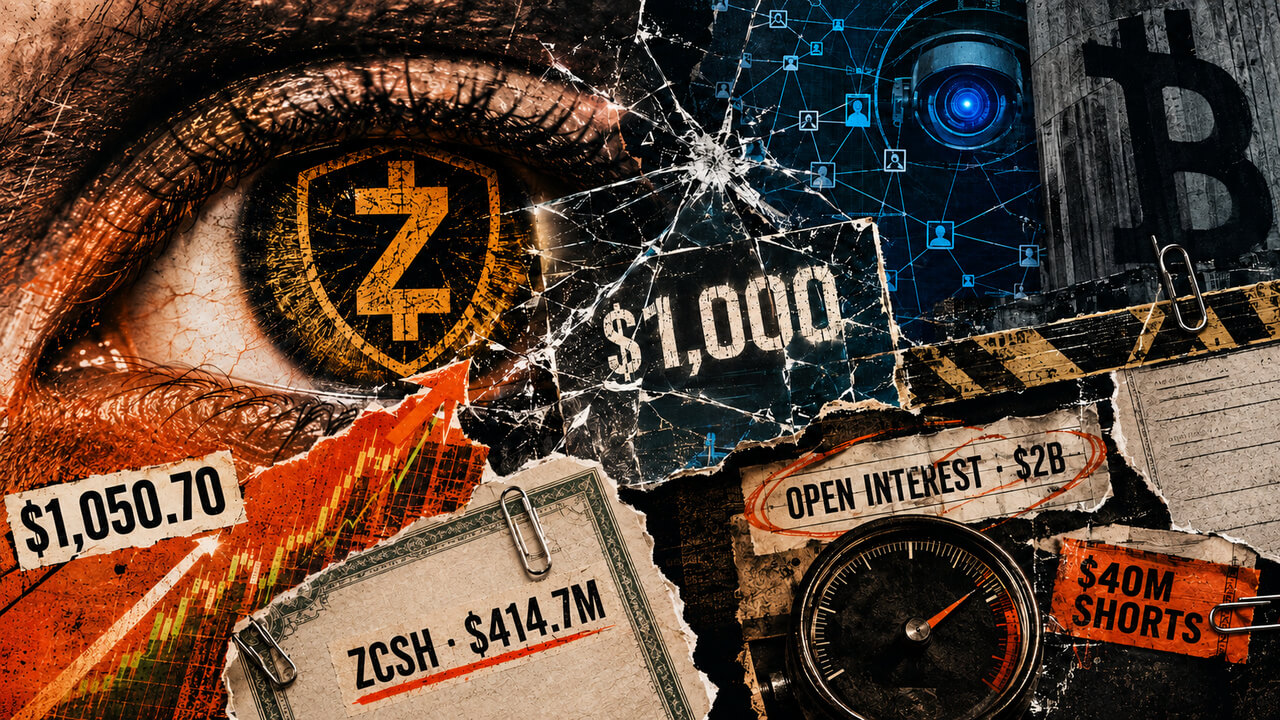
Zcash rose above $1,000 on 4 September, lifting assets in Grayscale's newly listed ZCSH exchange-traded fund past $400m less than two weeks after it began trading.
ZEC reached an intraday high of $1,050.70, a gain of about 20% over 24 hours and close to 100% over the previous month, according to CryptoSlate.
The fund's first fortnight
ZCSH held $414.7m in assets as of 3 September, up from about $304.6m when it debuted on NYSE Arca on 25 August. The fund inherited its assets from the Grayscale Zcash Trust, and much of the increase reflects the rise in ZEC's price rather than new money.
Not all of it was price, however. The number of coins held by the fund grew from 387,849 at launch to 428,613 by 3 September, while shares outstanding rose to 5.35 million, which points to some net creation of new shares.
For a converted trust, that distinction matters. Asset growth driven purely by a rising token price says little about investor appetite; an increase in the coin count is the more telling signal.
Leverage added fuel
The breakout came during a broader advance, with Bitcoin moving above $82,000 and ether reclaiming $2,500, but Zcash's gain was considerably larger.
Derivatives played a part. About $40m of short ZEC positions were liquidated over 24 hours, adding momentum to a rally that was already under way before the wider market moved. When prices rise sharply, exchanges forcibly close short positions whose margin has run out, and the buying needed to close them can accelerate the move.
CoinGlass data showed Zcash futures open interest crossing $2bn for the first time, while 24-hour futures volume rose above $6bn for the first time since mid-August. Traders are committing considerably more capital to ZEC derivatives as the price returns to a range it has not held in years.
The scale of the turnaround is striking. ZEC traded at around $40 a year earlier and has now rejoined the ten largest cryptocurrencies by market capitalisation for the first time since 2018.
The case beyond privacy
Some supporters argue the rally is about more than privacy. Cryptographer Arjun Khemani said that treating it purely as a privacy-coin trade sells Zcash short. He pointed to its fixed supply of 21 million coins, a Bitcoin-like issuance schedule, a decade of distribution, work on quantum recoverability, plans for much higher transaction throughput and efforts to formally verify the shielded pool against undetectable inflation bugs.
"Privacy is just one property of Zcash," Khemani said, framing the larger bet as whether ZEC can become a form of sovereign money.
Grayscale's thesis leans on changing technology. Because Bitcoin transactions are recorded permanently on a public ledger, balances and histories can potentially be pieced together once an address is linked to a real-world identity. The asset manager argues AI could make that analysis faster, cheaper and more widely available, and sees the start of a third major wave of concern about financial privacy, after the computerisation of records in the 1970s and the spread of the internet in the 1990s.
In Zcash's shielded transactions, zero-knowledge cryptography keeps the amount and the addresses of both sender and recipient hidden. Grayscale also points to second-mover advantages: active work on new cybersecurity threats, and links to other chains via intent-based technology, which could allow wallets or AI agents to shift value between networks with Zcash acting as a private settlement layer.
A large gap to close
The scale remains lopsided. Bitcoin accounts for about 93% of the market capitalisation of Grayscale's Currencies Crypto Sector, and Zcash's value is still below 1% of Bitcoin's, despite a roughly 19-fold climb across the span examined in Grayscale's most recent research.
Bitcoin's own strengths are hard to copy: its liquidity and infrastructure, a widely recognised brand, and a network that has grown for over 15 years. Privacy also cuts both ways, since shielded transfers can make sanctions screening, anti-money-laundering checks and the tracing of illicit money more difficult, an issue that has long hurt privacy coins more than Bitcoin.
The test for Grayscale's argument is whether privacy and technical differentiation can produce lasting market-share gains once the current rally cools. ZCSH's coin holdings, futures open interest and any regulatory response to shielded assets are the measures to watch.
More from peatpost
Bitcoin's Rebound Nears $85,000 Cost-Basis Cluster as Ether Whales Trim Bullish Bets
Bitcoin briefly topped $84,000 and Ether regained $2,500, but investor cost-basis data and $26.5bn of Ether futures positioning point to hurdles ahead.
Bitcoin, Ether and Solana ETFs Shed $1.25bn as XRP Funds Log 13th Week of Inflows
Bitcoin funds posted their first losing week since mid-September and Ether products their heaviest redemptions since January, according to SoSoValue data.

79thVault Token Pool Drained of $14.35m Despite 79% of Liquidity Being Burned
A privileged permission in the 79AU token let coins leave its PancakeSwap pool without payment, Bitquery found, bypassing the burned liquidity entirely.
Discussion
0 commentsNo comments yet — be the first to weigh in.