Acurast Says 335,000 Smartphones Joined Its Network as Projects Pitch Phones as AI Computing Layer
Decentralised networks such as Acurast and Phase want idle phones to take on AI and web workloads, but sceptics argue the devices are better suited to gathering real-world data.
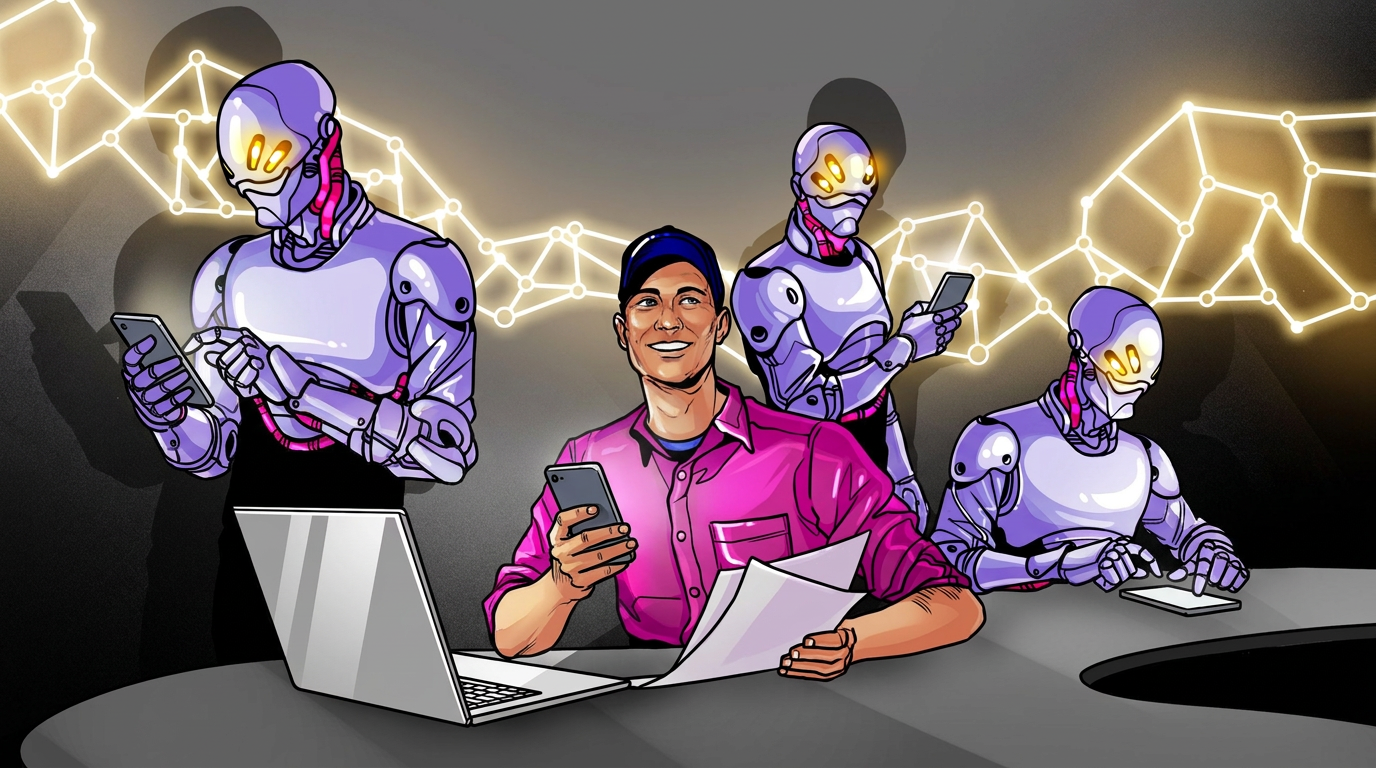
A group of decentralised computing projects is trying to turn ordinary smartphones into an alternative to the large data centres that power artificial intelligence. One of them, Acurast, says it has signed up more than 335,000 phones, though only a fraction are working on any given day.
The pitch arrives as scrutiny of conventional AI infrastructure intensifies. Yet some in the decentralised infrastructure sector doubt that phones can run AI models at meaningful scale, and argue their real value lies elsewhere.
The case against the data centre
The facilities behind the AI boom face pressure from two directions. Campaigners in many countries have drawn attention to the heavy energy and water demands of large data centres, while investors have questioned how operators will recoup the outlay. According to Cointelegraph, a single AI data centre with one gigawatt of capacity costs around $38bn to build.
Against that backdrop, the idea of tapping hardware that already exists has obvious appeal. Cointelegraph cites an estimate of 7.68 billion mobile connections worldwide as of October 2026, and notes that billions of smartphones sit unused for much of the day in pockets, on desks or in drawers.
Each of those devices carries a processor, memory and an internet connection. In aggregate, proponents argue, they amount to a large reservoir of idle computing capacity that could be rented out rather than left dormant.
How Acurast says its network performs
Acurast is among the more advanced attempts to put that theory into practice. Co-founder Alessandro De Carli said that of the 335,000-plus phones onboarded, roughly 40,000 are fully active on a typical day. Those devices handle tasks including web scraping, cybersecurity work, AI inference and the hosting of AI agents.
De Carli argued that phones are especially efficient for certain kinds of work. He pointed to their built-in hardware security, which he said makes them well suited to confidential computing and to running executable programs in an isolated environment. He also said they perform well on processor-heavy tasks and on jobs that benefit from being spread widely across locations with unrestricted internet access.
Speaking to Cointelegraph's Magazine, De Carli said that while servers hold the advantage in multi-threading, phones cannot be matched on computing efficiency.
He acknowledged the limits. Standard phones have modest memory, and large servers keep an edge when running many tasks in parallel. But he maintained that plenty of workloads fit comfortably within a phone's available memory.
De Carli also offered a headline comparison. He claimed the network's active phones together match the computing capacity of about 2,340 high-end data-centre servers, using the ASUS RS720A-E11, a dense machine designed for AI and high-performance computing, as the benchmark. That figure is the company's own claim and has not been independently verified.
Phase targets connectivity for AI agents
A second project, Phase, is approaching the opportunity from a different angle. In October it launched Phase Proxy, which lets smartphone owners supply internet connectivity and blockchain validation to AI agents.
Founder Kirill Eves explained the rationale: websites often block or throttle automated traffic that comes from data-centre addresses. By routing requests through users' mobile and residential connections instead, the service aims to give AI agents access that might otherwise be denied. Phase plans to charge 0.5 USDT, a dollar-pegged stablecoin, per 1,000 requests and per gigabyte of traffic.
The company's next product, Phase Router, is designed to triage requests. Simpler queries would be sent to models running on phones within the network, while more demanding ones would be passed to large external providers such as OpenAI and Anthropic. Eves said routing decisions would weigh task complexity, model capability, performance and cost.
He added that the network could eventually extend beyond phones to desktop computers, servers and graphics processors, the chips that do most of the heavy lifting in modern AI.
Why it matters, and the doubts
These projects sit within a broader category known as decentralised physical infrastructure networks, or DePIN, in which participants contribute hardware in exchange for payment, often in crypto tokens. The approach promises to lower costs by drawing on spare capacity rather than building new facilities, and to spread infrastructure across many owners rather than concentrating it in a handful of companies.
The sector has attracted attention. Cointelegraph referenced a Messari finding that DePIN has grown into a $10bn sector despite a slump in token prices.
But the gap between onboarding devices and doing useful work is notable. Acurast's own figures suggest only around 12% of registered phones are fully active on an average day, a reminder that consumer hardware is intermittently available, battery-constrained and dependent on owners' willingness to participate.
There is also a question of fit. Training and running the largest AI models depends on tightly linked clusters of specialised chips with large amounts of memory, something phones cannot replicate. Even De Carli's argument rests on specific workloads rather than AI broadly, and Phase's router design implicitly concedes that harder tasks will still go to centralised providers.
Markus Levin, co-founder of decentralised infrastructure provider XYO, offered a more sceptical view. He suggested decentralised networks may be better used for gathering and verifying real-world data than for running AI models. Phones and sensors can capture local information that centralised datasets overlook, he said, but only if that data is accurate and resistant to manipulation.
Levin's point reframes the opportunity. Rather than competing with data centres on raw computing, a distributed network of devices might supply something those facilities cannot easily produce: fresh, location-specific inputs for AI systems.
The proxy model raises its own considerations. Using residential connections to get around website blocks on automated traffic serves AI agents, but it works precisely because sites are trying to filter such traffic, which could invite pushback from the platforms concerned.
What to watch
The coming months should show whether these networks can convert sign-ups into sustained, paid demand. Key indicators include:
- Whether Acurast's daily active count rises meaningfully relative to its 335,000 registered phones
- Uptake of Phase Proxy at its stated pricing, and the rollout of Phase Router
- Any independent benchmarking of claims comparing phone networks with data-centre servers
- Whether projects pivot towards data collection and verification, as Levin suggests
For now, phone-based networks look less like a replacement for the data centre than a complement to it, handling niche, distributed or security-sensitive jobs at the edges. Whether that niche grows large enough to dent demand for multi-billion-dollar facilities remains an open question.
More from peatpost
Nvidia Board Opens Independent Inquiry Into Jensen Huang After Chinese Spy Report
Directors say they see no sign that secrets were compromised, as Huang admits an affair, lawmakers demand answers and shares slip 5% before Monday's open.
AI Chip Stocks Rebound From Global Rout as Nvidia Gains 2.8%, but Bubble Fears Persist
A Friday relief rally left Nvidia and AMD well below their October peaks, as data centre politics and stress in AI debt markets keep investors uneasy.
Voters in At Least 29 US Communities Back Limits on AI Data Centre Development
Ballot results from Ohio to Wisconsin show local resistance to the AI buildout hardening, as industry figures warn that broad moratoriums could damage the economy.
Discussion
0 commentsNo comments yet — be the first to weigh in.