AI Chip Stocks Rebound From Global Rout as Nvidia Gains 2.8%, but Bubble Fears Persist
A Friday relief rally left Nvidia and AMD well below their October peaks, as data centre politics and stress in AI debt markets keep investors uneasy.
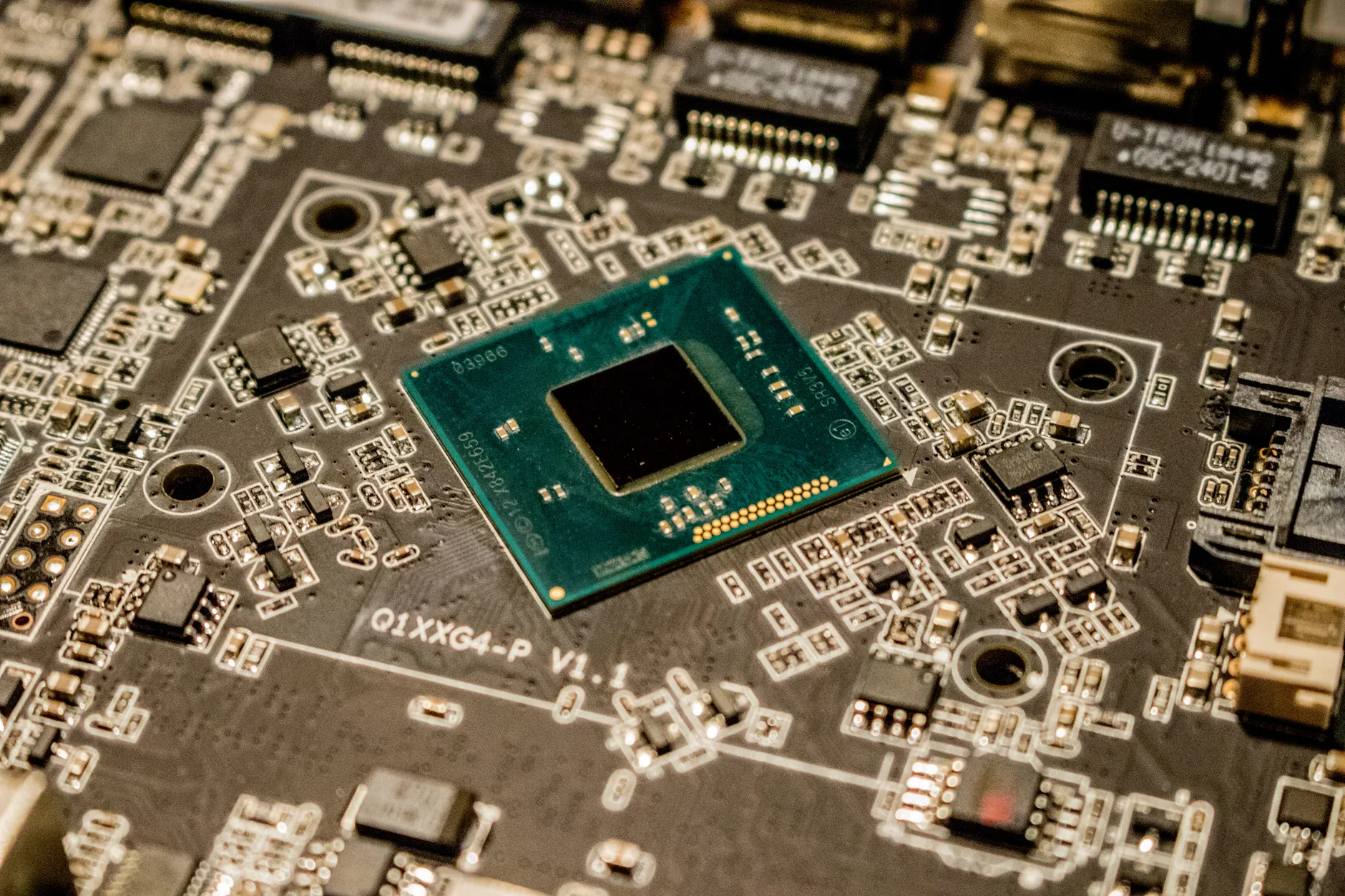
Shares in the largest artificial intelligence chipmakers recovered on Friday after a sharp sell-off that spread from Wall Street to Asian markets. A single positive session has done little to resolve the question now facing investors: whether the sector is going through a healthy correction or the early stages of a bubble deflating.
Nvidia closed 2.78% higher at $186.64, a day after falling 9.3%. AMD rose to $449.04 following a 17.3% slump on Thursday, according to Decrypt. Both remain well short of the highs they reached in October.
A rebound that repaired little
The scale of the earlier losses puts Friday's gains in perspective. A stock that drops 17% needs a rise of roughly a fifth just to return to where it started, and AMD's bounce came nowhere close to that.
The broader technology benchmark told a similar story. A cash-market proxy for the US Tech 100 index gained 1.85% to 27,007.3 on Friday, yet still ended the week down more than 5.5%. On a daily chart, the recovery looks like a pause in a longer decline from October levels rather than a resumption of the previous upward trend.
The damage was not confined to the US. South Korea's KOSPI fell 6% on Friday, and Taiwan's main index lost more than 8% over the week, its weakest weekly performance in months. TSMC, the contract manufacturer that produces chips for many of the world's leading designers, fell by its maximum permitted daily amount during the rout.
Reuters reported that Taiwanese officials had asked state-owned banks to help prop up prices, a sign of how seriously authorities viewed the selling. Both South Korea and Taiwan are heavily exposed to the semiconductor supply chain, so moves in AI-linked shares tend to ripple quickly through their wider markets.
Politics enters the data centre debate
Part of the latest nervousness stems from US politics. The midterm elections heightened concern that gains for Democrats could bring tougher scrutiny of data centre construction.
Local votes added to that impression. Ballotpedia found that in 40 of 41 local ballot contests held on 3 November, voters backed limits on development, including by rejecting measures designed to ease construction. Some of those votes were advisory rather than binding, but the direction of public sentiment was clear.
This matters to chipmakers because data centres are the main engine of their growth. Each facility involves heavy spending not only on processors but also on servers, power supply and cooling systems. Local restrictions could push back orders or force developers to build in other locations, adding delay and cost.
The doubts, however, did not begin with the election. AI developers and their customers have been committing enormous sums to new capacity, often before it is clear what returns that investment will generate. Higher borrowing costs make that strategy harder to sustain. Reuters quoted market strategist Steve Sosnick as warning that widely held stocks were already "priced to perfection".
Correction or bursting bubble
The distinction between the two scenarios is important. A correction is conventionally defined as a fall of at least 10% from a recent peak. It says nothing in itself about the health of the underlying business.
Valuation multiples can do much of the work. Consider a chipmaker valued at 60 times its annual earnings because investors expect rapid growth. If the market decides it will pay only 40 times those same earnings, the share price can fall by a third even if profits do not decline at all. In that case, sentiment has changed but the company has not.
A bubble bursting is a more serious event. It occurs when the expectations driving a boom turn out to be unrealistic and the capital funding it starts to dry up.
The dot-com era offers the obvious comparison. From March 2000 to October 2002, the Nasdaq shed about 77% of its value. That technology did prove transformative, but investors had badly misjudged how quickly companies could turn it into profit.
Telecoms groups spent heavily laying fibre-optic networks ahead of demand that had not yet materialised. In 2002 Global Crossing, the builder of an international network, sought bankruptcy protection. What was laid down endured; many of the companies and shareholders who paid for it did not.
How financial strain could spread
AI could face a similar gap between long-term potential and near-term returns. The boom has drawn in a wide range of participants, from cloud and inference start-ups to former crypto miners now renting out their hardware, according to Decrypt.
The risk lies in how such projects are financed. Picture an operator that borrows billions to build a data centre filled with Nvidia chips, expecting to lease that computing power at premium rates for years. If customers spend less than forecast, if refinancing becomes more expensive, or if construction is delayed, the debt still falls due.
In that situation the chain reaction is easy to trace. The operator may cancel chip orders, contractors lose work, and utilities that planned new generating capacity lose expected customers. Lenders and bondholders could take losses. At that point a stock-market sell-off begins to affect the real economy.
There is a significant difference from 2000, though. Microsoft, Alphabet, Amazon and Meta, the largest spenders on AI infrastructure, are profitable companies with established customer bases and substantial cash flows. Many dot-com businesses had neither. The large technology groups are far better placed to absorb setbacks than smaller AI-cloud providers that rely on repeated borrowing to expand.
That suggests a more nuanced outcome than a simple boom or bust. AI could continue to reshape industries while a number of individual companies fail, and investors in even the successful ones may still find they paid too much.
Warning signs in credit markets
Some indicators are already flashing amber. Reuters reported on Friday that the cost of insuring against a default by CoreWeave, an AI-cloud provider, had risen above 1,000 basis points. Credit default swaps work somewhat like insurance on a loan: the higher the price, the more concerned investors are about repayment.
Broader bond markets, by contrast, were functioning relatively normally. That points to stress concentrated in the riskiest parts of AI financing rather than evidence of a system-wide crisis.
The distinction is worth watching. Problems at highly leveraged specialists can remain contained if larger, cash-rich buyers keep spending. They become more dangerous if tighter credit forces cutbacks across the industry at once.
What to watch next
The coming week should provide firmer evidence than another day of price swings. Several data points will help investors judge whether demand is holding up:
- Results from CoreWeave, which will show how its business and finances are faring amid rising credit concerns
- Earnings from Applied Materials and Cisco, which may indicate whether customers are still ordering equipment and capacity
- US inflation data, which will shape expectations for interest rates and borrowing costs
Steady orders and manageable debt levels would strengthen the case that the sell-off is a correction driven by stretched valuations. A pattern of cancelled projects, failed refinancings and falling sales would point instead to deeper cracks in the financial foundations of the boom.
Few dispute that AI has a long-term future. The open question is whether every company borrowing heavily to reach that future can afford the journey.
More from peatpost
Nvidia Board Opens Independent Inquiry Into Jensen Huang After Chinese Spy Report
Directors say they see no sign that secrets were compromised, as Huang admits an affair, lawmakers demand answers and shares slip 5% before Monday's open.

Acurast Says 335,000 Smartphones Joined Its Network as Projects Pitch Phones as AI Computing Layer
Decentralised networks such as Acurast and Phase want idle phones to take on AI and web workloads, but sceptics argue the devices are better suited to gathering real-world data.
Voters in At Least 29 US Communities Back Limits on AI Data Centre Development
Ballot results from Ohio to Wisconsin show local resistance to the AI buildout hardening, as industry figures warn that broad moratoriums could damage the economy.
Discussion
0 commentsNo comments yet — be the first to weigh in.