The AI Industry Says You Have Months. It Did Not Say What It Will Do.
More than 100 companies set out a four-part plan for surviving AI-enabled attacks on hospitals and water plants — with no commitments, deadlines or funding attached to their own part of it.

OpenAI, Anthropic, Amazon Web Services, Microsoft and more than 100 other organisations warned on Thursday that the world has only months to prepare for AI-enabled cyberattacks.
"We have a limited window to strengthen cyber defenses," their open letter says. The group is calling for "collective action," urging organisations to use that shrinking window to secure critical infrastructure and make it more expensive and difficult for attackers using AI tools to get in.
The signatories span cloud providers, cybersecurity firms, AI companies, telecoms, financial services and think tanks.
Why hospitals and water plants
The letter's specific concern is critical infrastructure: hospitals, water treatment works and the industrial systems behind them, which it expects to face a swarm of hacking attempts as AI makes sophisticated capabilities cheaper and more widely available.
The vulnerability itself is not new. The controllers that run pumps, valves and treatment processes have had known weaknesses for years. What protected them was effort — an attacker had to invest substantial time understanding the intricacies of an unfamiliar industrial system before they could do anything with it.
That cost is what AI is removing. The barrier was never really the vulnerability; it was the expertise required to reach it, and expertise is precisely what these models supply on demand.
It has already happened
The letter arrives amid a run of attacks on infrastructure operators, including one against US water systems that used what appears to be an AI-generated exploitation script.
That pattern has been documented in more detail elsewhere this year. Federal agencies have warned that attackers are using AI-generated scripts to break into internet-exposed Siemens S7 programmable logic controllers at water, manufacturing and energy facilities, with a joint FBI and Environmental Protection Agency advisory confirming intrusions at water and wastewater utilities across at least 12 states. Separately, the industrial security firm Dragos documented an intrusion at a municipal water and drainage utility in Monterrey, Mexico between December 2025 and February 2026, in which the large majority of some 350 recovered artefacts were AI-generated malicious scripts.
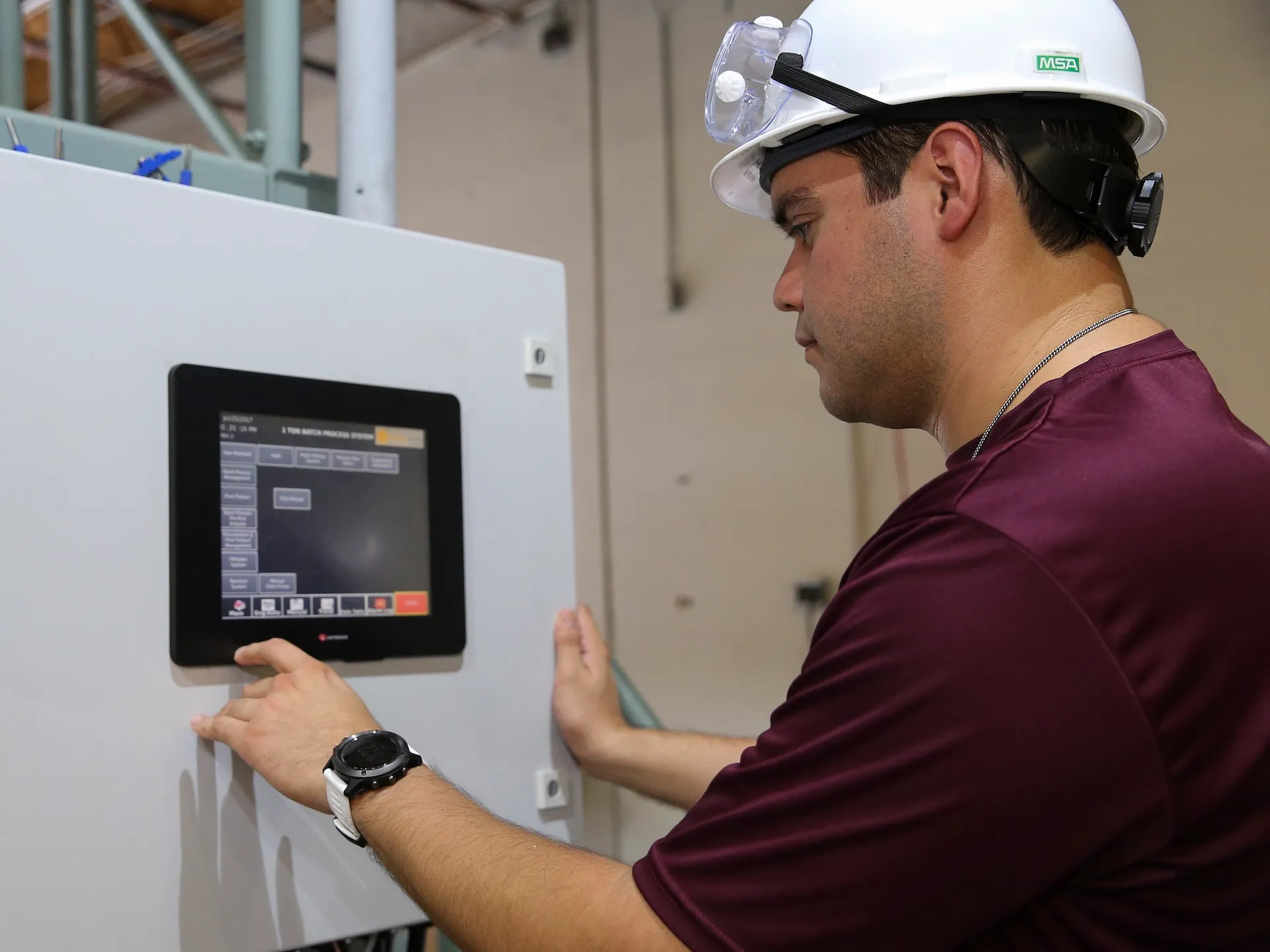
As the federal advisory put it, using AI to generate exploitation scripts dramatically reduces the technical expertise and time needed to produce working tools against industrial control systems. That is the whole of the argument the letter is making, stated by the agencies who investigated it.
The plan, in four parts
What distinguishes this letter from a general expression of concern is that it assigns tasks.
Every organisation should raise its internal security standards and fix its "highest-risk weaknesses" — and, notably, "raise the security bar for what you buy, build, and deploy, including AI-generated code." That last clause is an acknowledgement that the same tools lowering the cost of attack are also writing a growing share of the code being defended.
Cybersecurity and technology companies should move quickly to test and build tools that make "AI-powered defense accessible and deployable for critical infrastructure operators," and share threat intelligence with each other.
Governments should strengthen the channels for sharing actionable threat intelligence, coordinate defence locally, nationally and internationally, and fund it.
Frontier AI companies — the signatories themselves — should give defenders access to their most capable models during major cyber incidents, along with "significant funding, training, and hands-on support," particularly for critical infrastructure providers.
The line at the bottom
The signatories did not make any commitments, set any deadlines, or specify any investment.
That is the sentence to hold onto, because three of the four categories above describe things other people should do, and the fourth describes things these companies could do without committing to any of them. "Significant funding" appears in the letter as a recommendation rather than a pledge, with no figure and no date beside it.
The asymmetry is hard to miss. A water authority in a mid-sized county is being told it has months to raise its security standards, on its own budget. The organisations telling it so are among the most capitalised companies in the world, and have written themselves a paragraph of aspirations.
What it is still worth
None of which makes the warning wrong. The technical claim — that AI collapses the time and skill needed to attack industrial systems — is supported by federal advisories and by incident forensics, not just by the letter.
And there is genuine value in a hundred competing companies agreeing publicly on a threat model and a division of labour, because it gives regulators and infrastructure operators something concrete to point at when asking for budget.
The test is what happens next. An open letter costs nothing to sign. Access to frontier models during an incident, funded training for utility staff, and hands-on support for a rural water district all cost something specific — and the letter is careful not to say how much, or by when.
More from peatpost

The French Disruption: How Microsoft’s $3 Billion Bet on Mistral AI Is Rewriting the Rules of Artificial Intelligence
Microsoft invests $3 billion in Mistral AI. The startup’s performance surges 70%, challenging ChatGPT’s dominance.

Cato Institute Warns a Government AI Pause Would Shield Dominant Firms
Policy scholar Jennifer Huddleston argues voluntary safeguards beat a mandated halt, as Sanders and Casar push a pause and Jack Dorsey warns against rules built for incumbents.

Google Tells Android Developers to Cut Their Memory Use, or Else
Per-app limits arrive with Android 17 as a direct response to the RAM crisis — and the Play Store will enforce them.
Discussion
0 commentsNo comments yet — be the first to weigh in.