Protests Continue in Pakistan-Administered Kashmir Behind an Internet Blackout
Residents climb into the mountains to find a signal from outside the province. Foreign media access is restricted.
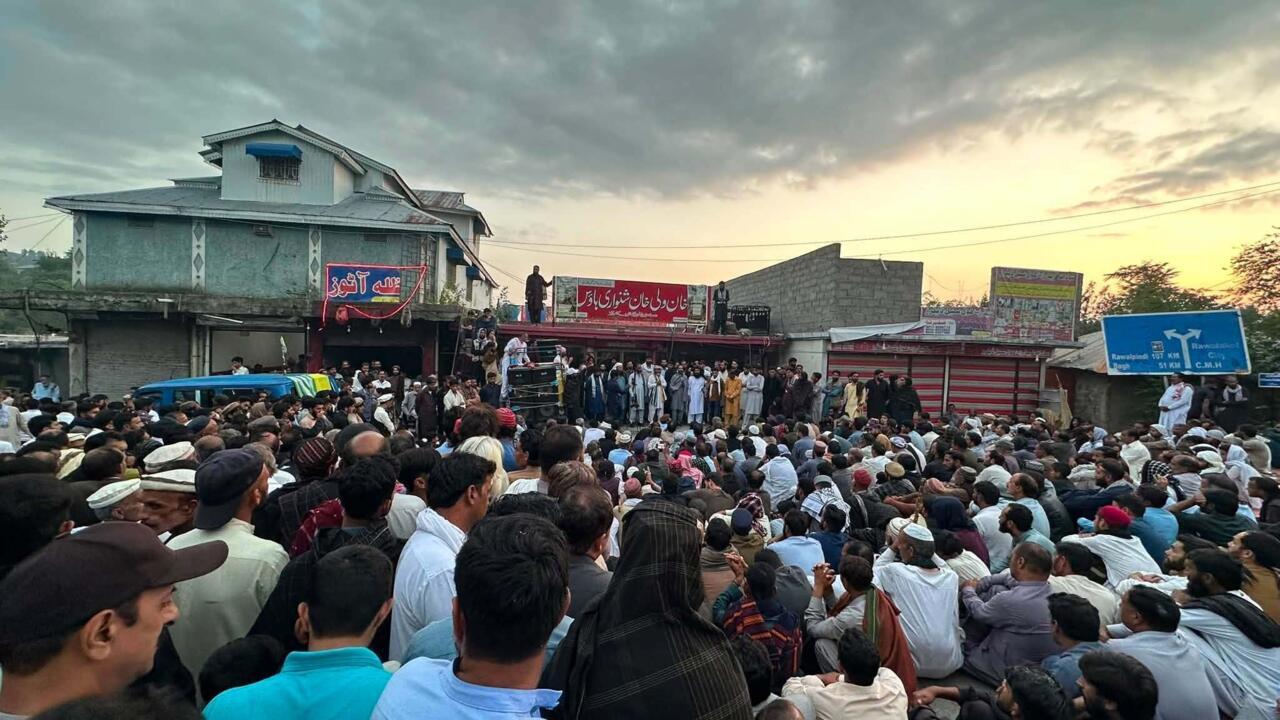
Protests that have shaken Pakistan-administered Kashmir since early June have continued through local legislative elections held in July and August, despite harsh repression. With internet access cut and foreign media access restricted, residents are attempting to document the situation themselves.
How the reporting is being done
To make contact, Usman — a resident of Rawalakot, a city in the Pakistan-administered part of the disputed region — has to climb into the surrounding mountains, where he can pick up a few bars of mobile signal from outside the province.
That detail describes the information environment more precisely than any statistic. Reporting from Azad and Jammu Kashmir now requires physically leaving the area covered by the blackout, on foot, and returning.
The account was gathered by the France 24 Observers, the network's digital investigation team, via social media. The identities of people inside Pakistan have been concealed to protect them from reporting restrictions imposed by the government.
The territory
Azad and Jammu Kashmir is an autonomous territory under Pakistani administration, part of a region disputed between Pakistan and India since 1947 and claimed in full by both.
That status is why events there attract limited international coverage. The dispute is framed almost entirely as a bilateral confrontation between two nuclear-armed states, and the politics of the people living in the territory tend to be read through that lens rather than on their own terms.
What a blackout accomplishes
Internet shutdowns have become a standard instrument of protest management across South Asia, and their logic is straightforward. They disrupt the coordination that keeps a movement organised, and they prevent images from reaching audiences outside the affected area.
The second function is the more consequential. A protest that cannot be photographed and distributed struggles to generate external pressure, and external pressure is often the only leverage available to demonstrators facing a state that has decided not to concede.
The elections held in July and August took place under these conditions — a vote conducted in a territory where communications were restricted and independent observation was limited.
Why it continues
The notable feature is that the protests have outlasted both the repression and the blackout, running for close to three months.
Movements typically depend on communication to sustain momentum. That these have persisted without it suggests organisation that predates the internet infrastructure now being denied to them — and grievances specific enough that participants do not need to be told when to gather.
What the protests are about
The movement that began in early June grew out of economic grievances rather than the constitutional dispute the region is usually discussed through — costs, electricity tariffs, subsidies and the terms on which the territory is governed from Islamabad.
That distinction is important and routinely lost. Coverage framed around the India-Pakistan confrontation tends to interpret any unrest as a proxy for that argument, which obscures demands that are local, material and directed at the administration people actually live under.
The verification problem
A blackout does more than suppress images. It makes everything that does emerge harder to confirm.
With foreign media restricted and residents forced to climb hills for a signal, the available record consists of social media posts that cannot be independently checked at source. That serves the authorities twice over: first by limiting what escapes, and second by allowing whatever does to be dismissed as unverified.
It is why the France 24 Observers method — corroborating user-submitted material against multiple accounts and locations — has become the standard approach for reporting from places that have been switched off.
More from peatpost

Denmark’s CPR Breach: How a Security Failure Exposed 8.8 Million People and Shook the Nation’s Digital Trust
Hackers accessed names, addresses, and CPR numbers of 8.8 million people in Denmark’s national registry. The breach has reignited fears over data security and national digital infrastructure.

Six US Banks Have Failed in 2026, but They Held Only $1.43bn in Combined Assets
The banks that failed in 2023 held about $552.54bn. FDIC data also show a shrinking problem-bank list and higher industry profits this year.

Evernorth's XRP Treasury Faces Nasdaq Merger Vote With Room for 10bn Shares
Armada shareholders vote on 30 September. The proposed charter allows far more stock than the deal needs, putting dilution at the centre of Evernorth's XRP-per-share goal.
Discussion
0 commentsNo comments yet — be the first to weigh in.