Burnham Backed a £500,000 Donation Cap That Would Fall Over Time
Correspondence shows the prime minister supporting a lower limit than reported — as campaigners accuse him of a U-turn before next week's bill.
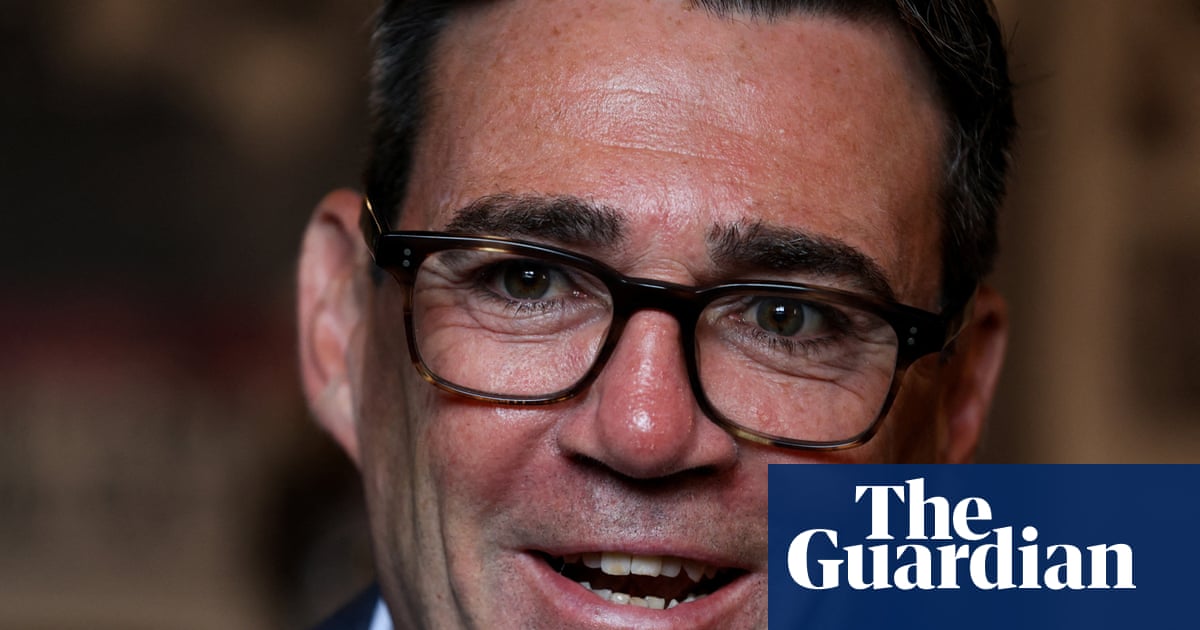
Andy Burnham recently supported an even lower cap on political donations than previously reported, according to correspondence seen by the Guardian, as the row over next week's elections bill escalates.
The prime minister wrote to a campaigner in May setting out his support for a £500,000 individual donations cap, which he said would "guard against the perception of any one party being unduly influenced or swayed by one person or organisation."
In a follow-up email, Burnham went further, saying he believed the cap should gradually be reduced over time — a proposal now being advanced by the Labour MP Stella Creasy.
The accusation
Campaigners are accusing Burnham of a U-turn, after reports that the prime minister had decided not to back attempts by Creasy and others to introduce a donations cap in next week's elections bill.
The correspondence makes that a harder position to hold quietly. It is one thing to decline to support a backbench amendment on grounds of parliamentary timing; it is another to have set out the case for the policy, in writing, three months earlier, including a mechanism for tightening it.
Where the resistance is coming from
The opposition is not principally from the political right. It is from the trade unions, and that is what makes the politics awkward for a Labour prime minister.
A cap on individual donations, applied consistently, constrains union contributions to Labour as much as it constrains large private donors to other parties. Union affiliation fees and political fund payments are structured differently from a single wealthy individual writing a cheque, but any cap has to decide how to treat them — and a design that exempts unions invites the charge that it was written to protect one party's funding base.
That is the substantive difficulty behind what is being reported as a straightforward retreat.
Why the ratchet matters
The detail about reducing the cap over time is the most interesting element of the correspondence.
A fixed cap erodes. Set at £500,000 and left alone, inflation loosens it every year without anyone voting to do so. A cap designed to decline does the opposite: it tightens by default, and any government wishing to relax it has to legislate in public.
That is a meaningful structural choice, and it is the sort of provision that rarely survives contact with the parties that have to live under it.
What happens next week
The elections bill is the vehicle, and amendments of this kind succeed or fail on whether the government whips against them.
Campaigners, including the broadcaster Carol Vorderman, are urging Burnham not to back down. The correspondence has changed the terms of that appeal: they are no longer asking the prime minister to adopt a policy, but to vote for one he has already argued for in his own words.
The wider argument about money in politics
Britain is unusual among comparable democracies in having no cap at all on what an individual may give to a political party. Spending during a campaign is limited; the size of a single donation is not.
That asymmetry has produced the pattern the correspondence refers to. A party can be substantially funded by a handful of people without breaching any rule, and the resulting perception problem is what caps are designed to address rather than any proven transaction.
The counter-argument is practical. Capped donations have to be replaced with something, and the available options — state funding, mass small-donor fundraising, or reduced campaigning — are each unattractive to somebody. Parties that cannot raise money do not become more independent; they become weaker relative to the campaigns, newspapers and non-party groups that face no equivalent limits.
That is the trade every country adopting a cap has had to make, and the reason Britain has repeatedly examined the question and declined to answer it.
More from peatpost

Denmark’s CPR Breach: How a Security Failure Exposed 8.8 Million People and Shook the Nation’s Digital Trust
Hackers accessed names, addresses, and CPR numbers of 8.8 million people in Denmark’s national registry. The breach has reignited fears over data security and national digital infrastructure.
Six US banks have failed in 2026 but the numbers look nothing like 2023
Six US banks have failed in 2026 so far, which is one more than in 2023 and enough to make another banking-crisis headline practically write itself. But before we start reliving Silicon Valley Bank , it's worth looking at what those six ...

Evernorth’s XRP strategy hinges on one number after Nasdaq vote
Armada Acquisition Corp. II shareholders will vote Sept. 30 on Evernorth Holdings' Nasdaq merger, which would give the XRP treasury firm authorization for up to 10 billion shares as it targets growth in XRP per share. According to a fili...
Discussion
0 commentsNo comments yet — be the first to weigh in.