The Six Skills Employers Say Will Matter as Much as Your Degree
A five-year study lands as up to three million low- to mid-level jobs face automation by 2035 and 981,000 young people are out of work or training.
The ability to communicate, collaborate and solve problems ranks among the qualities employers say they most want in new hires, according to a major study of what the labour market will reward over the coming decade.
The National Foundation for Educational Research, in a five-year project, identified six key transferable skills that it expects to count as much as formal qualifications in getting and keeping a job.
The context that gives it urgency
The findings land alongside separate NFER research suggesting it may become significantly harder to find work as AI and automation eliminate up to three million low- to mid-level jobs by 2035.
The pressure is already visible in the figures. Office for National Statistics data shows 981,000 people aged 16 to 24 were not in education, employment or training between April and June — just under a million young people at the exact point where entry-level work is thinning out.
What employers actually watch for
One of the sharpest shocks for people leaving education is the sudden absence of structure, which is why the ability to prioritise your own work comes up repeatedly.
In Leeds, Christian Townsley, co-founder of the North Bar group, says working a busy bar is about staying calm and keeping a "cool head."
"It's important that you can organise, you can multitask, you can identify who's next at the bar and remember that," he says. Townsley uses trial shifts as part of recruitment, specifically so candidates can demonstrate these things rather than assert them. "We'll observe them working with customers, working with the team, seeing how they fit in, seeing how they communicate."
The demands compound with promotion. "There's organisation, ordering beer, pricing beer, planning social media, marketing, recruiting," he adds — a list that has very little to do with pouring drinks.
Adaptability, in practice
Employers also want recruits who can respond to problems as they emerge and take decisive action.
Maria Aderonmu moved from a political science degree into a career at Morgan Sindall Infrastructure, which delivers projects across energy, defence and rail. Now working in strategy, she frequently has to think on her feet, and says "adapting to each kind of situation" has been among the most important things she has learned at work. At university she was involved in debating — a route into those skills that has nothing to do with the subject on her certificate.
Why this is a harder message than it sounds
There is an uncomfortable implication in the research that tends to get skipped over in the coverage.
Transferable skills are not distributed evenly, and they are not principally taught in classrooms. They accumulate through part-time jobs, team sports, debating societies, volunteering and family networks — activities that correlate strongly with household income and available time.
A hiring standard that shifts weight from qualifications, which are at least assessed against a public syllabus, towards attributes observed in a trial shift is not obviously fairer. It may simply move the advantage somewhere less visible.
What is not in dispute is the direction. If AI absorbs the routine analytical work that entry-level roles have historically consisted of, what remains is the part that involves other people — and employers are already recruiting on that basis, whether or not the education system has caught up.
More from peatpost
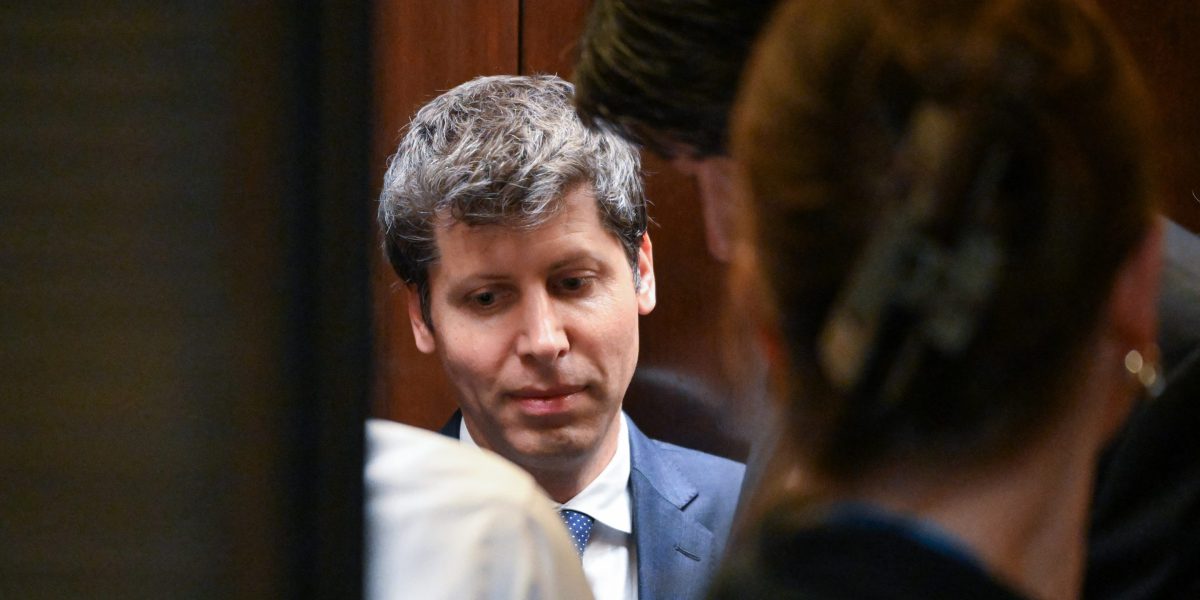
'Clearly, People Hate Data Centers': Altman Concedes the Backlash
Seven in ten Americans oppose one being built near them. At least 48 projects worth $156bn have already been blocked or stalled.

Former Barclays Chief Questioned Under Oath Over Epstein Emails
Newly released transcripts show US lawmakers pressing Jes Staley on 2010 exchanges. He denies the central allegation.
Nvidia's $12.9bn Move for Hugging Face Would Put Silicon and Distribution Under One Roof
The largest GPU maker buying the largest open-model hub would concentrate the entire open-source AI pipeline inside one company.
Discussion
0 commentsNo comments yet — be the first to weigh in.