'Pretty Shambolic': Europe's New Border System Meets the Summer Rush
Three-hour delays, missed connections and visa mix-ups. Brussels refused to suspend the scheme over the peak season.
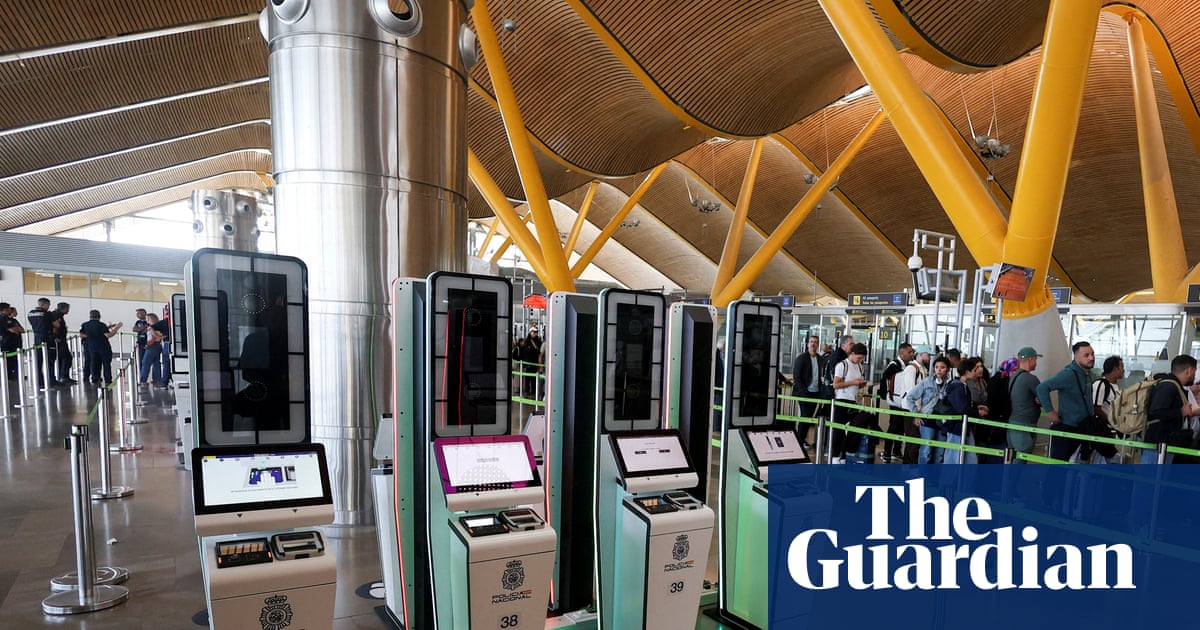
On top of fears about extreme heat and possible jet fuel shortages, Britons planning European holidays this year had another thing to contend with: long queues and waiting times caused by the bloc's new border checks.
The EU's digital entry and exit system, known as EES, requires non-EU citizens to register and be photographed and fingerprinted on arrival at and departure from the Schengen zone. It has been technically in full force since April, after launching last autumn, and has been beset by teething problems throughout.
The response to the complaints
Despite reports of passengers facing three-hour delays and missed connections, Brussels rejected calls from airports and airlines to suspend implementation over the peak summer period.
Border police have instead been permitted to relax requirements when queues become unmanageable, under an opt-out that expires next month. That is a revealing compromise: the system's own operators have been given discretion to switch off the checks precisely when the volume of travellers makes them hardest to perform.
What travellers reported
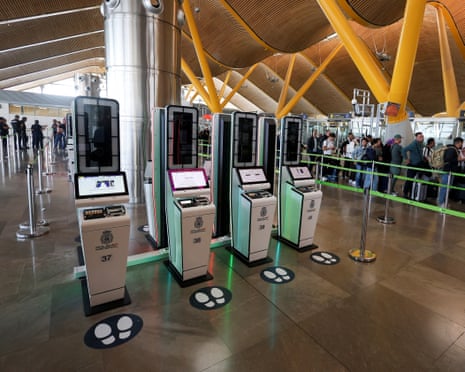
Britons who described their experiences reported frustration, visa mix-ups and long waits — the ordinary friction of a biometric registration process being performed for the first time on tens of millions of people simultaneously.
The registration is a one-time event per traveller, which means the queues should shorten as the population of already-enrolled visitors grows. That is the argument for pushing through rather than pausing, and it is a reasonable one. It is also cold comfort to anyone who missed a connection this month.
The structural problem for Britain
EES is a Schengen system applied to third-country nationals, and Britain became a third country in 2020. That is the whole of the explanation for why this lands on British travellers in a way it does not land on, say, Irish or Dutch ones.
Nothing about the scheme targets the UK. It simply applies to everyone outside the zone, and Brexit moved the UK into that category — a consequence that was foreseeable in principle and has arrived as a practical inconvenience at a specific airport gate.
What comes next
The opt-out allowing border police to relax requirements expires next month, which removes the safety valve that has been absorbing the worst of the congestion.
After that, the system faces its first autumn and winter with no discretion to ease off, and the enrolled population will still be well short of complete. The EU's position is that the transition is nearly over and the friction is temporary.
That may prove correct. The test will be whether the queues shorten as enrolment builds, or whether the delays turn out to be a permanent feature of processing biometrics at land and air borders that were designed for a wave-through.
What the system is actually for
It is worth being clear about the purpose, because the queues have largely displaced it from the coverage.
EES replaces passport stamping with a biometric record of every entry and exit. The stamp was a poor instrument: easily smudged, hard to audit, and effectively impossible to use for tracking whether a visitor had exceeded the 90-days-in-180 limit that applies to short stays.
A digital record makes overstays visible automatically. For a bloc with external borders spanning 27 countries and no internal checks, that is a genuine gap being closed rather than a bureaucratic flourish.
The cost nobody priced
What the design underestimated was the enrolment burden. Every one of hundreds of millions of eligible travellers has to be registered once, in person, at a border — and the system went live into a period when those borders were handling their heaviest annual traffic.
A one-time cost spread evenly would have been unremarkable. Concentrated into a summer, it produced three-hour queues and the political problem that followed.
More from peatpost

Denmark’s CPR Breach: How a Security Failure Exposed 8.8 Million People and Shook the Nation’s Digital Trust
Hackers accessed names, addresses, and CPR numbers of 8.8 million people in Denmark’s national registry. The breach has reignited fears over data security and national digital infrastructure.

Six US Banks Have Failed in 2026, but They Held Only $1.43bn in Combined Assets
The banks that failed in 2023 held about $552.54bn. FDIC data also show a shrinking problem-bank list and higher industry profits this year.

Evernorth's XRP Treasury Faces Nasdaq Merger Vote With Room for 10bn Shares
Armada shareholders vote on 30 September. The proposed charter allows far more stock than the deal needs, putting dilution at the centre of Evernorth's XRP-per-share goal.
Discussion
0 commentsNo comments yet — be the first to weigh in.