France Erupts: A City Hall Burned, Chanel Looted and 2,400 Arrested in the Worst Riots in Years
A cost-of-living protest called on TikTok turned into a night of fire and looting from Paris to Marseille. Curfews are in force, and a new day of marches is set for Saturday.
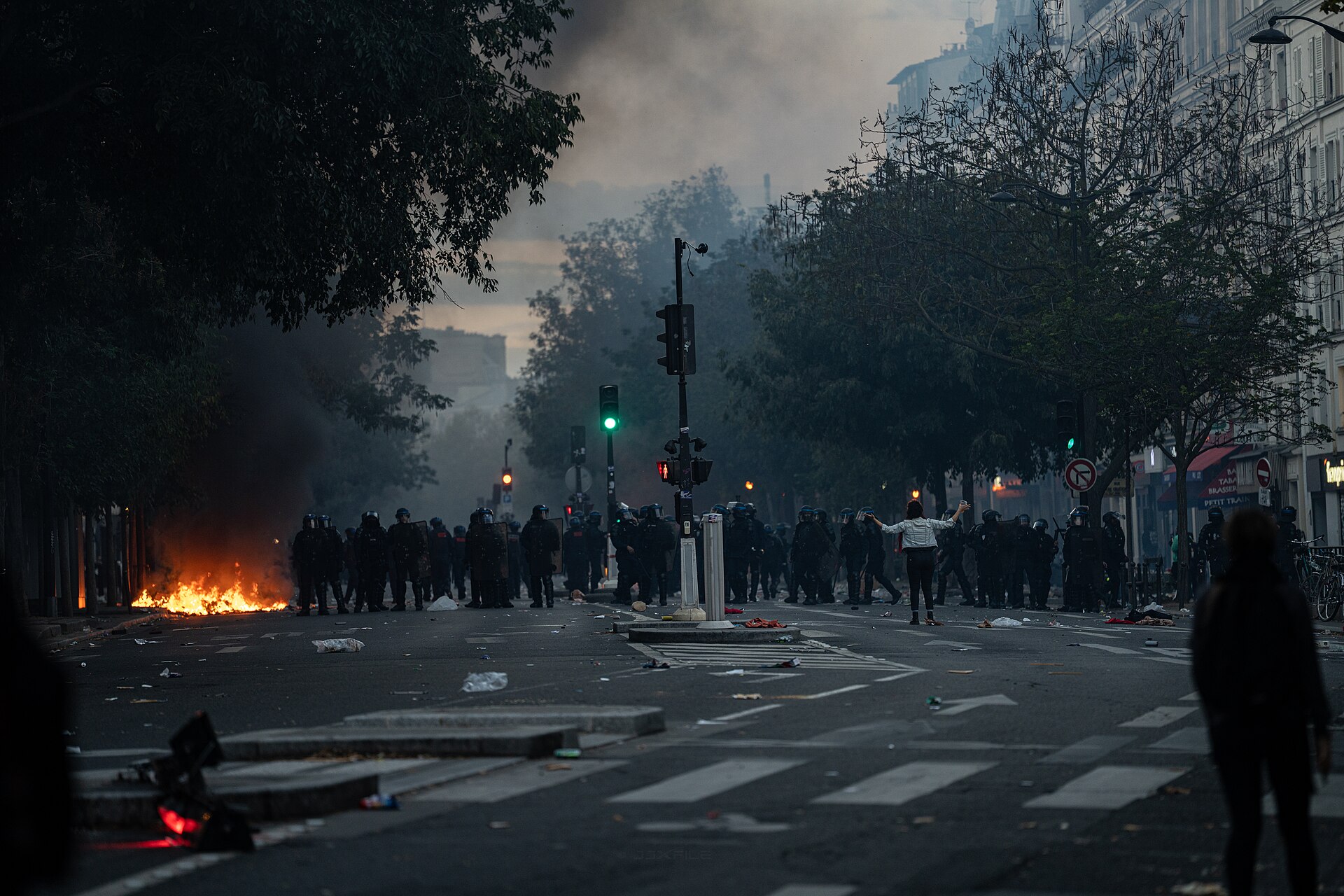
France is counting the cost of its worst street violence in years after a nationwide day of protest over the cost of living turned into rioting, looting and arson in cities across the country.
What began as a call to march on TikTok drew around 550,000 people onto the streets on Saturday 17 October, including about 110,000 in Paris, according to the interior ministry. Organisers put the total at 800,000. Most marched peacefully. But as the day went on, masked groups attacked police, set fires and broke into shops and public buildings.
By Wednesday, at least 2,400 people had been arrested, 149 had been jailed and more than 800 had been sent before prosecutors, NPR reported. One protester died after collapsing in Paris.
Paris: tear gas, fires and a Chanel store broken open
The worst of the Paris clashes centred on Place de la République, where police used tear gas and water cannon against hooded crowds throwing fireworks and other objects at officers. Cars and shared bikes were set alight along boulevard Voltaire, and barricades went up in nearby streets.
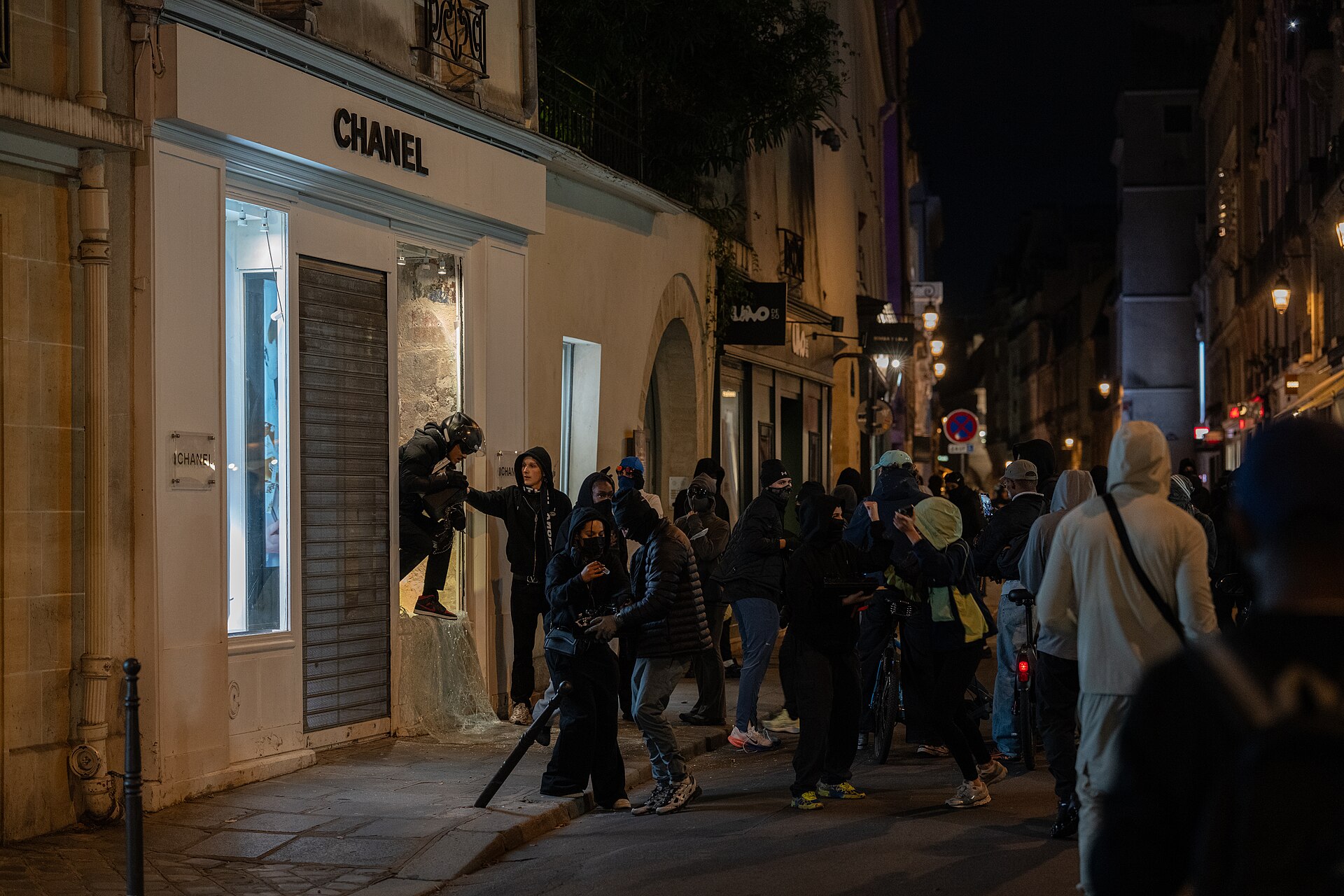
As night fell, the violence spread west. Groups broke into luxury boutiques and other shops, including around the Champs-Élysées and rue du Faubourg Saint-Honoré, home to some of the city's most expensive fashion houses.
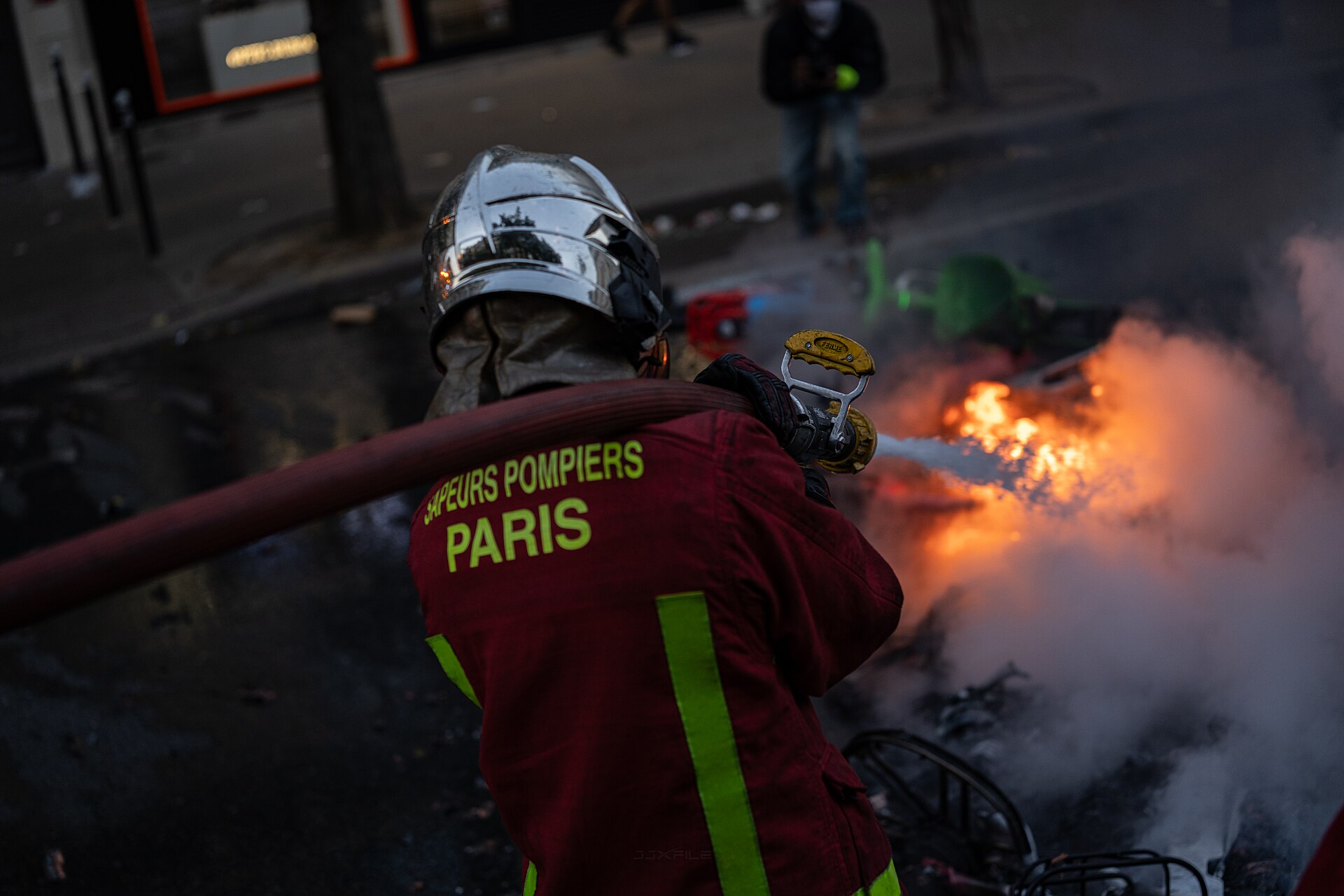
Paris firefighters spent much of the evening putting out burning cars, bins and bikes.
Limoges: a 140-year-old city hall in flames
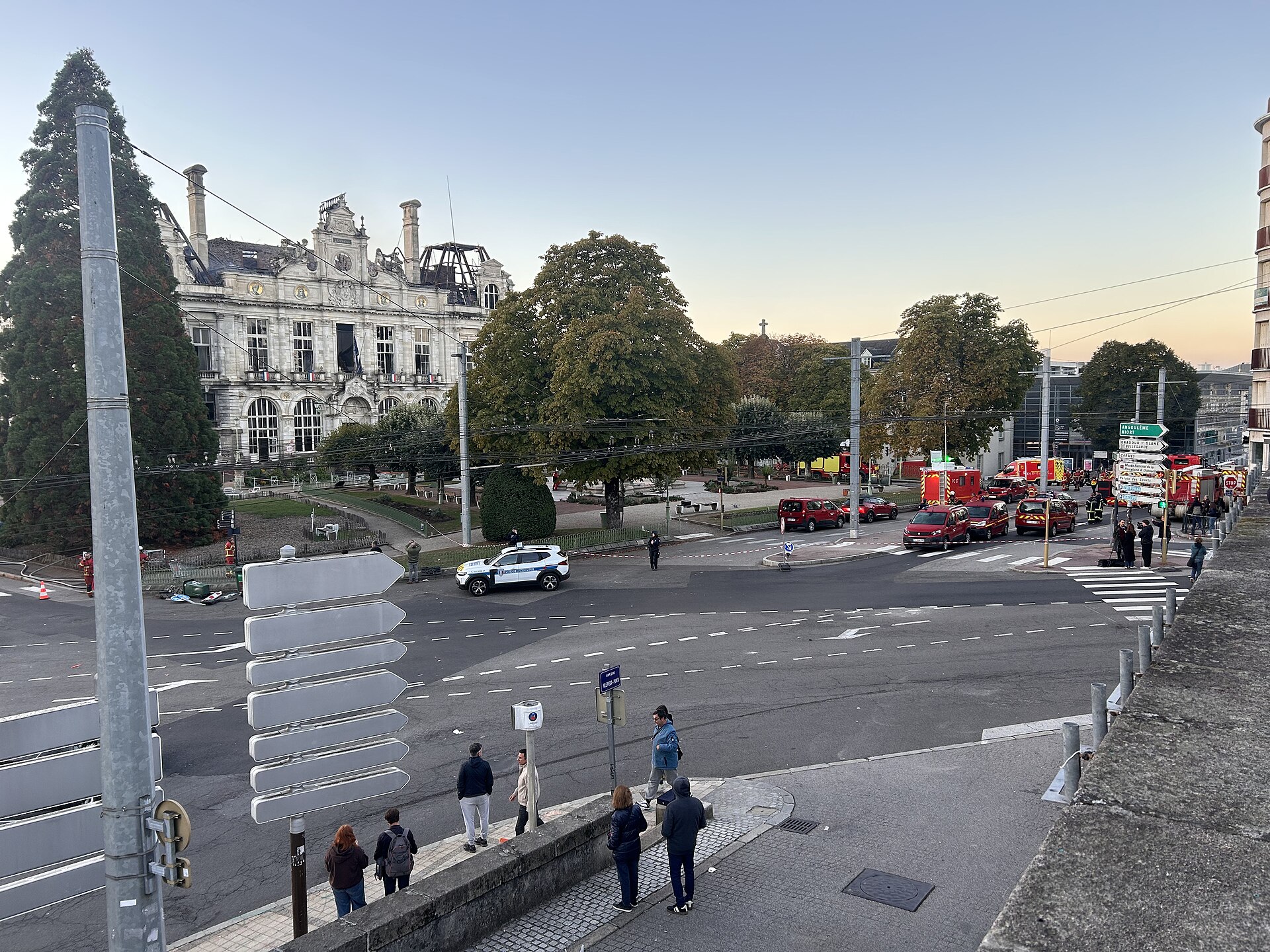
The most shocking images came from Limoges in central France, where masked protesters set fire to the city hall, a landmark built in the 1880s. Flames tore through the building, its roof caved in and its bell tower collapsed. The region's top official said the building had been largely lost.
By the next morning, only a blackened shell of the roof remained. A suspect was arrested on Tuesday 20 October.
From Marseille to Lille
The violence was not limited to Paris and Limoges. Across the country:
- Marseille: protesters stormed the city hall and threw down a bust of Marianne, the symbol of the French Republic. Shops were looted.
- Lyon: the tourist office pavilion on place Bellecour was burned.
- Bordeaux: the prefect's official residence was ransacked.
- Lille: a McDonald's restaurant was set on fire.
- Saint-Étienne: a 17-year-old lost a hand to a police grenade.
- Mulhouse: another 17-year-old lost the sight of one eye. The police watchdog, the IGPN, has opened an inquiry.
Hundreds of police officers were injured, though official figures have varied from day to day. Commerce minister Serge Papin said about 3,000 shops were hit, and Carrefour alone has put its losses at more than €10 million.
Why people took to the streets
The 17 October protest was first called on TikTok and then taken up by the gilets jaunes (yellow vest) movement, the CGT and Solidaires unions, the farmers' union Confédération paysanne, and student and school pupil unions.
Their grievances are broad: the rising cost of living and fuel, cuts to public services, and problems in schools and universities, including Parcoursup, the platform that allocates university places. The protests come months before next year's presidential election.
Curfews, soldiers and a 'massive' police response
The government has answered with force. Curfews have been imposed "for as long as necessary" in parts of several cities, including the République and Les Halles areas of Paris, central Lyon from 9pm to 6am, and for unaccompanied minors in Marseille. Restrictions have also been reported in Bordeaux and Lille.
President Emmanuel Macron said there was "no room for violence" in a televised address on Sunday 18 October and spoke of the public's anger and shame at the destruction. A government crisis cell has been meeting since Tuesday.
Prime Minister Sébastien Lecornu said the government would not be "intimidated" and blamed the unrest on the "ultra-left" and criminals. Interior Minister Laurent Nuñez said soldiers from Opération Sentinelle would guard sensitive sites, and Justice Minister Gérald Darmanin promised an "extremely firm" response in the courts. National Assembly President Yaël Braun-Pivet has announced a parliamentary inquiry, with findings expected by the end of the year.
The riots have also drawn comment from abroad, including posts from US President Donald Trump and Vice President JD Vance.
Monday night was the first calm night since the riots began.
What to watch
- Saturday 24 October: new protests are planned, and Lecornu has said the police deployment "will be massive".
- The courts: hundreds of cases are moving through fast-track hearings this week.
- Curfews: whether cities lift them or extend them after the weekend.
- The inquiry: what Parliament finds about how the day turned so violent, and about police use of grenades.
Photos: Paris by Jorge Jaramillo / Wikimedia Commons (CC BY-SA 4.0); Limoges city hall by Lucas Destrem / Wikimedia Commons (CC BY-SA 4.0). Videos: Associated Press and AFP News Agency on YouTube. Reporting draws on Reuters, AP, AFP and NPR.
More from peatpost
US Treasury Sanctions Eight Canadian Money-Service Firms Over Iran Crypto Links
Washington says the firms swapped rials for digital assets on behalf of sanctioned Iranian exchanges and IRGC-linked wallets, in action coordinated with Canada's FINTRAC.

OpenAI Pledges to Pay Full Power Costs of AI Campuses After Voter Backlash
The company's new community compact promises energy and water disclosure and fewer secrecy deals, but sets out no penalties, dispute process or independent checks.
OCC Issues First AI Supervisory Framework, Ranking Autonomous Payment Agents as Highest Risk
The 22-page guidance tells bank examiners to judge AI by the harm a failure could cause, not by technical sophistication, and flags outside agents connecting to accounts.
Discussion
0 commentsNo comments yet — be the first to weigh in.