Qatar Takes a Hormuz Proposal to Tehran
A temporary shipping corridor and a joint project to clear mines from the strait, as hopes rise that US-Iran dialogue resumes.
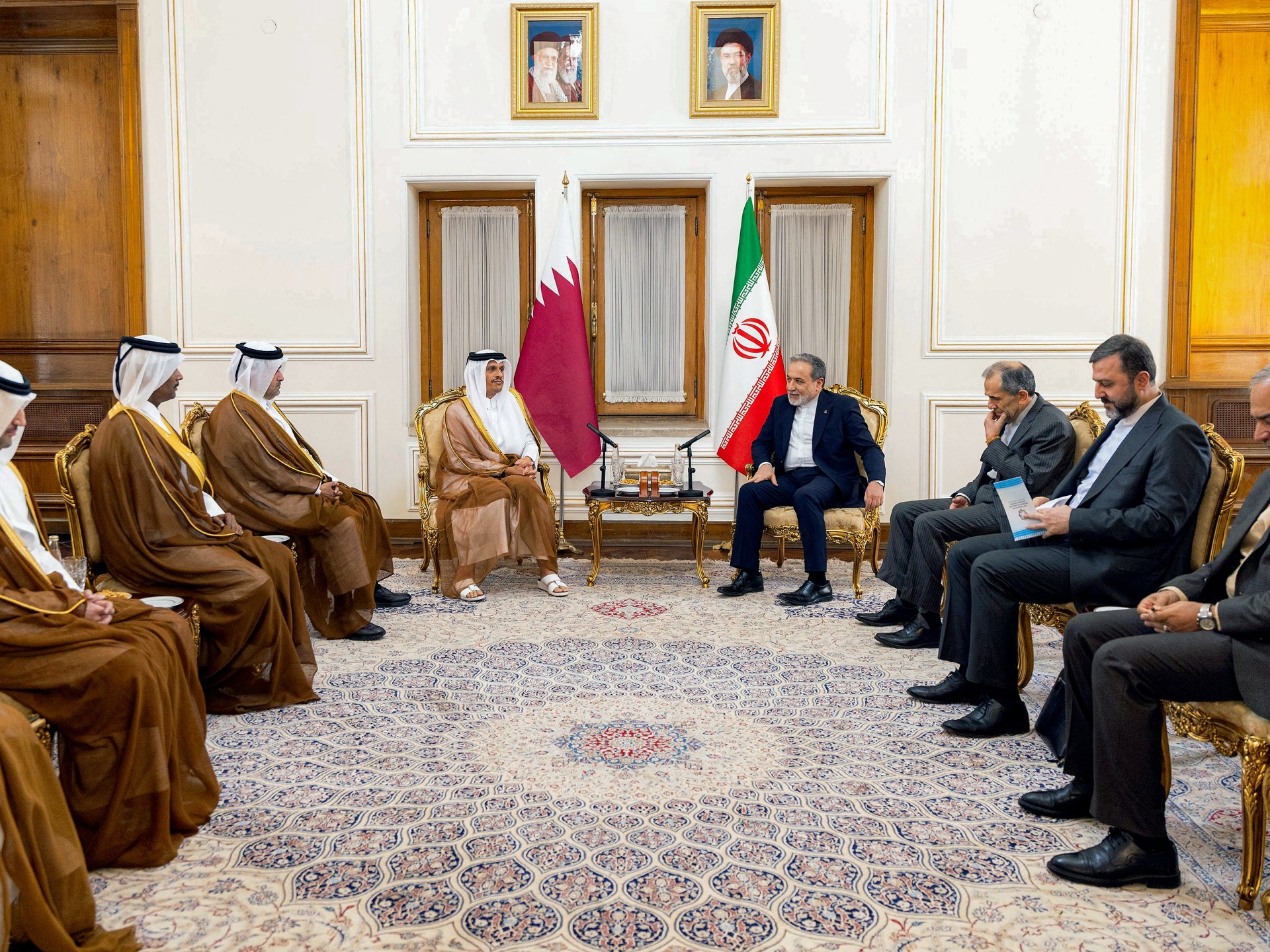
Qatar's prime minister has held talks in Tehran covering the future of the Strait of Hormuz, amid international hopes that dialogue between the United States and Iran on ending the war will resume.
Iran's foreign minister Abbas Araghchi and Qatar's Sheikh Mohammed bin Abdulrahman bin Jassim Al Thani discussed a proposed framework including the creation of a temporary shipping corridor through the strait, and a possible joint project to clear it of mines, according to a statement from Qatar's foreign ministry. Iran says the mines were laid during the war.
The two also reviewed regional developments and efforts to reduce escalation and create conditions for dialogue.
Why the strait is the central problem
Roughly a fifth of the world's seaborne oil and gas normally passes through Hormuz, a narrow channel along Iran's southern coast. Disruption there raises energy prices globally within days, which is what gives Tehran leverage far out of proportion to the size of its economy.
It is also what makes the strait the natural first item in any de-escalation. Neither a temporary corridor nor a demining project resolves anything about the war, and both would materially reduce the pressure the conflict is placing on everyone outside it.
The significance of a joint demining project
The demining proposal is the more interesting half of the framework, because of what it would require.
Mines have to be cleared by someone, in specific locations, with detailed knowledge of what was laid where. A joint project implies Iranian cooperation and Iranian information — a level of practical engagement well beyond a ceasefire declaration, and one that would be difficult to reverse quickly.
That is precisely why it is being proposed. Confidence-building measures work when they are concrete, verifiable and costly to abandon.
Why Qatar
Doha has spent two decades cultivating a position as the region's intermediary, maintaining working relationships with Washington, Tehran and parties that will not speak to each other directly.
It hosts the largest US military installation in the Middle East while sharing the world's biggest natural gas field with Iran. That combination makes it uniquely exposed to a Hormuz closure and uniquely credible to both sides — a mediator with its own substantial interest in the outcome, which participants can verify rather than take on trust.
What has not happened
No agreement has been announced, and the framework remains a proposal carried by a third party rather than a negotiation between the principals.
The US and Iran are not talking directly. The value of this week's meeting is that a specific, technical, limited proposal now exists for them to accept or refuse — which is more than the diplomacy has produced for some time.
The shipping industry's position
The parties with the most immediate stake are not governments. Tanker owners, charterers and marine insurers have effectively priced the strait as a war risk zone, which raises premiums to levels that make some voyages uneconomic regardless of whether any vessel is actually attacked.
A temporary corridor addresses that directly. Insurance markets respond to defined, monitored routes with agreed protocols, because a quantifiable risk can be underwritten and an unquantifiable one cannot.
Mines, and why they linger
Naval mines are cheap to lay and expensive to remove, which is what makes them attractive to the weaker party in a maritime confrontation and why they outlast the conflicts that produce them.
Clearance is slow, dangerous work requiring specialist vessels, and the strait's depth and traffic density make it among the harder environments in which to attempt it. A joint project would need not only Iranian consent but Iranian records — and the willingness to hand them over would say more about Tehran's intentions than any communiqué.
More from peatpost

Denmark’s CPR Breach: How a Security Failure Exposed 8.8 Million People and Shook the Nation’s Digital Trust
Hackers accessed names, addresses, and CPR numbers of 8.8 million people in Denmark’s national registry. The breach has reignited fears over data security and national digital infrastructure.
Six US banks have failed in 2026 but the numbers look nothing like 2023
Six US banks have failed in 2026 so far, which is one more than in 2023 and enough to make another banking-crisis headline practically write itself. But before we start reliving Silicon Valley Bank , it's worth looking at what those six ...

Evernorth’s XRP strategy hinges on one number after Nasdaq vote
Armada Acquisition Corp. II shareholders will vote Sept. 30 on Evernorth Holdings' Nasdaq merger, which would give the XRP treasury firm authorization for up to 10 billion shares as it targets growth in XRP per share. According to a fili...
Discussion
0 commentsNo comments yet — be the first to weigh in.