Jellyfish Have Shut Down Half of France's Biggest Nuclear Plant
Four of the six units at Gravelines are offline. The same thing happened last August, and the swarms are getting more frequent.
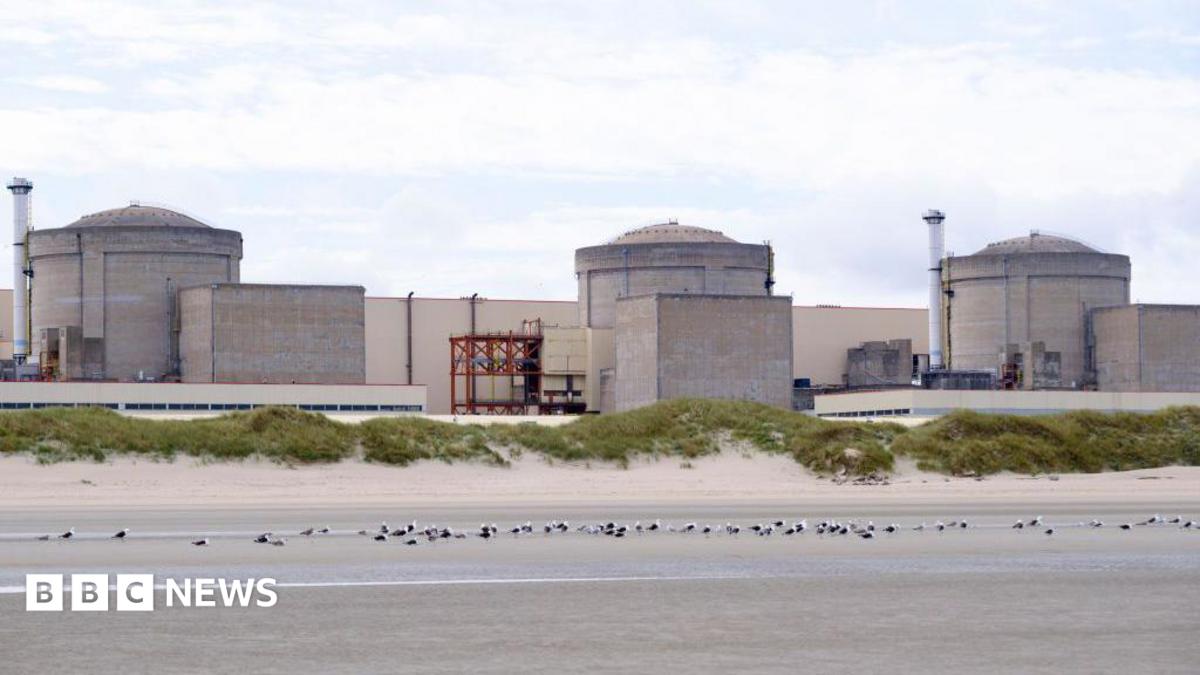
A massive influx of jellyfish has forced the partial shutdown of a nuclear power station in northern France.
Two of the six units at Gravelines were shut down on Wednesday and Thursday because of jellyfish in the seawater filtration system used for cooling, according to Électricité de France. A third has been offline since 10 August for the same reason, and a fourth is closed for inspection.
The scale of the outage
Gravelines, between Dunkirk and Calais in the Hauts-de-France region, is one of France's largest nuclear stations. Each of its six units produces 900 megawatts.
With four units down, roughly 3.6 gigawatts of generating capacity is unavailable — comparable to a substantial share of a mid-sized country's peak demand, removed from the European grid by an animal with no brain.
Unit three had only been reconnected to the grid on 18 August after the earlier wave of jellyfish this month. Units one and two were already running at reduced power as a precaution.
Why this keeps happening here
The station is cooled from a canal connected to the North Sea. That design choice — abundant, reliable cooling water — is exactly what makes it vulnerable, because whatever is in the sea arrives at the intake screens along with the water.
Gravelines was also closed last August because of jellyfish in its filters. A second occurrence in consecutive years, with multiple waves within a single month, is no longer easily described as a freak event.
The wider pattern
Several jellyfish species are native to these waters, and blooms have always occurred. What appears to be changing is their frequency and size.
Warmer seas extend breeding seasons and expand habitable range. Overfishing removes both the predators that eat jellyfish and the competitors for the plankton they feed on. Nutrient runoff supports the blooms. Each of those pressures is well documented; together they favour an organism that thrives in degraded conditions.
Nuclear stations are unusually exposed to the result. They require enormous volumes of cooling water, which is why they sit on coasts and estuaries, and their intakes cannot be scaled down when the sea delivers something unexpected.
The awkward implication
There is an irony here that the energy debate has not fully absorbed. Nuclear power is central to most credible plans for decarbonising electricity, and this is the second consecutive summer in which a warming, degraded marine environment has taken a significant French plant partly offline.
The shutdowns are precautionary and the fix is mechanical — screens, filters, cleaning. But an increasingly common disruption to baseload capacity, arriving in late summer when demand for cooling is high, is a resilience problem rather than a curiosity.
What actually happens at the intake
The mechanism is unglamorous. Cooling water is drawn through screens designed to keep debris out of the condenser circuits. A dense bloom arrives faster than the screens can be cleared, the pressure differential rises, and the plant reduces output or shuts the affected unit rather than risk losing cooling flow.
No safety system fails and no radiological risk arises. The reactors trip because the operators choose to trip them, which is the system working correctly — but it still removes the electricity from the grid.
The engineering response
Stations facing recurrent blooms can install larger or angled screens, bubble curtains, or additional filtration stages, all of which cost money and take a unit offline to fit.
The difficulty is justifying that investment against an event that was, until recently, treated as exceptional. Two consecutive Augusts, and multiple waves within a month, is the evidence base changing in real time — and it will take rather longer for the capital planning to follow it.
More from peatpost

Denmark’s CPR Breach: How a Security Failure Exposed 8.8 Million People and Shook the Nation’s Digital Trust
Hackers accessed names, addresses, and CPR numbers of 8.8 million people in Denmark’s national registry. The breach has reignited fears over data security and national digital infrastructure.

Six US Banks Have Failed in 2026, but They Held Only $1.43bn in Combined Assets
The banks that failed in 2023 held about $552.54bn. FDIC data also show a shrinking problem-bank list and higher industry profits this year.

Evernorth's XRP Treasury Faces Nasdaq Merger Vote With Room for 10bn Shares
Armada shareholders vote on 30 September. The proposed charter allows far more stock than the deal needs, putting dilution at the centre of Evernorth's XRP-per-share goal.
Discussion
0 commentsNo comments yet — be the first to weigh in.