Zara's Owner Opens Its Discount Chain in Britain, Staffed Partly by Robots
Lefties lands in Liverpool with basket-scanning checkouts and hanger-sorting machines, priced between Primark and Shein.
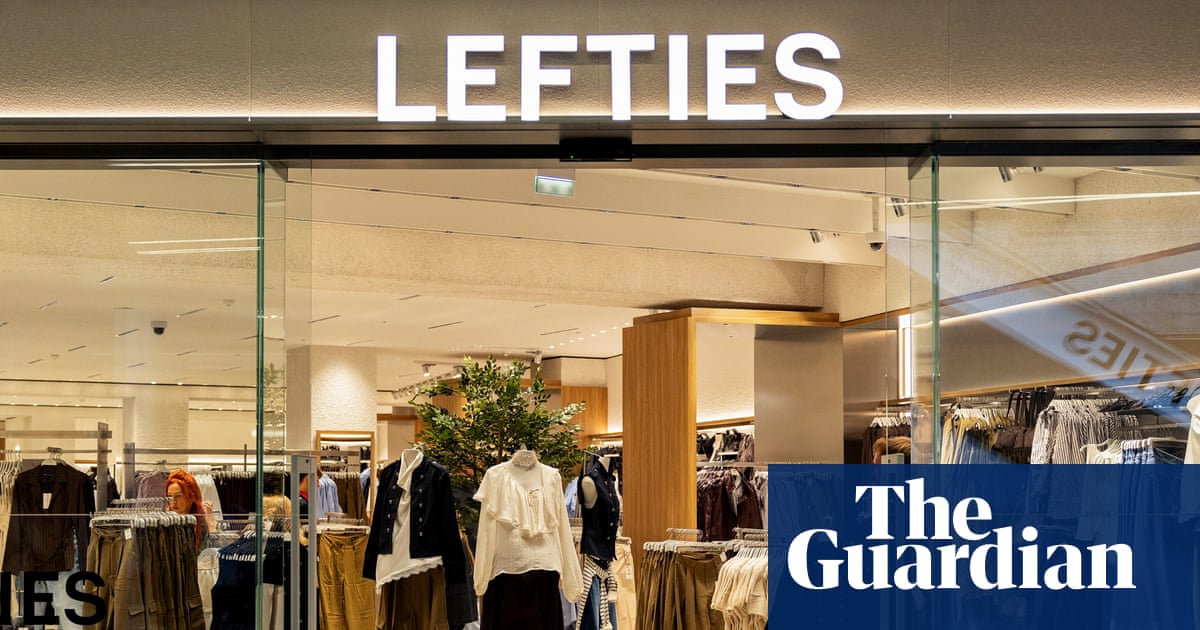
The owner of Zara is taking on Primark, Shein and the supermarkets with the UK launch of its cut-price chain Lefties, backed by an array of robots.
The Spanish group opened its first British store in Liverpool on Thursday, weeks after quietly launching its UK website.
What the automation actually does
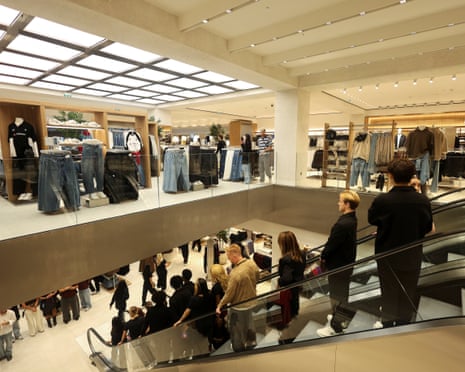
The store has embraced robotics to reduce staffing costs in a way most shoppers will notice. Self-checkouts scan an entire basket in one pass. A hanger sorter takes hangers through a slot at the till onto a hidden conveyor, where two robots behind a screen sort them into boxes by size.
The fitting rooms at the Liverpool One development have a hatch through which unwanted items are passed for sorting behind the scenes, again by machine. The garment-sorting system splits clothes onto rails by department, ready to return to the shop floor or go into the stockroom.
This is a specific bet about where labour costs sit in fashion retail. The expensive, invisible work is not serving customers; it is re-sorting the enormous volume of clothing that shoppers try on and reject.
The positioning
Lefties takes its name from its 1999 origins as an Inditex outlet for leftover Zara stock. It stopped selling its larger sibling's clothing about a decade ago and now stocks its own men's, women's and children's ranges, plus shoes and homewares from bedding to vases.
As Zara has drifted upmarket, Lefties has moved into the space below it. Its products sit a touch above Primark and below Shein on price: dresses average £18, against £16 at the British chain and £18.50 at the Chinese-founded marketplace, according to analysis by Retail Week.
In a concession to the British climate, Liverpool is the first Lefties to stock thermal clothing, putting it up against Marks & Spencer and Uniqlo on basics, with bras from £7.99.
The rollout
Liverpool is the first of three UK stores planned this year, with the others at Lakeside in Essex and the Metrocentre near Newcastle, and more expected next year.
More than 100 customers queued to be the first British shoppers. Speaking shortly before opening, the chain's general director Xavier Ruz Riera said the group was "not thinking about a specific number" of UK stores and would assess the first few before deciding. Liverpool was chosen, he said, as a city with a vibrant young population that as a port was "open to the world" and "has a great personality."
Why physical stores, now
The strategy runs against the prevailing direction of the market it is attacking. Shein has taken share almost entirely online, with no store estate and no property costs.
Inditex is wagering that the online model's weakness is returns — expensive to ship, slow to resell, and the single largest drag on fast-fashion margins. A store where customers try things on, reject them at a hatch and have a machine return them to the rail in minutes eliminates that cost rather than absorbing it.
Whether British shoppers prefer that to a parcel is the thing the first three stores are there to find out.
More from peatpost
'Clearly, People Hate Data Centers': Altman Concedes the Backlash
Seven in ten Americans oppose one being built near them. At least 48 projects worth $156bn have already been blocked or stalled.

Former Barclays Chief Questioned Under Oath Over Epstein Emails
Newly released transcripts show US lawmakers pressing Jes Staley on 2010 exchanges. He denies the central allegation.
Nvidia's $12.9bn Move for Hugging Face Would Put Silicon and Distribution Under One Roof
The largest GPU maker buying the largest open-model hub would concentrate the entire open-source AI pipeline inside one company.
Discussion
0 commentsNo comments yet — be the first to weigh in.