Drill, Burnham, Drill? The Oil Basin That Became a Totem
North Sea oil once drove the British economy. What remains is dwindling, expensive — and politically impossible to discuss calmly.
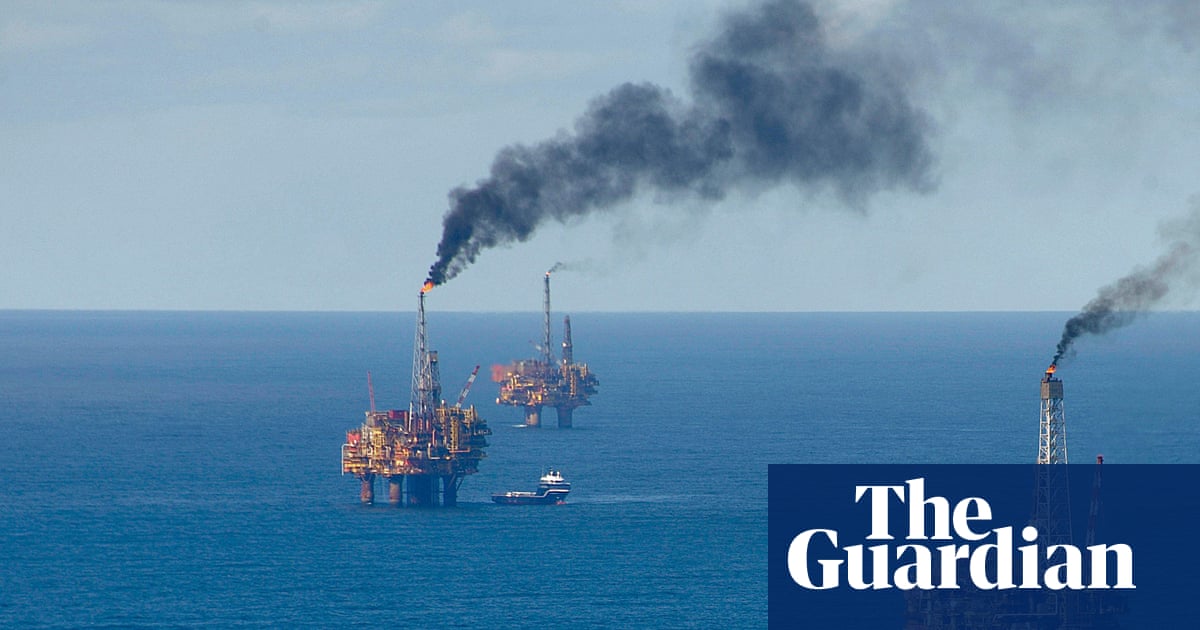
When oil was first discovered off the north-east coast of Scotland in September 1969, industry folklore holds that the duty superintendent on the rig poured it into a pickle jar commandeered from the canteen and carried it back to Amoco's office in Great Yarmouth. There it was emptied into an ashtray, sniffed, and set alight.
From that beginning, North Sea oil became a driving force of the British economy and a symbol of national renewal as the country emerged from the Opec crisis.
The promise
By 1977 the Labour prime minister Jim Callaghan was declaring: "God has given Britain her best opportunity for 100 years in the shape of North Sea oil." A subsequent white paper described it as a unique opportunity.
That framing — oil as a national inheritance rather than a commodity — has proved remarkably durable, and it is a large part of why the basin is so difficult to discuss in ordinary economic terms half a century later.
The reality
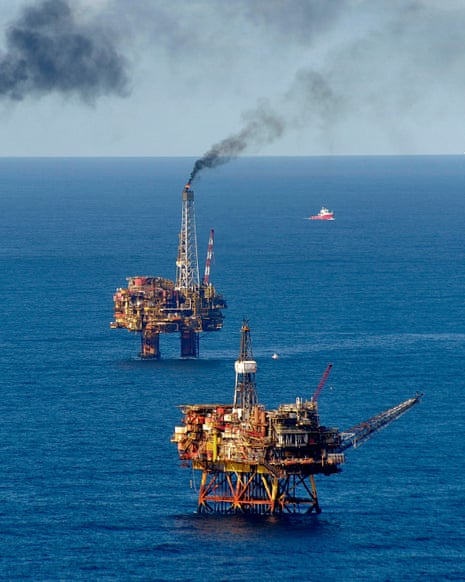
The volume of economically viable oil and gas has declined sharply since its peak around the turn of the century. What is left is in smaller, deeper, more expensive fields, and each new licence buys less than its predecessors did.
This is where the political debate detaches from the geology. The argument for further exploration is usually made in terms of energy security and household bills. But oil and gas prices are set on international markets, so additional UK production does not lower the price a British household pays — it produces a commodity sold at the prevailing world rate, with the benefit accruing as tax revenue and employment rather than as cheaper energy.
That is a legitimate case. It is simply a different case from the one most often made.
The political bind
Burnham's only substantive commitment so far has been to take a "pragmatic" approach to North Sea drilling — a shift from the previous Labour position of ending exploration licences.
It satisfies nobody completely, which may be the point. To the industry and to the north-east of Scotland, where the jobs are, it signals that the taps will not be closed abruptly. To the party's climate-focused wing, it reads as a retreat from a manifesto position.
Why the totem endures
The basin has acquired a symbolic weight out of proportion to its remaining output, and not only in Britain. It functions internationally as shorthand in the argument about whether developed economies will actually stop extracting hydrocarbons, which is why it attracts attention from figures with no stake in the North Sea itself.
For a new prime minister that is an unhelpful inheritance. A decision about a handful of marginal fields in a declining basin is being asked to stand in for the government's entire posture on climate — and every available answer will be read as a verdict on something much larger than the oil.
What the tax revenue actually looks like now
The fiscal case has weakened along with the geology. Receipts from North Sea production peaked decades ago and now fluctuate with the oil price rather than providing the dependable revenue stream that shaped the politics of the 1980s.
That matters for how the decision should be framed. When Callaghan spoke about a hundred-year opportunity, the basin was capable of transforming public finances. Today the marginal field under discussion changes the exchequer's position by an amount that would be lost in the rounding of a single fiscal event.
Jobs, and where they are
The strongest remaining argument is employment, and it is concentrated. Aberdeen and the surrounding north-east of Scotland built an economy on the industry, and the skills involved — subsea engineering, marine logistics, heavy offshore construction — transfer well to offshore wind but not automatically or locally.
A transition that works arrives before the jobs disappear rather than after. That sequencing, not the licensing question, is the decision with lasting consequences.
More from peatpost

Denmark’s CPR Breach: How a Security Failure Exposed 8.8 Million People and Shook the Nation’s Digital Trust
Hackers accessed names, addresses, and CPR numbers of 8.8 million people in Denmark’s national registry. The breach has reignited fears over data security and national digital infrastructure.

Six US Banks Have Failed in 2026, but They Held Only $1.43bn in Combined Assets
The banks that failed in 2023 held about $552.54bn. FDIC data also show a shrinking problem-bank list and higher industry profits this year.

Evernorth's XRP Treasury Faces Nasdaq Merger Vote With Room for 10bn Shares
Armada shareholders vote on 30 September. The proposed charter allows far more stock than the deal needs, putting dilution at the centre of Evernorth's XRP-per-share goal.
Discussion
0 commentsNo comments yet — be the first to weigh in.