ATF Declares a 'Major Incident' as a Ransomware Gang Claims the Hack
The compromised system held information including the targets of ATF investigations. The classification triggers notification to Congress.
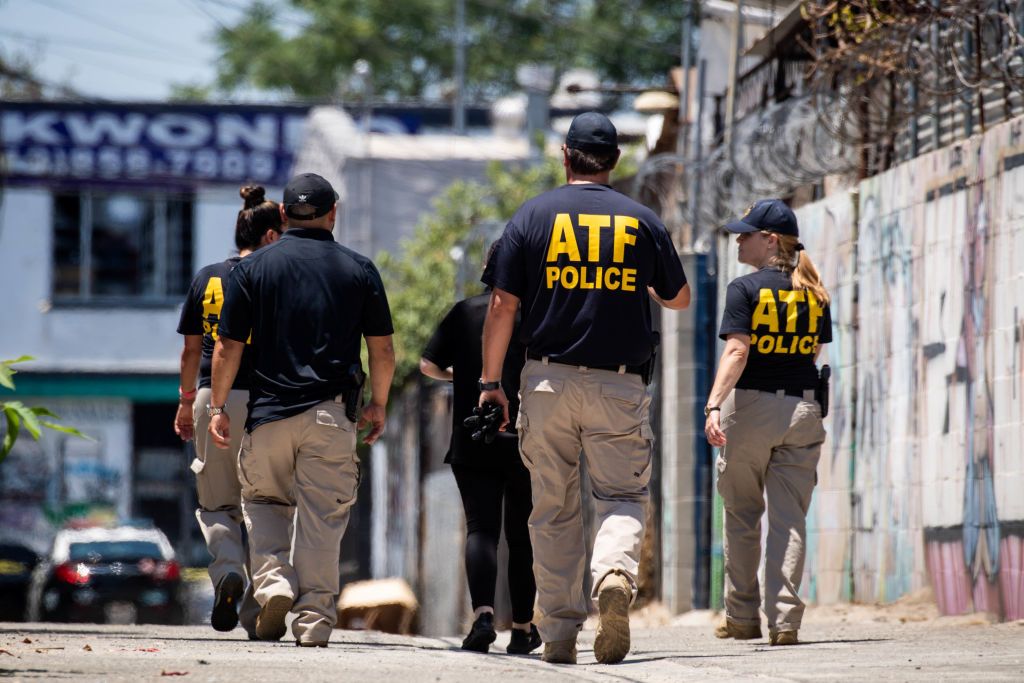
The US Bureau of Alcohol, Tobacco, Firearms and Explosives says a cyberattack on one of its systems has been declared a "major incident" — a formal, legally defined classification that requires notification to lawmakers in Congress.
The ATF said it is responding to an attack on a standalone system separate from the bureau's main network. A spokesperson told reporters that the targeted computer system contained information including the "targets of ATF investigations."
What that data would mean
That single phrase is what elevates this above a routine government breach.
A list of investigation targets is not merely sensitive personal data. It identifies who a federal law enforcement agency is examining, which by implication reveals what it knows, which lines of inquiry are active, and — in cases involving cooperating individuals — who may be exposed to retaliation. It is the category of information whose disclosure damages ongoing cases rather than just embarrassing an agency.

The claim of responsibility
TechCrunch has seen a claim by the Qilin ransomware gang on its leak site, though the group provided no evidence such as a sample of leaked data.
Qilin operates a ransomware-as-a-service model, leasing its tools to criminal affiliates in exchange for a share of the proceeds. It has previously listed the media group Lee Enterprises and the UK pathology laboratory operator Synnovis among its victims.
Unverified claims on leak sites are common and are sometimes opportunistic, which is why the absence of a data sample matters. Ransomware groups routinely publish proof precisely because it drives negotiation; withholding it can indicate either a weaker position or an ongoing extortion attempt.
What 'major incident' means legally
Under federal law, major incidents include significant cyber incidents likely to cause demonstrable harm to US national security, or comparable harm to the public interest.
The designation is not rhetorical. It triggers mandatory congressional notification within a defined period and brings the response under a higher level of oversight than an ordinary breach. An agency does not apply the label casually, because doing so surrenders control of the timeline and invites scrutiny.
That the ATF has applied it, rather than characterising the intrusion as contained, is the most informative fact currently available.
The standalone system detail
The bureau's emphasis that the affected system was standalone and separate from its network is intended to reassure, and to a point it should: segregation limits lateral movement, which is how a single intrusion usually becomes an agency-wide compromise.
But standalone systems are frequently where the most sensitive material is deliberately placed. Isolation is a control applied to data considered too important for the general network — which means a breach of an isolated system can be narrower in reach and more serious in content than a breach of the network itself.
Ransomware-as-a-service, and why attribution is hard
Qilin's model complicates any assessment of responsibility. The group develops tooling and leases it to affiliates, who carry out intrusions and share the proceeds.
That structure means a claim on Qilin's leak site does not identify who actually breached the ATF. It identifies the platform used, in the same way that naming a courier does not tell you who sent a parcel. Affiliates vary enormously in skill and discipline, and several may work with multiple gangs simultaneously.
The federal exposure
The incident lands amid a broader pattern of ransomware groups targeting government agencies, where the calculation differs from the corporate case.
A company facing extortion weighs a payment against downtime. A federal agency generally cannot pay, which removes the usual negotiation and leaves publication as the likely endpoint. Where the data concerns investigation targets, that turns an extortion attempt into a disclosure event with consequences the attackers themselves may not have anticipated.
More from peatpost

The French Disruption: How Microsoft’s $3 Billion Bet on Mistral AI Is Rewriting the Rules of Artificial Intelligence
Microsoft invests $3 billion in Mistral AI. The startup’s performance surges 70%, challenging ChatGPT’s dominance.

Cato Institute Warns a Government AI Pause Would Shield Dominant Firms
Policy scholar Jennifer Huddleston argues voluntary safeguards beat a mandated halt, as Sanders and Casar push a pause and Jack Dorsey warns against rules built for incumbents.

The AI Industry Says You Have Months. It Did Not Say What It Will Do.
More than 100 companies set out a four-part plan for surviving AI-enabled attacks on hospitals and water plants — with no commitments, deadlines or funding attached to their own part of it.
Discussion
0 commentsNo comments yet — be the first to weigh in.