China's Mainland Stocks Shed About $2.4tn Since May as Doubts Grow Over AI Returns
AI-linked companies now account for 42% of Chinese market value, according to Goldman Sachs, so their retreat has dragged broad indices into a bear market.

Chinese mainland equities have lost roughly $2.4tn in combined market value since May, as investors grow sceptical that the country's artificial intelligence boom will generate the profits needed to justify its valuations, Decrypt reported.
The scale of the decline is striking. The value erased exceeds the annual economic output of South Korea, one of Asia's largest economies.
How the sell-off unfolded
The retreat has been broad, but it has been driven by a concentrated group of companies. Goldman Sachs estimates that AI-related businesses now make up 42% of the combined capitalisation of Chinese stocks traded in Hong Kong and on mainland exchanges, while generating 57% of trading activity.
That concentration means sentiment towards AI has become, in effect, sentiment towards the market as a whole. When enthusiasm for the theme fades, the effect is felt across benchmark indices rather than confined to a single sector.
The CSI 300, which tracks the 300 largest listed companies in China, crossed into bear-market territory on 22 October. A bear market is conventionally defined as a fall of at least 20% from a recent peak.
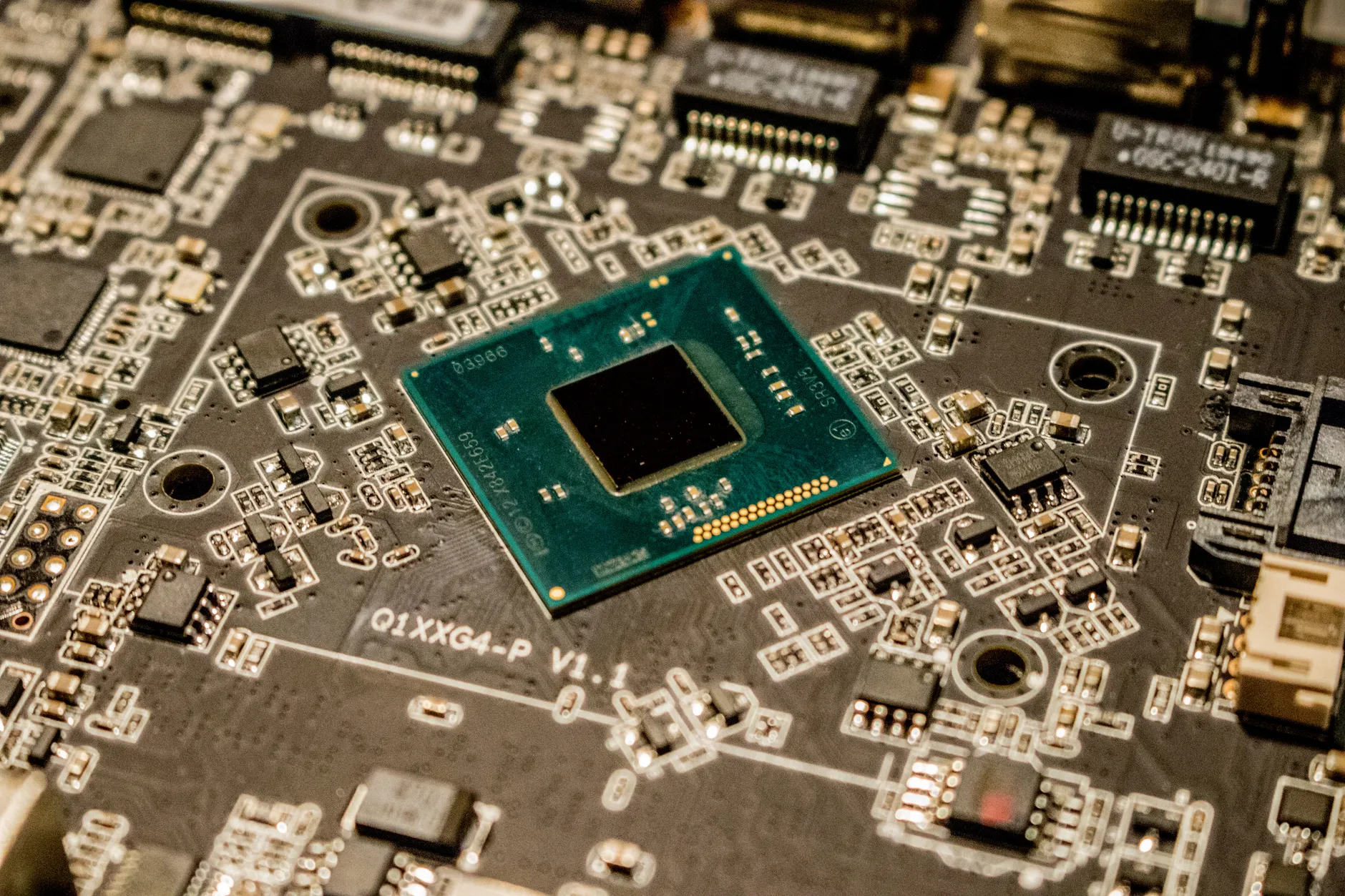
Tech and chip stocks take the heaviest losses
The most severe damage has been concentrated in Shanghai's STAR 50, an index of 50 large technology and semiconductor companies. It dropped 40% in under four months, wiping out about $480bn in value.
Even after that fall, the index is far from cheap by conventional measures. It trades at roughly 100 times earnings, down from close to 250 at its peak. The price-to-earnings ratio indicates how many years of current profits investors are effectively paying for when they buy a share.
By comparison, the Nasdaq 100, the main US technology benchmark, trades at around 30 times earnings. The gap suggests that, despite the correction, Chinese tech investors are still pricing in a great deal of future growth that has yet to appear in company accounts.
Suppliers to the global data-centre build-out have also been hit hard. Zhongji Innolight and Eoptolink, both makers of optical components, are down about 60% from their highs.
From DeepSeek euphoria to a policy-driven chip push
The rally that preceded the slump had clear catalysts. In January 2025, the Chinese start-up DeepSeek released a low-cost but capable chatbot. The launch prompted a sharp reassessment of how much expensive hardware AI really requires, and Nvidia, the US company whose chips underpin most AI systems, lost nearly $600bn in market value in a single day.
A similar shock followed in July, when Moonshot AI, another Chinese lab, released its Kimi K3 model, sending chip stocks lower again. Episodes like these fuelled a narrative that Chinese developers could compete at the frontier of AI at a fraction of the cost incurred by their US rivals.
Beijing then leaned on its technology champions to rely on domestic hardware. According to the Financial Times, China's internet regulator reportedly instructed companies including ByteDance and Alibaba to stop purchasing Nvidia chips in September 2025. Z.ai, a lab based in Beijing, says it trained its GLM-5.2 model entirely on chips made by Huawei.
That policy push helped to create a domestic investment story in which homegrown chipmakers and AI developers would capture demand once served by foreign suppliers. The question now unsettling markets is whether that demand will translate into earnings at the pace investors assumed.

Why investors have lost confidence
Analysts point to two main problems. The first is soft spending by Chinese consumers, which limits how quickly AI products and services can be monetised at home. The second is growing doubt that AI companies can recoup the vast sums they have poured into infrastructure and research.
The experience of Unitree, a robotics company, illustrates how speculative the mood became. When it listed in August, retail investors placed orders for 8,000 times the number of shares available. Its stock has since lost nearly half its value from its debut, even after a notable rebound this week.
Dong Baozhen, a fund manager based in Beijing, described the market's trajectory as a speculative frenzy that has now reversed. "And now we see the bubble bursting," he said.
Oversubscription on that scale typically signals that buyers are chasing momentum rather than weighing fundamentals. When the momentum stalls, the same crowded positioning can accelerate the decline, as investors who bought on enthusiasm rush to exit together.
Geopolitical pressure adds to the strain
The domestic concerns have been compounded by actions in Washington that threaten the overseas prospects of Chinese technology companies.
In July, the US Federal Communications Commission banned imports of new foreign-made humanoid robots, citing national security. The measure narrows a potentially significant export market for Chinese robotics firms at a time when the sector has attracted heavy investor interest.
Washington is also moving to bar Chinese-made optical components from US data centres. That helps explain the steep declines at Zhongji Innolight and Eoptolink, whose businesses have benefited from global spending on AI infrastructure.
Together, these measures point to a structural problem for Chinese AI investors. Beijing's push for self-sufficiency may support domestic demand for local chips, but US restrictions could simultaneously cap the international revenue that would help justify high valuations.
Counterpoints and risks
The sell-off does not necessarily mean China's AI ambitions are faltering technologically. The DeepSeek and Kimi K3 releases showed that Chinese labs can produce models capable enough to move global markets, and Z.ai's claim to have trained a model solely on Huawei hardware suggests progress on domestic chips.
The issue is financial rather than technical. Strong products and a functioning domestic supply chain do not automatically produce profits, particularly when consumer demand is weak and capital spending is heavy.
Valuation remains a central risk. At about 100 times earnings, the STAR 50 still trades at more than three times the multiple of the Nasdaq 100. If earnings fail to grow into those valuations, further declines are possible; if profits do materialise, the correction may later look like an overdue reset after a period of excess.
The heavy weighting of AI stocks in Chinese indices also cuts both ways. It amplified the downturn, but it would equally amplify any recovery should sentiment improve.
What to watch next
Several factors are likely to shape whether the slide deepens or stabilises:
- Earnings from AI and chip companies, and whether profits begin to justify current multiples
- Signs of a pick-up in Chinese consumer spending
- Further US restrictions on Chinese robots, optical components or other technology exports
- The pace of Beijing's push towards domestic chips and its effect on suppliers
- Retail investor behaviour, given the speculative demand seen in listings such as Unitree's
For now, the market appears to be repricing a story that ran well ahead of the numbers. Investors will be looking for evidence that China's AI sector can turn technical achievement into durable earnings, rather than further model launches alone.
More from peatpost
Nvidia Board Opens Independent Inquiry Into Jensen Huang After Chinese Spy Report
Directors say they see no sign that secrets were compromised, as Huang admits an affair, lawmakers demand answers and shares slip 5% before Monday's open.
AI Chip Stocks Rebound From Global Rout as Nvidia Gains 2.8%, but Bubble Fears Persist
A Friday relief rally left Nvidia and AMD well below their October peaks, as data centre politics and stress in AI debt markets keep investors uneasy.

Acurast Says 335,000 Smartphones Joined Its Network as Projects Pitch Phones as AI Computing Layer
Decentralised networks such as Acurast and Phase want idle phones to take on AI and web workloads, but sceptics argue the devices are better suited to gathering real-world data.
Discussion
0 commentsNo comments yet — be the first to weigh in.