A Former PG&E Engineer Is Building 'Google Maps for the Underground'
Utility strikes happen 200,000 times a year in the US because nobody has a single map of what is buried where.
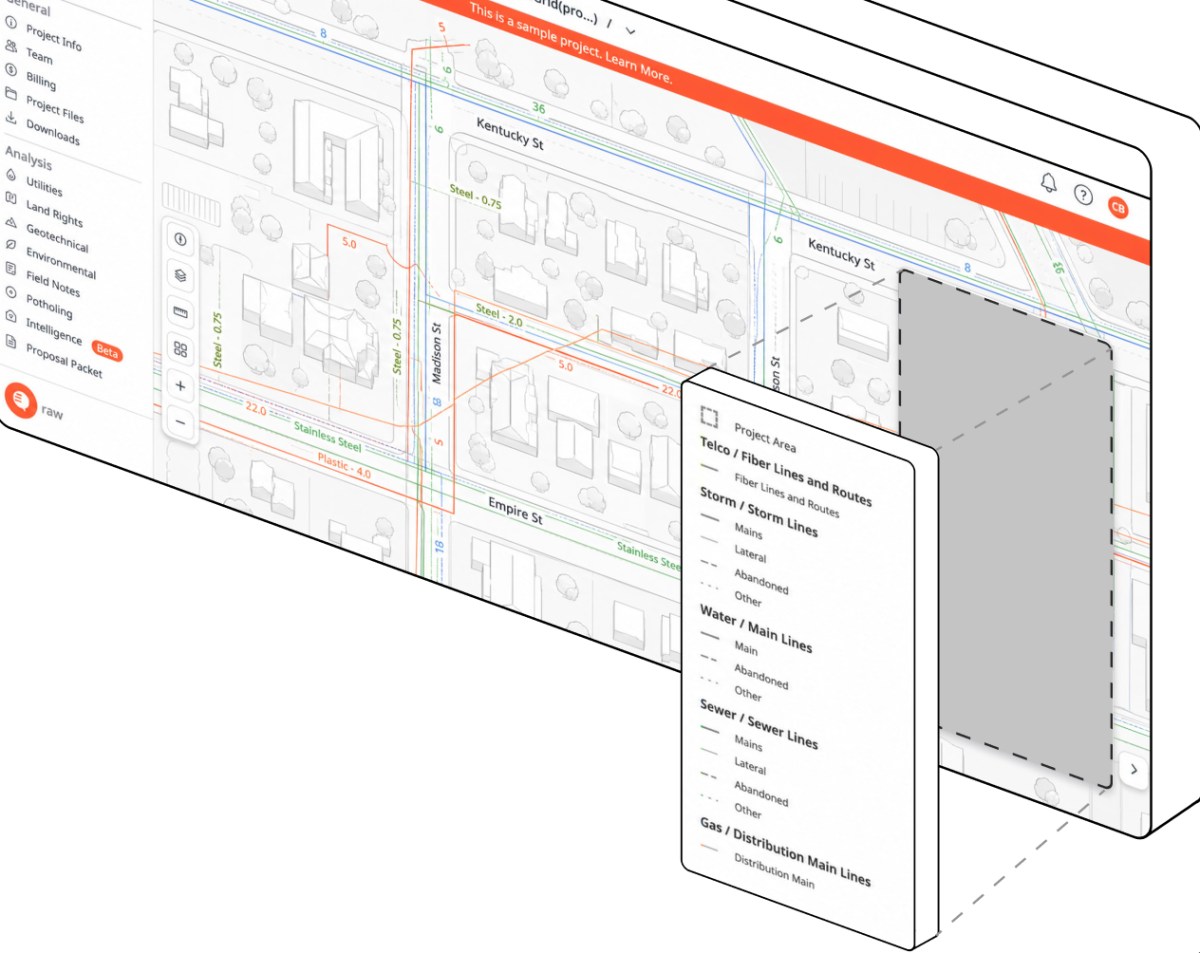
Josh Mackanic left a decade-long engineering career at Pacific Gas and Electric because of what the utility does not know about what is buried beneath it.
"I had a job that got shut down because a pipe was in the excavation [that] we didn't know about. Fortunately, we saw it before we impacted it," he told TechCrunch. What followed was "this three-day ordeal of running around [asking] like: 'Whose pipe is this? Can we tap it? Can we not? What's in it?'"
He got the answer eventually. The delay cost $60,000.
The structural gap
PG&E is one of the largest utilities in the United States, and it has visibility only into the electric and gas lines it owns and operates. Pipes carrying sewage or water belong to other companies, and so does the record of where they are.
Nobody holds the complete picture, because no single organisation has ever had a reason to assemble one. The result is roughly 200,000 utility strikes a year.
What CivilGrid is assembling
Mackanic founded the company in 2020 to gather the scattered data — utility assets, property ownership, environmental regulations — into one view a crew can consult before digging.
The hard part is not the software. It is that the underlying records sit with dozens of owners in inconsistent formats and varying states of accuracy, and each one has to be negotiated for separately. Which is precisely why the map does not already exist.
More from peatpost

The French Disruption: How Microsoft’s $3 Billion Bet on Mistral AI Is Rewriting the Rules of Artificial Intelligence
Microsoft invests $3 billion in Mistral AI. The startup’s performance surges 70%, challenging ChatGPT’s dominance.
Cato Institute Warns a Government AI Pause Would Shield Dominant Firms
Policy scholar Jennifer Huddleston argues voluntary safeguards beat a mandated halt, as Sanders and Casar push a pause and Jack Dorsey warns against rules built for incumbents.

The AI Industry Says You Have Months. It Did Not Say What It Will Do.
More than 100 companies set out a four-part plan for surviving AI-enabled attacks on hospitals and water plants — with no commitments, deadlines or funding attached to their own part of it.
Discussion
0 commentsNo comments yet — be the first to weigh in.