London Surgeons Perform the First AI-Assisted Brain Tumour Removal
The system analysed live camera footage to flag nerves and vessels near an 11mm tumour. The patient kept his sight.
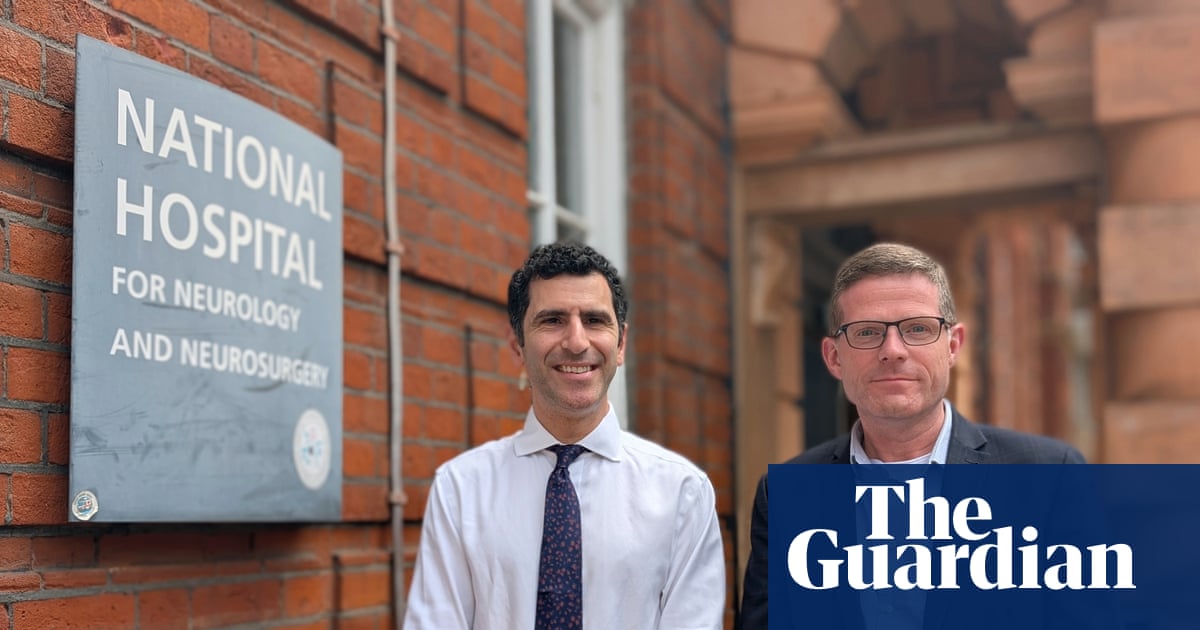
Neurosurgeons in London have performed what health officials describe as the world's first successful AI-assisted operation to remove a brain tumour, saving the sight of a 48-year-old man.
The surgery took place in May at the National Hospital for Neurology and Neurosurgery, part of University College London Hospitals NHS Foundation Trust. Details were withheld until this week while the patient, Rhys Hibbert, recovered.
What the system did
The surgical team remained in full control throughout. The AI analysed live camera footage during the operation, helping identify key structures — nerves and blood vessels — that needed to be avoided near the 11mm tumour.
That description is worth reading carefully, because it defines a narrow and unusually sensible role. The system did not plan the operation, make decisions or move anything. It performed real-time recognition on a video feed and highlighted anatomy, leaving every judgement to the surgeon.
Why this problem suits the technology
Neurosurgical anatomy is exactly the kind of task where machine vision has a genuine advantage, and it has nothing to do with the system being cleverer than a surgeon.
The critical structures around a pituitary tumour are small, variable between patients, and partially obscured by blood and tissue in a field viewed through an endoscope. A surgeon is identifying them from experience while simultaneously operating, managing bleeding and tracking time. A model doing nothing but labelling the image, continuously, does not become fatigued or divide its attention.
The stakes are correspondingly precise. An 11mm tumour in that location sits beside the optic nerves; the difference between a good outcome and permanent blindness is measured in millimetres.
The evidence question
A single successful case is a milestone, not a result, and the field has a long history of promising surgical technologies that did not survive controlled evaluation.
What would establish value is a trial comparing outcomes with and without the assistance across enough operations to detect a difference in complication rates — difficult to run, because the surgeons involved are already among the most experienced, and their baseline results are very good.
Why the NHS setting matters
The operation was performed in a public hospital, on a public patient, by a team publishing what they did.
That matters for how the technology spreads. Surgical innovation developed inside a health service with an obligation to evaluate and disseminate follows a different path from one commercialised first — and the difference determines whether a capability like this reaches district hospitals or remains available only where someone can afford it.
Where the training data comes from
A system that recognises anatomy in endoscopic video has to learn from endoscopic video, annotated by surgeons who can identify what is on screen.
That is the real constraint on this class of technology. The imagery is scarce, the annotation requires the time of exactly the people whose time is most limited, and consent and governance for surgical footage are stricter than for most medical data.
It also means performance is tied to the population and technique the model was trained on. A system built on one hospital's cases may perform differently in a hospital that operates differently.
The regulatory route
Software that influences clinical decisions is a regulated medical device, and demonstrating safety for a system whose output is advisory raises questions the framework was not built for.
If a surgeon disregards a correct warning, or follows an incorrect one, the responsibility is genuinely shared — and neither device regulation nor clinical negligence law currently has a settled answer for that.
More from peatpost
The French Disruption: How Microsoft’s $3 Billion Bet on Mistral AI Is Rewriting the Rules of Artificial Intelligence
Microsoft invests $3 billion in Mistral AI. The startup’s performance surges 70%, challenging ChatGPT’s dominance.
Cato Institute Warns a Government AI Pause Would Shield Dominant Firms
Policy scholar Jennifer Huddleston argues voluntary safeguards beat a mandated halt, as Sanders and Casar push a pause and Jack Dorsey warns against rules built for incumbents.

The AI Industry Says You Have Months. It Did Not Say What It Will Do.
More than 100 companies set out a four-part plan for surviving AI-enabled attacks on hospitals and water plants — with no commitments, deadlines or funding attached to their own part of it.
Discussion
0 commentsNo comments yet — be the first to weigh in.