Musk Mocks Altman's Argument That DRAM Is Better Used in AI Data Centres Than Home PCs
The OpenAI chief said memory sitting idle in personal computers is a poor use of scarce supply. Musk answered with a film meme, reopening a long-running feud.
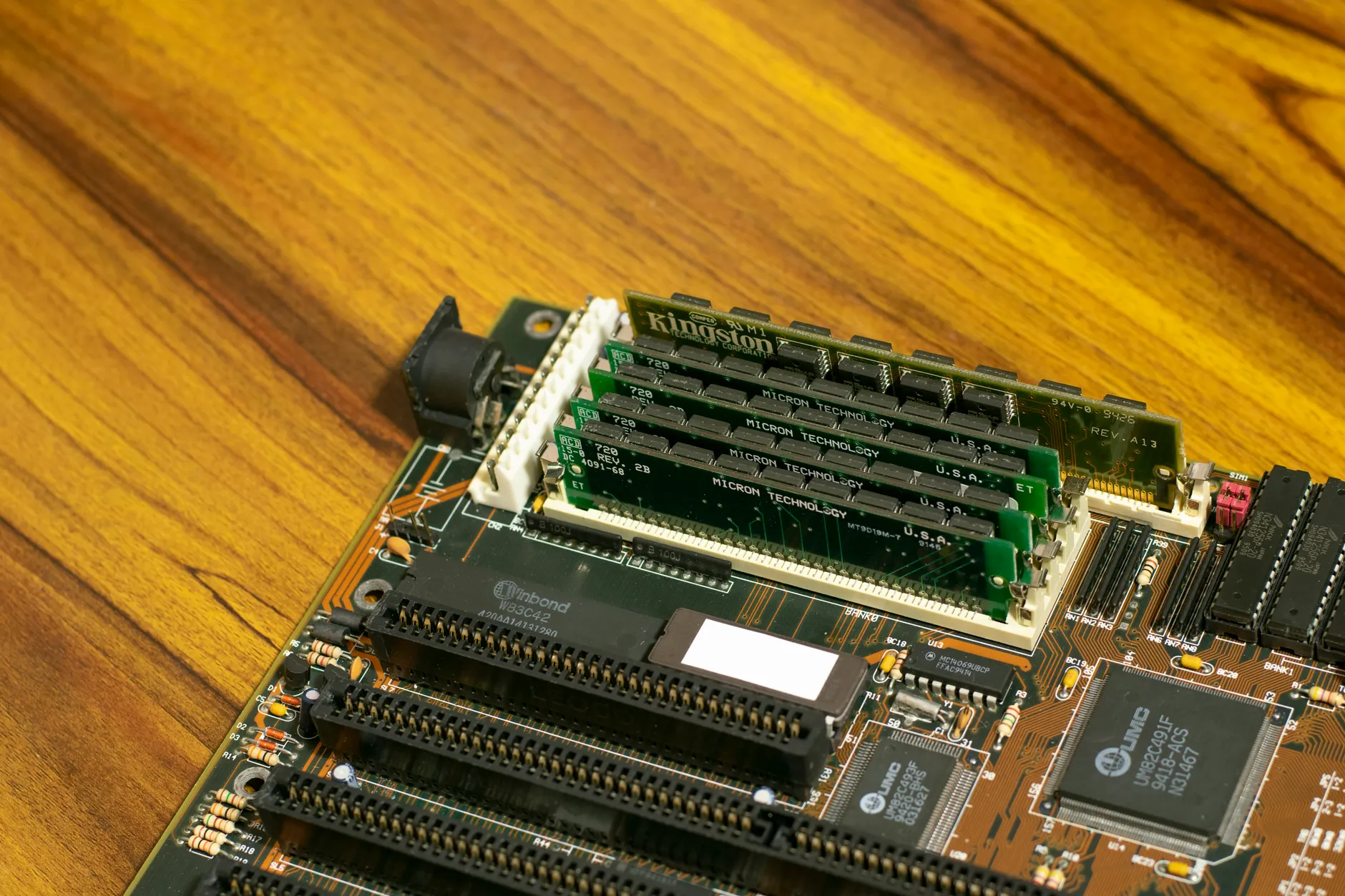
Elon Musk has ridiculed Sam Altman, the chief executive of OpenAI, after Altman argued that the world's scarce supply of computer memory would be put to better use in AI data centres than in people's personal computers.
The exchange, which played out on Musk's social network X on Sunday, is the latest flare-up in a dispute between two men who helped found OpenAI together and have since become rivals in the race to build advanced artificial intelligence.
What Altman said
Altman set out his view during an interview with the YouTube channel Cheeky Pint, in a conversation about shortages of memory chips and other components that have emerged as demand for AI computing has surged.
He pushed back against enthusiasm for so-called local inference, the practice of running AI models on a user's own machine rather than on remote servers. According to Decrypt, Altman said many people assume the arrival of open-source models settles the question of running AI at home, but that the picture looks very different when viewed as a problem of global resource allocation.
His central point was about utilisation. Memory installed in a personal computer, he argued, spends most of its life idle, by his estimate in use around 5% of the time. In a market where supply is tight, he suggested, it makes more sense to concentrate that capacity in cloud facilities where it can be kept busy almost continuously. Altman added that he finds many people's instincts on the issue run in the opposite direction.
The argument is essentially an efficiency case. A data centre that pools hardware and serves many users can, in principle, extract far more work from each chip than an individual who switches a computer on for a few hours a day. The difficulty is that it frames personal ownership of hardware as a cost to be minimised, which is not how most consumers think about the devices they buy.
Musk's response
Musk replied with a meme built around Hans Landa, the Nazi officer played by Christoph Waltz in Quentin Tarantino's film Inglourious Basterds. The image carried a caption parodying one of the character's interrogation scenes, asking whether the viewer was withholding DRAM from the cloud.
Alongside it, Musk wrote: "The people deserve to have their RAM too!"
The post cast Altman's comments as a call for centralised control over hardware that ordinary users own, a reading that plays to a broader debate about whether AI should run mainly in the hands of a few large providers or be distributed across individual devices.
Altman's diagnosis of the shortage
The interview was not only about where memory should sit. Altman also offered an explanation for why supply has struggled to keep pace with demand, and he placed part of the blame on the caution of the companies that make DRAM.
Dynamic random-access memory is the working memory used by computers, phones and servers, and it is a crucial ingredient in the hardware that trains and runs large AI models. The industry that produces it has a history of sharp boom-and-bust cycles, in which periods of heavy investment are followed by gluts and falling prices.
Altman described the economics of those past cycles bluntly. For years, he said, a memory producer might spend $20bn in capital expenditure only to generate $19bn in return. Companies that came close to collapse after building too many factories in earlier downturns, he argued, have been reluctant to add capacity quickly, even though the current demand environment means they now stand to earn very large profits.
He said he would like to see the costs of energy, chips and the wider supply chain come down, and indicated he would be disappointed if they did not. For prices to fall, he noted, supply has to expand.
That reasoning helps explain the logic behind his comments on home computers. If manufacturers are slow to build, the existing pool of memory becomes a fixed resource in the short term, and the question of who uses it, and how intensively, becomes more pressing.
A feud with a long history
The jibe sits within a rivalry that stretches back years. Musk and Altman were among the co-founders of OpenAI in 2015. Musk left the organisation in 2018, and relations between the two have deteriorated sharply since.
In 2024 Musk took legal action against OpenAI and Altman, alleging that they had abandoned the organisation's original nonprofit mission. The case went to trial, and in May a federal jury in California rejected the $150bn lawsuit, finding OpenAI, Altman and the company's president, Greg Brockman, not liable on all claims.
During the litigation, OpenAI's lawyers argued that Musk's suit was driven partly by competitive motives. Musk launched his own AI company, xAI, in 2023, putting him in direct commercial competition with the organisation he helped create.
That context matters when reading the latest exchange. Musk's response was framed as a defence of ordinary users, but it also comes from the owner of a rival AI business that competes with OpenAI for the same scarce chips, power and talent.
Why the argument matters
Beneath the mockery lies a genuine question about how the AI industry will be built. One vision places most computation in large, centralised data centres operated by a handful of providers, with users accessing models over the internet. Another emphasises local inference, in which capable models run on laptops, desktops and phones, offering greater privacy, independence from cloud services and lower ongoing costs for users.
Altman's comments put him firmly on the side of centralisation, at least while memory remains scarce. From a pure utilisation standpoint, his point has some force: hardware that sits idle most of the day is, in aggregate, a less efficient use of a constrained resource.
The counterargument is that efficiency is not the only measure that matters. Many users value control over their own computing, and some would rather not route sensitive data through a third party. Critics of the centralised model also note that it concentrates economic power in the companies that operate the data centres, OpenAI among them, which gives Altman an obvious interest in the outcome.
There is also a practical consideration. Personal computers need memory to function regardless of whether they run AI models, so the scope for shifting that capacity into data centres is limited. Altman's remarks read more as a critique of the push to equip home machines for local AI than as a literal proposal to take memory away from consumers, though Musk's meme leaned into the latter interpretation.
What to watch
The exchange is unlikely to change much on its own, but several threads are worth following:
- Whether memory makers respond to sustained AI demand by accelerating investment in new capacity, as Altman has urged.
- The direction of memory and component prices, which Altman has said need to fall through greater supply.
- The balance between cloud-based AI services and models designed to run locally on consumer hardware.
- Further public sparring between Musk and Altman as xAI and OpenAI compete for resources and customers.
For now, the dispute illustrates how the physical constraints of the AI boom, from chips to energy, have become a subject of public argument among the industry's most prominent figures, and how quickly technical debates between these two can turn personal.
More from peatpost
Nvidia Board Opens Independent Inquiry Into Jensen Huang After Chinese Spy Report
Directors say they see no sign that secrets were compromised, as Huang admits an affair, lawmakers demand answers and shares slip 5% before Monday's open.
AI Chip Stocks Rebound From Global Rout as Nvidia Gains 2.8%, but Bubble Fears Persist
A Friday relief rally left Nvidia and AMD well below their October peaks, as data centre politics and stress in AI debt markets keep investors uneasy.
Acurast Says 335,000 Smartphones Joined Its Network as Projects Pitch Phones as AI Computing Layer
Decentralised networks such as Acurast and Phase want idle phones to take on AI and web workloads, but sceptics argue the devices are better suited to gathering real-world data.
Discussion
0 commentsNo comments yet — be the first to weigh in.