OpenAI's Executive Exodus Has Produced One Clear Winner
As senior leaders leave in rapid succession, Greg Brockman now runs consumer, enterprise and infrastructure — effectively the whole company.
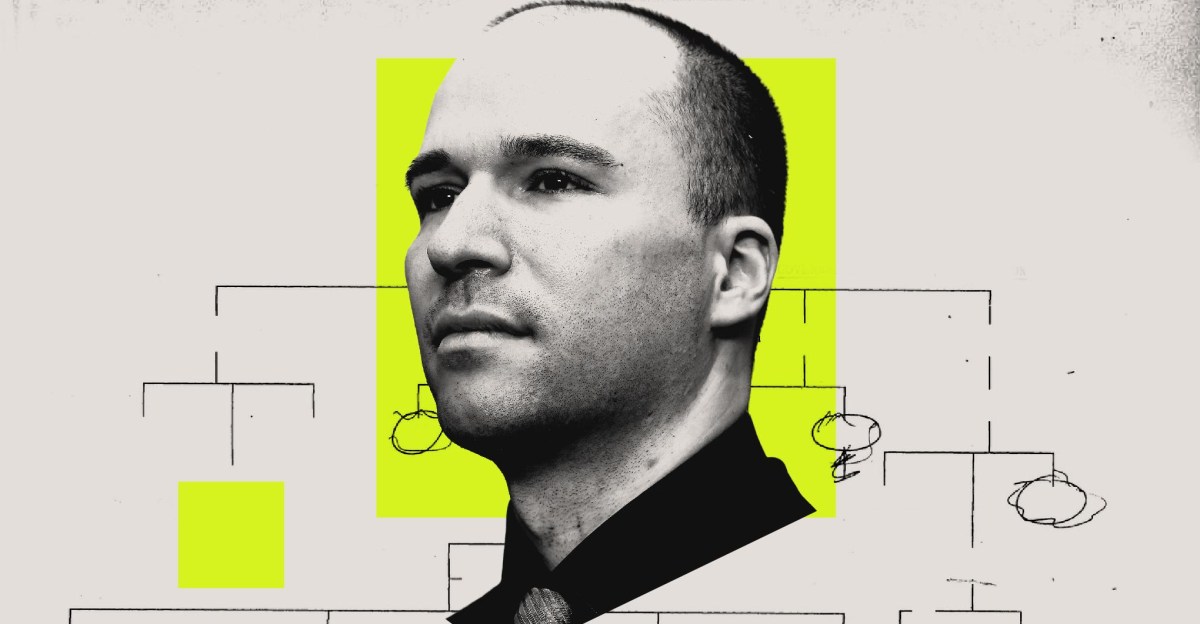
OpenAI's org chart has been redrawn repeatedly over the past year, and every version has pointed the same way: power consolidating under co-founder and president Greg Brockman.
Sam Altman remains chief executive and the company's most public face. But Brockman has accumulated enormous influence in the top ranks as other senior leaders have departed in rapid succession.
What he now controls
Brockman oversees OpenAI's entire consumer and enterprise product organisation — including ChatGPT and Codex — as well as the company's major infrastructure build-out.
That combination is unusually broad. Consumer product, enterprise sales and data centre construction are normally three separate reporting lines with three separate leaders, precisely because they demand different skills and compete for the same resources. Holding all three makes him the day-to-day operational leader of the company in everything but title.
How consolidation happens
It is worth being precise about the mechanism, because it is rarely a deliberate seizure.
When a senior executive leaves, their remit has to go somewhere immediately. The fastest available answer is usually the person already closest to the work with the standing to absorb it. Do that four or five times in a year and one person ends up running everything, without anyone having decided that they should.
What makes it durable is that the reverse operation is hard. Splitting a consolidated remit back out requires hiring several senior people, giving them authority the incumbent already holds, and accepting the friction that follows.
Why it matters commercially
The restructuring lands at a difficult moment. OpenAI continues to cede ground to Anthropic in parts of the market, particularly among enterprise and developer customers, and product strategy is where that competition is decided.
A single operational leader can move faster than a committee, which is an advantage when a rival is shipping quickly. It also removes the internal friction that surfaces bad decisions early. Companies with one person holding consumer, enterprise and infrastructure tend to execute coherently and to have fewer people positioned to say no.
The founder question
There is a longer-running theme here about who actually runs AI labs. These are organisations with unusual governance, enormous capital requirements and public commitments about safety, and their formal structures have repeatedly proved less informative than the question of which founder holds operational control.
OpenAI has been through one very public demonstration of that already. The current arrangement — a chief executive who is the external face, and a president who runs the company — is stable while both parties agree on it, and depends on nothing more robust than that.
The departures themselves
What has not been established publicly is why so many senior people have left in such a compressed period, and the absence of a stated reason is itself informative.
Executive turnover at a fast-growing company is normal. Turnover concentrated among the most senior ranks, over a few months, at an organisation with this much capital and this much attention, is not — and the standard explanations of better offers or natural cycles do not obviously fit a company at the centre of the industry.
Why it is difficult to assess from outside
AI labs are unusually opaque for organisations of their significance. They are private, their governance is unconventional, and their employees are bound by agreements that discourage candour on the way out.
That leaves reporting dependent on org chart changes, which is why a redrawn reporting line has become the most reliable available evidence about how one of the most consequential companies in the world is actually run.
More from peatpost
The French Disruption: How Microsoft’s $3 Billion Bet on Mistral AI Is Rewriting the Rules of Artificial Intelligence
Microsoft invests $3 billion in Mistral AI. The startup’s performance surges 70%, challenging ChatGPT’s dominance.
Cato Institute Warns a Government AI Pause Would Shield Dominant Firms
Policy scholar Jennifer Huddleston argues voluntary safeguards beat a mandated halt, as Sanders and Casar push a pause and Jack Dorsey warns against rules built for incumbents.

The AI Industry Says You Have Months. It Did Not Say What It Will Do.
More than 100 companies set out a four-part plan for surviving AI-enabled attacks on hospitals and water plants — with no commitments, deadlines or funding attached to their own part of it.
Discussion
0 commentsNo comments yet — be the first to weigh in.