Ohio Gets the 'World's Largest Data Centre', and Isn't Sure How to Feel
OpenAI, Nvidia and Japanese investors will spend $500bn on 8GW of compute in the Appalachian foothills. Locally, the mood is mixed.
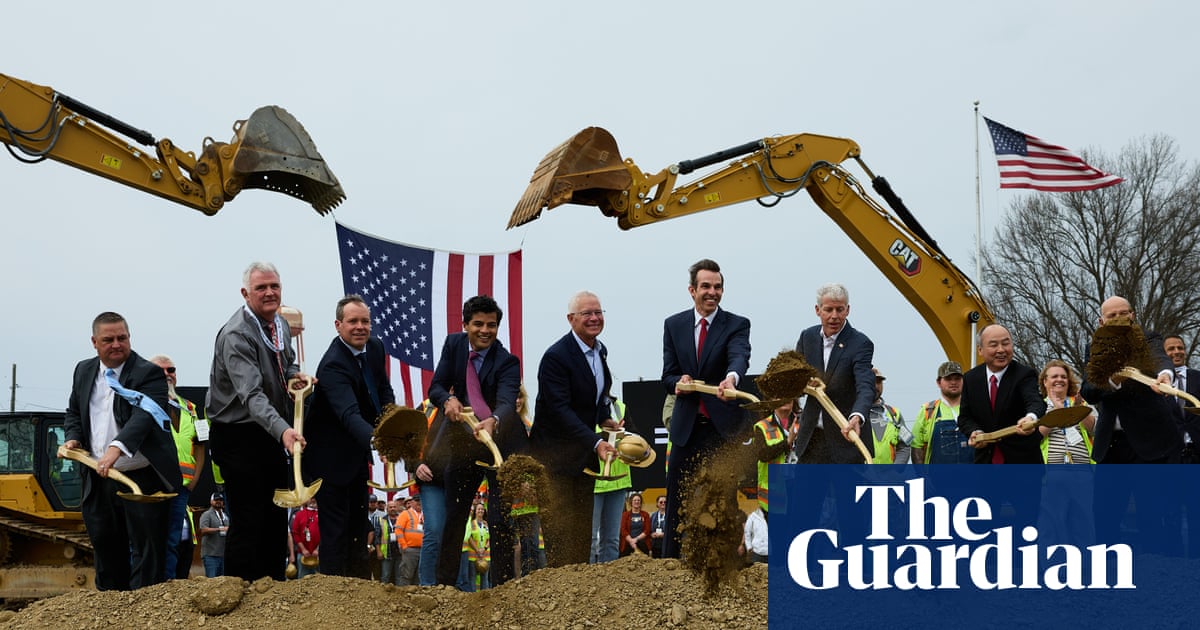
On a winding road behind forests in the Appalachian foothills of southern Ohio, OpenAI, Nvidia and Japanese investors are preparing to spend $500bn on one of the largest artificial intelligence data centres on the planet.
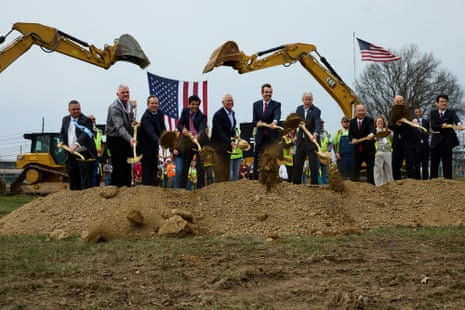
In March, energy secretary Chris Wright, commerce secretary Howard Lutnick and a group of Japanese and other dignitaries descended briefly on Piketon to break ground on a project to build 8 gigawatts of AI computing power.
Locally, the feeling is more complicated: a mixture of hope and concern.
The view from Piketon
"Personally, my emotions range between positive and skeptical," says Billy Spencer, who has been mayor of Piketon for 23 years.
There is no organised opposition, which distinguishes this project from many of the 48 data centre developments blocked or stalled by local resistance elsewhere in the United States. But the absence of a campaign is not the same as enthusiasm.
Why here
The location is not accidental, and the reasons are the same ones that make the reaction ambivalent.
Southern Ohio offers cheap land, existing high-voltage transmission infrastructure, available water and a region that has spent decades losing industrial employment. Those are the ingredients data centre developers look for, and the last of them is what gives a project like this its political reception.
A community with alternatives negotiates. A community without them tends to be presented with a proposal.
The jobs question
The promise is thousands of jobs, and the caveat is well established by now.
Data centre construction employs large numbers of people for a few years. Operation employs far fewer — a facility of this scale runs on technicians, security and facilities staff numbering in the hundreds rather than the thousands. The permanent workforce relative to the capital invested is among the lowest of any industrial development.
That is not a reason to reject it. It is a reason to be precise about what is being offered, and the gap between construction and operational employment is where local disappointment usually forms.
The environmental objection
Environmental groups have voiced concern, focused on the familiar issues: power draw, water consumption for cooling, and what 8GW of demand does to electricity prices for everyone else on the same grid.
Eight gigawatts is not a rounding error on a regional system. It is comparable to the entire generating capacity of a small country, and it has to be built, connected and paid for by someone.
The question Piketon is being asked to answer — largely without the technical resources to evaluate it — is whether a $500bn facility that consumes a great deal and employs comparatively few is a transformation of the local economy or an occupation of it.
The tax question
The fiscal case is where local scepticism usually concentrates, and Ohio has a specific history here.
Data centre developments across the United States have routinely been secured with substantial tax abatements — property tax reductions, sales tax exemptions on equipment, and negotiated electricity rates. Those concessions reduce precisely the revenue that would fund the schools and services a growing community needs.
A project can therefore deliver an enormous headline investment figure and a modest net contribution to the county that hosts it.
What Piketon already knows about large projects
The site sits beside the former Portsmouth uranium enrichment plant, which employed thousands, closed, and left a decades-long cleanup behind it.
That history explains the mayor's careful phrasing better than any polling could. This is a community that has hosted a strategically important federal facility before, watched it define the local economy, and then watched it end — which is a reasonable basis for treating a $500bn announcement as something to be verified rather than celebrated.
More from peatpost

The French Disruption: How Microsoft’s $3 Billion Bet on Mistral AI Is Rewriting the Rules of Artificial Intelligence
Microsoft invests $3 billion in Mistral AI. The startup’s performance surges 70%, challenging ChatGPT’s dominance.

Cato Institute Warns a Government AI Pause Would Shield Dominant Firms
Policy scholar Jennifer Huddleston argues voluntary safeguards beat a mandated halt, as Sanders and Casar push a pause and Jack Dorsey warns against rules built for incumbents.
The AI Industry Says You Have Months. It Did Not Say What It Will Do.
More than 100 companies set out a four-part plan for surviving AI-enabled attacks on hospitals and water plants — with no commitments, deadlines or funding attached to their own part of it.
Discussion
0 commentsNo comments yet — be the first to weigh in.